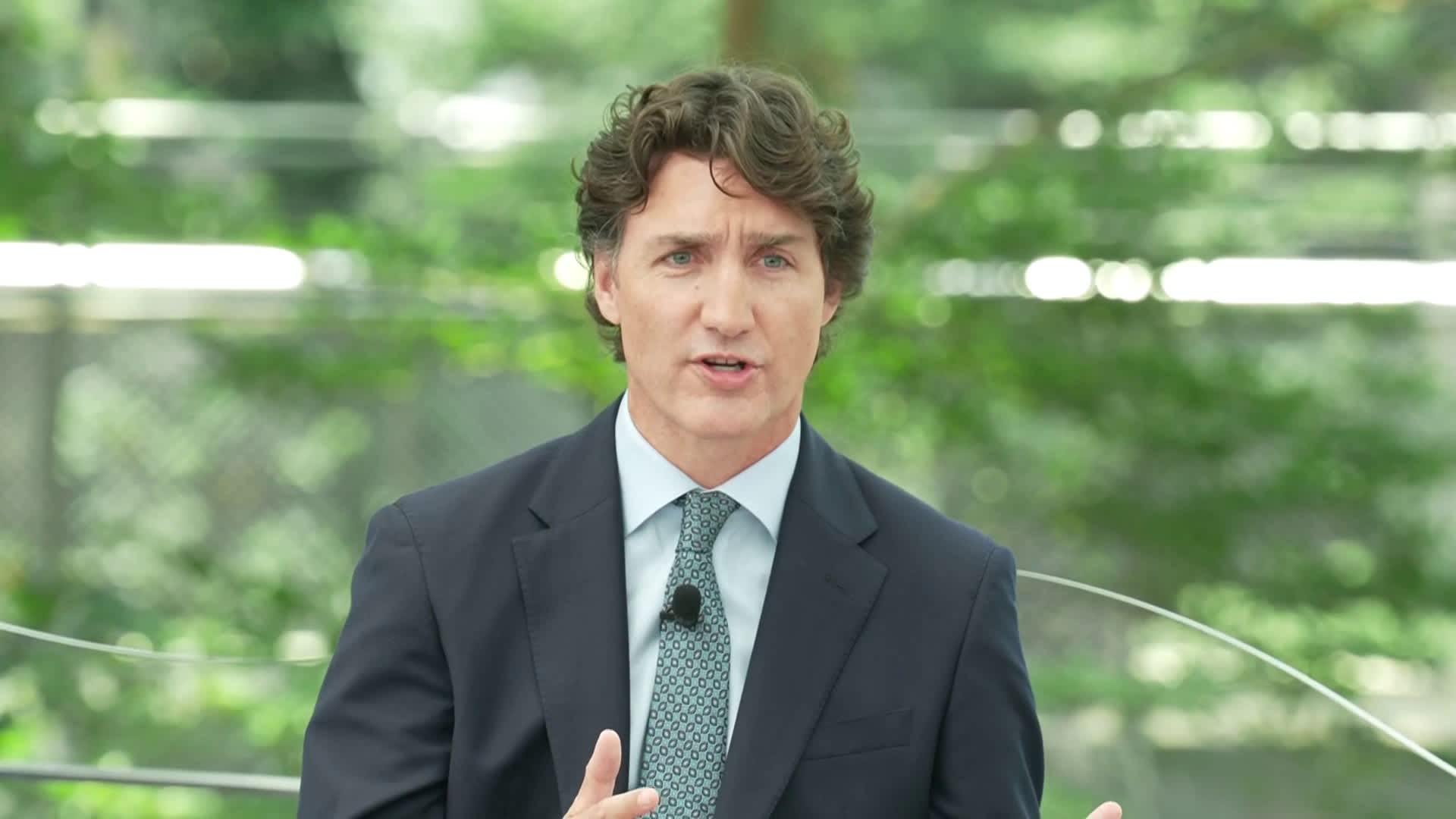
Justin Trudeau Advocates for ‘Microlateralism’ Amid Global Institutional Shift
Former Canadian Prime Minister Justin Trudeau has issued a critical assessment of the current state of international governance, arguing that legacy institutions such as the World Trade Organization and the International Monetary Fund are losing their efficacy in the modern geopolitical landscape. During a recent address in Singapore, Trudeau observed that major global powers—including the United States, China, Russia, and India—are increasingly bypassing established rules-based frameworks. This departure from traditional norms has created a vacuum of stability, leaving smaller nations to navigate an increasingly volatile international environment without the protection of reliable, large-scale institutional support.
To counter this trend, Trudeau has proposed a strategic shift toward ‘microlateralism.’ This approach encourages smaller nations to move away from slow-moving, bureaucratic global structures in favor of forming agile, interest-based alliances. For Canada, this represents a necessary recalibration of diplomatic and economic policy. By diversifying trade partners and forming targeted coalitions, the nation aims to insulate itself from the protectionist policies and transactional foreign agendas currently being pursued by larger global players.
Beyond the sphere of traditional diplomacy, Trudeau also highlighted the societal risks posed by the rapid advancement of artificial intelligence. He warned that the economic benefits of AI must be distributed equitably to avoid deepening social divisions. If the wealth generated by these technologies remains concentrated within a small elite, he cautioned that it could trigger widespread public unrest, similar to the anti-globalization movements that have recently challenged democratic stability. He emphasized that ensuring broad-based prosperity is a critical requirement for maintaining public trust and preventing systemic economic failure in the digital age.
Key Takeaways
- Justin Trudeau advocates for 'microlateralism,' a strategy where smaller nations form targeted alliances to bypass ineffective global institutions.
- Major global powers are increasingly ignoring the rules-based international order, creating a volatile environment for smaller countries.
- The concentration of wealth generated by artificial intelligence poses a significant risk to social cohesion and democratic stability.
Editor’s Analysis & Impact
Trudeau’s remarks signal a growing consensus among middle-power nations that the post-WWII international order is undergoing a fundamental transformation. By advocating for ‘microlateralism,’ he is acknowledging that the era of universal, consensus-based global governance is being superseded by a more fragmented, transactional reality. This shift has profound implications for global trade and security, as nations move away from broad multilateral agreements toward smaller, more resilient blocs. Furthermore, his focus on the intersection of AI and social inequality highlights a critical emerging challenge for policymakers: the need to prevent technological advancement from exacerbating domestic political polarization. As nations grapple with both geopolitical realignment and the economic disruption of AI, the ability to foster inclusive growth will likely become the primary metric for long-term national stability and international influence.
Frequently Asked Questions
Q: What is 'microlateralism' as proposed by Justin Trudeau?
A: Microlateralism is a diplomatic strategy that involves smaller groups of nations forming targeted, interest-based alliances to address specific issues, rather than relying on large, cumbersome international organizations.
Q: Why is Trudeau concerned about the impact of artificial intelligence?
A: Trudeau is concerned that if the economic benefits of AI are concentrated among a small elite, it could lead to widespread public dissatisfaction and social unrest, potentially destabilizing democratic systems.
AI Disclosure: This article is based on verified data and official reports. Our Team and AI have cross-referenced every financial detail with primary sources to ensure total accuracy.
More from this Category