Diplomatic Friction: Kenyan President’s Remarks on Nigerian English Ignite Regional Debate
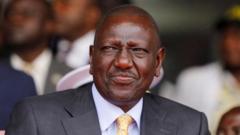
Kenyan President William Ruto has sparked a significant controversy following remarks regarding the English proficiency and accents of Nigerians. During a recent address to the Kenyan diaspora in Italy, the President suggested that Nigerian-accented English is often difficult to comprehend, necessitating the use of translators. In contrast, he positioned Kenyan English as a superior standard, claiming it ranks among the best globally.
The comments triggered an immediate backlash across social media platforms, with many Nigerians and regional observers labeling the remarks as dismissive and insensitive. Critics pointed out that both nations share a complex post-colonial history where English serves as an official language, yet is deeply influenced by indigenous linguistic roots. Nigeria, home to over 500 distinct languages, and Kenya, with its diverse Bantu, Nilotic, and Cushitic heritage, have naturally developed unique phonetic expressions that reflect their respective cultural identities.
While some supporters of the Kenyan administration have argued that the President’s comments were intended as lighthearted humor, the incident has highlighted deeper tensions regarding national pride and colonial legacies. The discourse has expanded beyond linguistics, touching upon broader economic and political rivalries between the two African powers. As of now, the Kenyan government has not released an official statement to clarify the intent behind the President’s words, leaving the diplomatic fallout to continue unfolding in the public sphere.
Key Takeaways
- President William Ruto’s comments about Nigerian English have caused a significant online backlash across Africa.
- Critics argue the remarks belittle Nigeria's linguistic heritage and ignore the diverse evolution of English in post-colonial nations.
- The controversy highlights the ongoing sensitivity surrounding national identity and language in the context of colonial history.
Editor’s Analysis & Impact
The diplomatic friction caused by President Ruto’s comments illustrates the fragility of inter-African relations when navigating the legacy of colonial-era institutions. Language, while a tool for communication, remains a potent symbol of national identity and prestige. By positioning one nation’s accent as superior to another, the President inadvertently tapped into long-standing regional rivalries, potentially complicating future diplomatic engagements between Kenya and Nigeria. From a broader perspective, this incident serves as a case study in how political rhetoric in the digital age can rapidly escalate into international controversy. Moving forward, leaders may need to exercise greater caution regarding cultural generalizations, as the interconnected nature of modern social media ensures that domestic remarks are subject to immediate, global scrutiny, often with unintended consequences for international cooperation and soft power.
Frequently Asked Questions
Q: Why did President Ruto’s comments cause outrage?
A: The comments were perceived as belittling and culturally insensitive, as they characterized Nigerian English as unintelligible while claiming Kenyan English was superior.
Q: How have supporters of the Kenyan President responded to the criticism?
A: Supporters have argued that the remarks were intended as a joke and that the public reaction has misinterpreted the President's original intent.
AI Disclosure: This article is based on verified data and official reports. Our Team and AI have cross-referenced every financial detail with primary sources to ensure total accuracy.
More from this Category