Asian Markets Defy Geopolitical Turbulence to Reach New Peaks
Major stock indices across the Asia-Pacific region displayed remarkable resilience on Monday, with Japan’s Nikkei 225 and South Korea’s Kospi both surging to record-breaking levels. Despite a backdrop of escalating geopolitical friction in the Middle East, investors have largely maintained a bullish outlook, prioritizing existing market momentum over the uncertainty surrounding stalled diplomatic efforts between the United States and Iran.
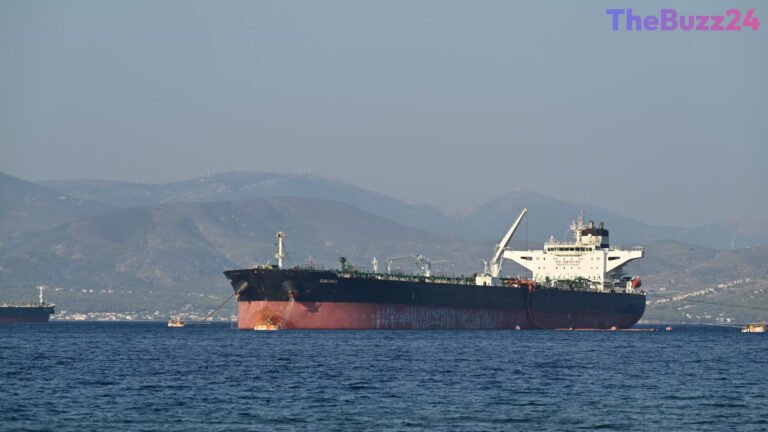
The recent breakdown in international negotiations has triggered a notable reaction in the energy sector. Brent crude futures climbed more than 2%, reaching $107.49 per barrel, while U.S. crude saw a 1.79% increase to $96.19. This upward pressure on oil prices stems from heightened instability near the Strait of Hormuz, where recent maritime incidents involving the Iranian Revolutionary Guard have raised concerns regarding global supply chain security.
While Asian exchanges largely maintained their upward trajectory, the sentiment was more cautious elsewhere. U.S. stock futures experienced a slight pullback during pre-market trading, with the Dow Jones Industrial Average dipping 0.2% following a record-setting Friday for the S&P 500 and Nasdaq Composite. Similarly, Australia’s S&P/ASX 200 retreated by 0.54% as market participants balanced the implications of geopolitical instability against the backdrop of robust quarterly corporate earnings.
Key Takeaways
- Japan’s Nikkei 225 and South Korea’s Kospi hit record highs despite regional geopolitical tensions.
- Oil prices spiked significantly, with Brent crude rising over 2% due to instability near the Strait of Hormuz.
- Global market sentiment remains mixed, as U.S. futures and the Australian market saw slight declines following recent record sessions.
Editor’s Analysis & Impact
The current market environment reflects a classic tug-of-war between strong corporate fundamentals and exogenous geopolitical shocks. While Asian markets are currently buoyed by domestic momentum and strong earnings, the energy price surge serves as a significant headwind that could dampen consumer spending and increase operational costs for global firms if sustained. The divergence between Asian performance and U.S. futures suggests that investors are beginning to price in the risk of a prolonged energy crisis. Moving forward, the market’s ability to sustain these record highs will depend heavily on whether diplomatic channels can be reopened to stabilize oil supply routes. If tensions in the Strait of Hormuz persist, we should expect increased volatility across global indices as inflation concerns begin to outweigh the optimism generated by recent quarterly earnings reports.
Frequently Asked Questions
Q: Why are oil prices rising despite record stock market performance?
A: Oil prices are increasing primarily due to heightened geopolitical tensions near the Strait of Hormuz, which has raised concerns about potential disruptions to global energy supply chains.
Q: Are global markets moving in unison following the recent diplomatic tensions?
A: No, the market sentiment is currently split. While Asian markets have shown resilience and reached record highs, U.S. futures and the Australian S&P/ASX 200 have experienced slight pullbacks as investors weigh the risks of international instability.
AI Disclosure: This article is based on verified data and official reports. Our Team and AI have cross-referenced every financial detail with primary sources to ensure total accuracy.
More from this Category