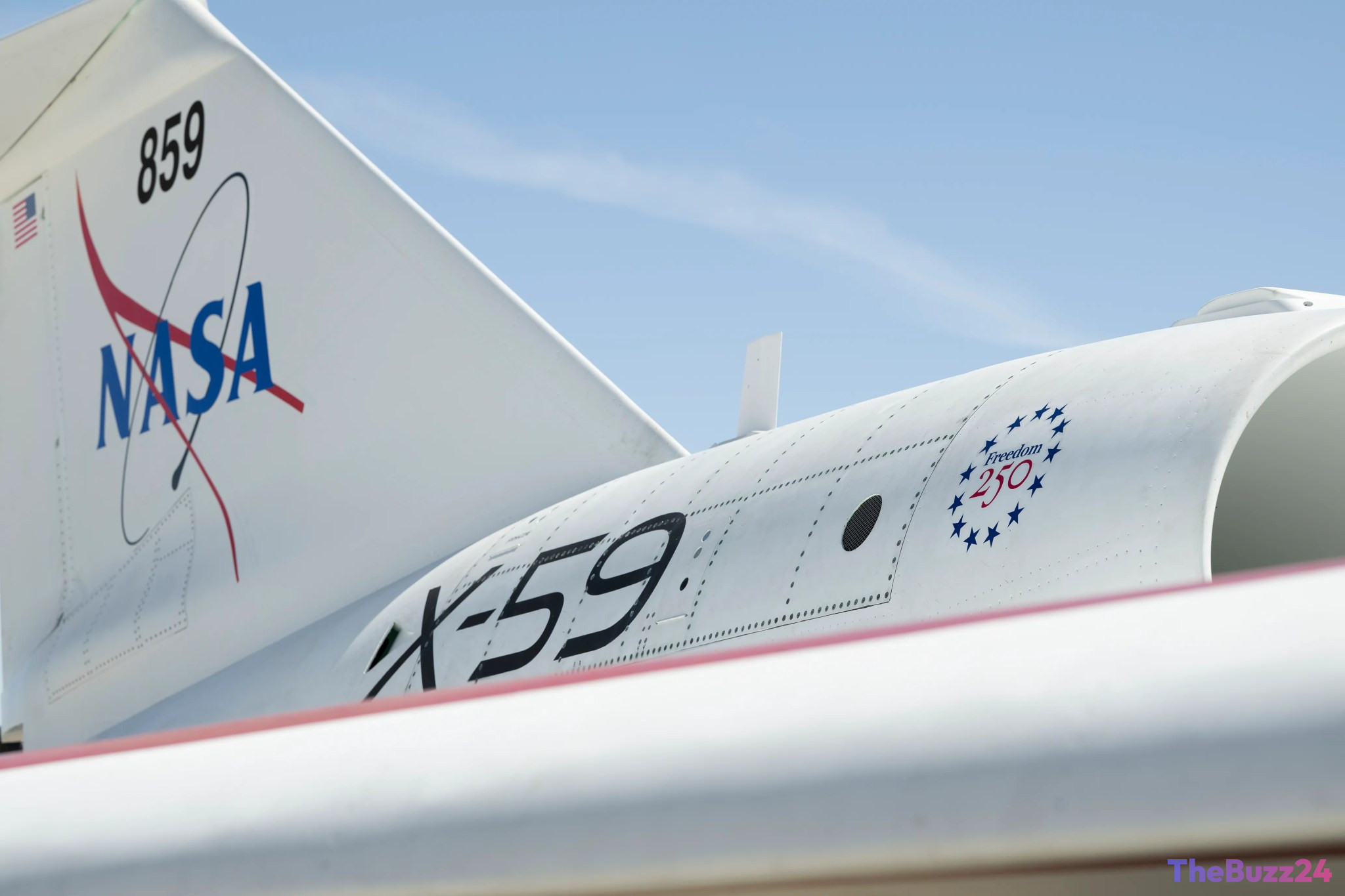
NASA’s X-59 Supersonic Research Jet Debuts Commemorative ‘Freedom 250’ Livery
NASA’s experimental X-59 aircraft has undergone a significant visual transformation, debuting a new ‘Freedom 250’ livery. The commemorative branding, which includes a specialized logo on the aircraft’s tail and jet engine, is designed to honor the upcoming 250th anniversary of the United States in 2026.
As the primary vehicle for the Quesst mission, the X-59 remains at the forefront of aerospace innovation. The mission’s core objective is to revolutionize the aviation industry by demonstrating that supersonic flight—traveling faster than the speed of sound—can be achieved with significantly reduced noise levels. This technology aims to mitigate the disruptive sonic booms that have historically limited supersonic travel to oceanic routes.
The integration of the ‘Freedom 250’ design highlights the intersection of cutting-edge engineering and national milestones. As the X-59 continues its rigorous flight testing phase, researchers are working to establish the technical foundation for a new era of commercial aviation: one that is characterized by high-speed travel, reduced noise pollution, and improved environmental consciousness.
Key Takeaways
- The X-59 research aircraft has been updated with a 'Freedom 250' livery to celebrate the U.S. 250th anniversary in 2026.
- The aircraft is central to the Quesst mission, which focuses on reducing the noise of sonic booms during supersonic flight.
- Successful testing could pave the way for quiet, commercial supersonic travel over land.
Editor’s Analysis & Impact
The X-59’s mission represents a critical pivot point for the aerospace industry. For decades, the sonic boom has been the primary regulatory barrier preventing supersonic commercial flight over populated landmasses. If NASA successfully demonstrates that a quiet supersonic profile is achievable, it will unlock a multi-billion dollar market for high-speed travel. This isn’t just about speed; it’s about the economic and environmental viability of next-generation aviation. Investors and manufacturers are watching closely, as the data gathered from the Quesst mission will likely dictate the design standards for the next generation of supersonic airliners. The move toward quieter, more efficient technology also aligns with increasing global pressure for more sustainable aviation practices.
Frequently Asked Questions
Q: What is the primary goal of the X-59 mission?
A: The primary goal is to demonstrate that supersonic flight can be conducted with a much quieter sonic boom, potentially allowing commercial jets to fly faster than sound over land.
Q: Why does the X-59 have a new design?
A: The aircraft features a new 'Freedom 250' livery to commemorate the upcoming 250th anniversary of the United States in 2026.
AI Disclosure: This article is based on verified data and official reports. Our Team and AI have cross-referenced every financial detail with primary sources to ensure total accuracy.
More from this Category