Red Planet in Motion: Curiosity Rover Captures Stunning Six-Year Driving Timelapse on Mars
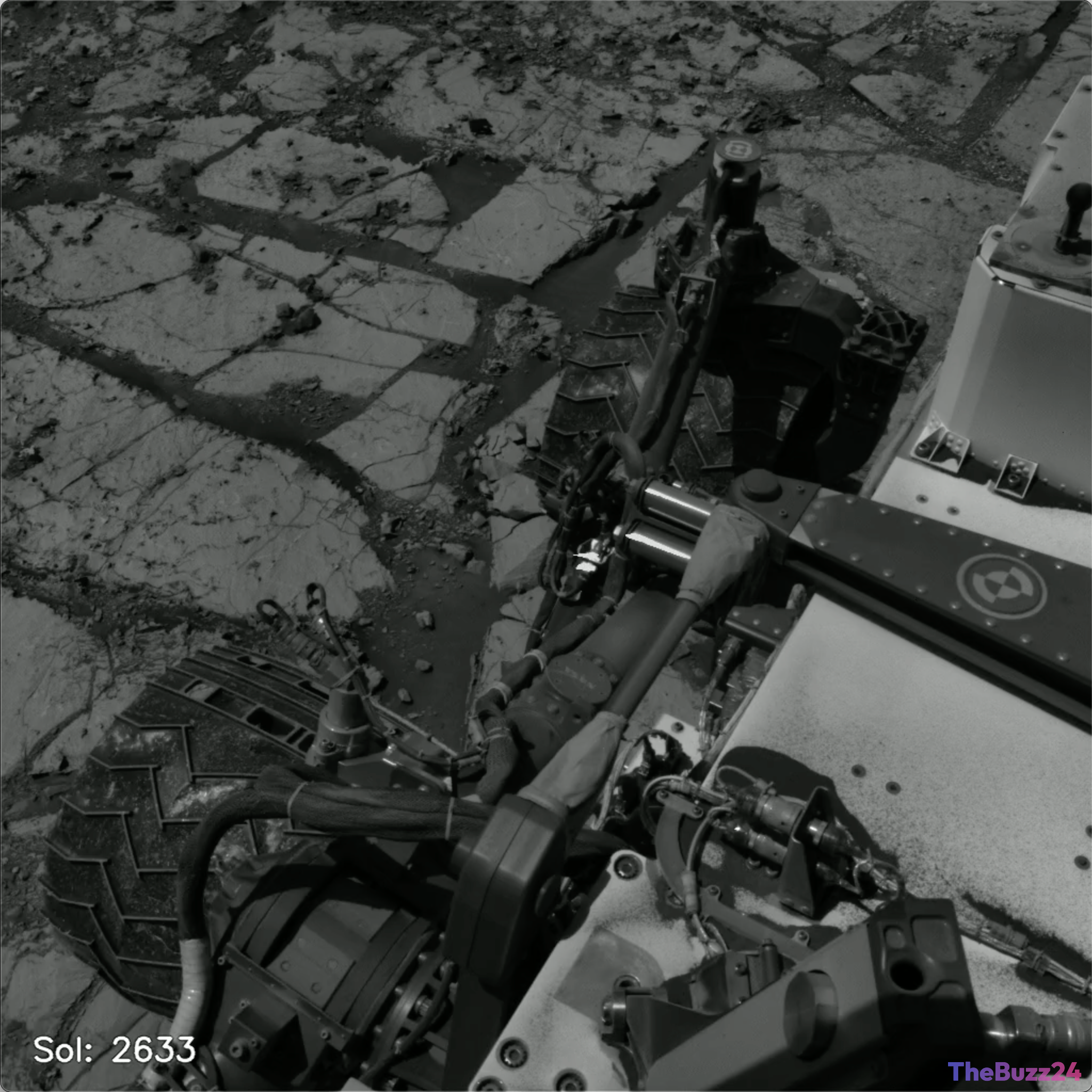
NASA’s Curiosity Mars rover has provided a fascinating look at its journey across the Red Planet through a newly compiled six-year timelapse. Captured using the rover’s right navigation camera mounted on its mast, the sequence of images documents Curiosity’s travels between January 2, 2020, and March 8, 2026. This period spans from Martian day (sol) 2,633 to sol 4,830 of the historic mission, showcasing the rugged terrain the robotic explorer has successfully navigated.
While the images offer a visually compelling record of the rover’s path, they also serve a vital scientific purpose. The camera was positioned to look backward over the rover’s deck, a perspective originally intended to help the science team select rock targets for analysis. However, researchers are now utilizing this specific footage to monitor the movement of sand grains settling on Curiosity’s deck.
By analyzing how these sand particles shift, scientists can differentiate between debris disturbed by the physical vibrations of driving and those moved by Martian wind gusts. This distinction is crucial for gathering new data on seasonal atmospheric variations and wind patterns on Mars. Built by the Jet Propulsion Laboratory (JPL) and managed by Caltech, Curiosity continues to push the boundaries of planetary exploration as part of the broader Mars Exploration Program.
Key Takeaways
- NASA's Curiosity rover captured a six-year driving timelapse on Mars spanning from January 2020 to March 2026.
- The footage, taken by the rover's right navigation camera, helps scientists study atmospheric changes by tracking sand movement on the deck.
- Distinguishing between wind-blown sand and drive-jostled sand provides critical data on Martian seasonal weather patterns.
Editor’s Analysis & Impact
The longevity and adaptability of the Curiosity rover highlight the incredible engineering behind modern deep-space exploration. By repurposing navigation footage meant for rock selection into an atmospheric study tool, the mission team demonstrates the resourcefulness required in planetary science. This research into Martian wind patterns and sand movement is not just academic; it has practical implications for future missions. Understanding the seasonal atmospheric dynamics and dust behavior on Mars is critical for designing next-generation landers, manned habitats, and solar-powered equipment that must withstand the harsh, dusty Martian environment. As Curiosity continues its journey, its ongoing operational success paves the way for more sophisticated robotic and eventually human exploration of the Red Planet.
Frequently Asked Questions
Q: How long has the Curiosity rover been on Mars?
A: Curiosity landed on Mars in August 2012, meaning it has been exploring the Red Planet for well over a decade, far exceeding its original two-year primary mission.
Q: What is a 'sol' on Mars?
A: A sol is a Martian solar day, which is slightly longer than an Earth day, lasting approximately 24 hours, 39 minutes, and 35 seconds.
Q: How does tracking sand on the rover's deck help scientists?
A: By observing how sand grains shift, scientists can differentiate between movements caused by the rover's vibrations and those caused by wind. This helps them map seasonal wind patterns and atmospheric changes on Mars.
AI Disclosure: This article is based on verified data and official reports. Our Team and AI have cross-referenced every financial detail with primary sources to ensure total accuracy.
More from this Category