Ancient Microbes Rewrote the Rules of Early Earth Survival
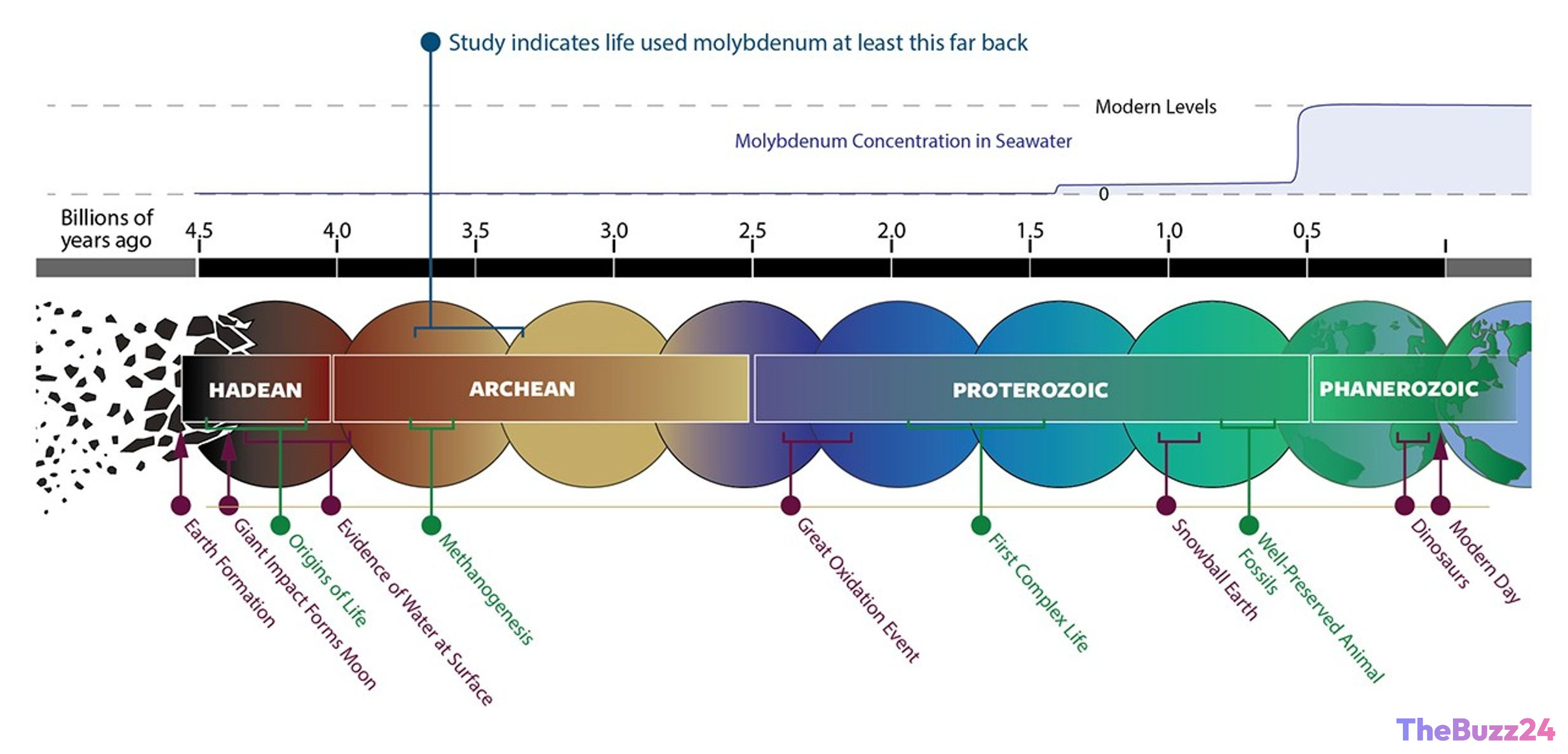
New scientific findings have pushed back the timeline of biological evolution, revealing that life on Earth was utilizing molybdenum as a catalyst as early as 3.3 to 3.7 billion years ago. This discovery challenges the long-held consensus that early organisms relied primarily on tungsten, only transitioning to molybdenum after the Great Oxidation Event increased the metal’s availability in the oceans.
Researchers determined that ancient microorganisms were far more sophisticated than previously believed, successfully harvesting molybdenum even when it was incredibly scarce. It is believed that these early life forms likely accessed the metal through localized, mineral-rich environments, such as deep-sea hydrothermal vents. This indicates that the catalytic advantages of molybdenum were significant enough to drive early life to develop complex acquisition strategies despite the resource-poor conditions of the Archean Eon.
This research suggests that early biological systems were remarkably adaptable, integrating both molybdenum and tungsten into their metabolic processes simultaneously rather than following a linear progression. By demonstrating that life could thrive under such severe constraints, the study provides a new framework for understanding the resilience of the early biosphere. These insights are now reshaping the field of astrobiology, as they suggest that life may be capable of adapting to a wider variety of chemical inventories than previously assumed.
Key Takeaways
- Microbes were using molybdenum for biological processes up to 3.7 billion years ago, significantly earlier than previously estimated.
- Early life forms demonstrated high adaptability by sourcing rare metals from extreme environments like hydrothermal vents.
- The findings suggest that early biological systems were more complex and capable of multi-metal metabolic integration than once thought.
Editor’s Analysis & Impact
This discovery represents a paradigm shift in our understanding of early biological evolution. By proving that life was capable of sophisticated metal utilization during the Archean Eon, the research challenges the traditional ‘simple-to-complex’ evolutionary narrative. From an industry perspective, this has significant implications for astrobiology and the search for life on exoplanets. If life can thrive in resource-constrained, metal-poor environments, the ‘habitable zone’ criteria for other planets may need to be significantly expanded. Furthermore, this research highlights the importance of interdisciplinary studies combining geochemistry and evolutionary biology. Future exploration missions will likely use these findings to refine the chemical markers they look for in planetary atmospheres, potentially increasing the probability of detecting non-Earth-like biological signatures in the coming decades.
Frequently Asked Questions
Q: Why is molybdenum important for biological life?
A: Molybdenum is a critical component in enzymes that accelerate essential biochemical reactions, particularly those involved in the nitrogen cycle, which is fundamental for life.
Q: How does this discovery affect the search for extraterrestrial life?
A: It suggests that life can adapt to environments with limited resources, meaning scientists should look for a wider range of chemical signatures on other planets rather than just those that mimic modern Earth.
AI Disclosure: This article is based on verified data and official reports. Our Team and AI have cross-referenced every financial detail with primary sources to ensure total accuracy.
More from this Category