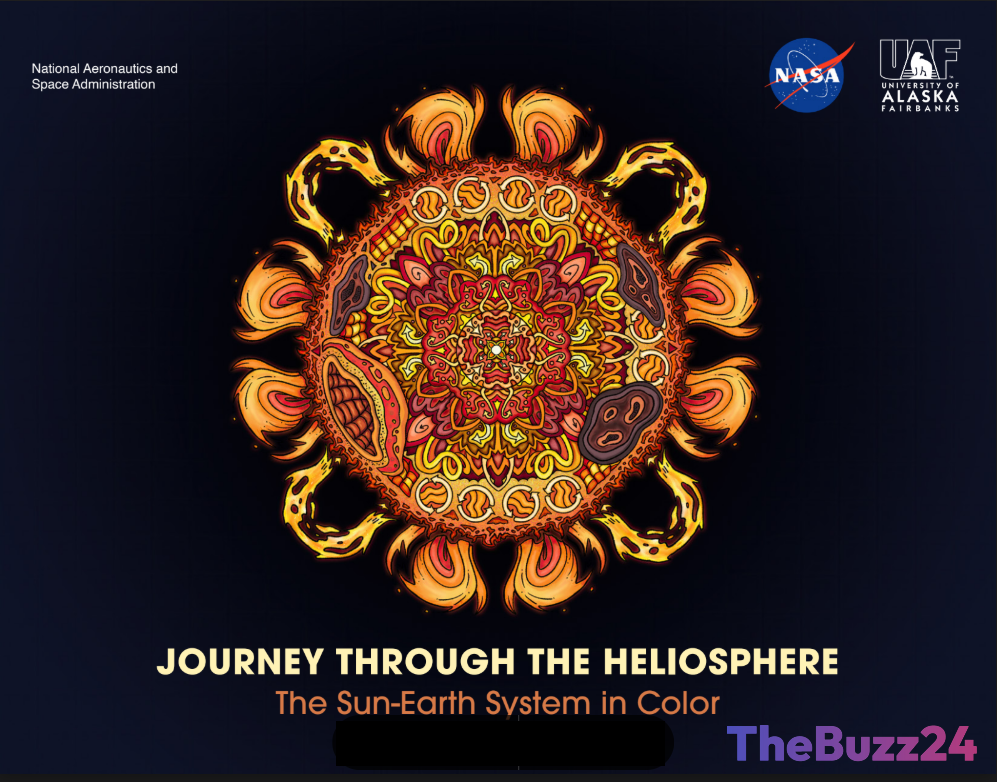
NASA Merges Heliophysics with Indigenous Heritage in Innovative Educational Resource
NASA has unveiled a creative educational tool titled “Journey Through the Heliosphere: The Sun-Earth System in Color,” a 28-page coloring book designed to demystify complex space science for students and adults alike. Developed over a two-year period, the project is a collaborative effort between the space agency, the University of Alaska Fairbanks, Oregon State University, and various outreach specialists. The initiative aims to make the study of heliophysics—the physics of the Sun and its interaction with the solar system—more engaging and accessible to a broader audience.
The resource explores ten fundamental scientific themes, ranging from solar winds and magnetic fields to the mechanics of eclipses and the formation of the aurora. What sets this project apart from traditional educational materials is its intentional integration of cultural perspectives. The book features a reference chart that translates key solar terminology into seven Indigenous Alaskan languages. This component was realized through the direct involvement of 13 Alaska Native language speakers, with supplementary digital resources provided to assist users in mastering the pronunciation of these heritage terms.
Operating under the Heliophysics Education Activation Team (HEAT) initiative, the project seeks to move beyond the limitations of standard textbooks by offering a tactile, interactive learning experience. By weaving together rigorous scientific data with the preservation of linguistic diversity, the creators hope to foster a deeper community connection to space science. This initiative underscores a growing trend in academic and scientific outreach, where the goal is to spark curiosity and promote scientific literacy through creative, inclusive, and culturally respectful lenses.
Key Takeaways
- NASA released a 28-page coloring book titled 'Journey Through the Heliosphere' to teach complex solar science to students and adults.
- The book incorporates Indigenous Alaskan languages, featuring solar terminology translated by 13 Native speakers to promote linguistic diversity.
- The project is part of the Heliophysics Education Activation Team (HEAT) initiative, designed to make space science more interactive and culturally inclusive.
Editor’s Analysis & Impact
This initiative represents a significant shift in how scientific institutions approach public engagement. By moving away from purely technical communication and toward a model that honors cultural heritage, NASA is effectively lowering the barrier to entry for STEM education. The integration of Indigenous languages not only preserves cultural knowledge but also provides a unique hook for students who might otherwise feel disconnected from abstract space concepts. From a market perspective, this highlights a growing demand for ‘edutainment’ resources that offer multi-disciplinary value. As educational institutions continue to prioritize diversity and inclusion, we can expect to see more collaborative projects that blend hard sciences with humanities, ultimately creating a more scientifically literate and culturally aware public. This strategy is likely to become a blueprint for future outreach programs seeking to maximize engagement across diverse demographics.
Frequently Asked Questions
Q: Who is the target audience for the new NASA coloring book?
A: The coloring book is designed for students in grades 6-12, though it is also intended to be an engaging resource for adults.
Q: How does the book incorporate Indigenous culture?
A: The book includes a reference chart that translates scientific solar terminology into seven Indigenous Alaskan languages, supported by digital audio resources for pronunciation.
Q: Where can the public access this educational resource?
A: The full coloring book and its individual sections are available for download through the official NASA science portal.
AI Disclosure: This article is based on verified data and official reports. Our Team and AI have cross-referenced every financial detail with primary sources to ensure total accuracy.
More from this Category