Venice Biennale Under Fire: Russia’s Return Sparks Protests and Ethical Debates
The prestigious Venice Biennale is facing significant backlash and ethical scrutiny following Russia’s return to the international arts exhibition for the first time since the full-scale invasion of Ukraine. The controversial decision has ignited protests from activists and condemnation from international bodies, raising questions about the role of art in times of conflict.
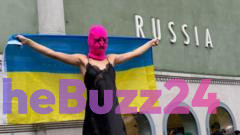
Punk protest group Pussy Riot, alongside Ukrainian-founded feminist activist group Femen, staged a dramatic demonstration outside the Russian national pavilion. Dressed in black with vibrant pink balaclavas, the activists disrupted the event, shouting slogans like “Russia kills! Biennale exhibits!” and displaying posters that read “Curated by Putin, dead bodies included.” Nadya Tolokonnikova of Pussy Riot argued that Russia’s participation is a form of cultural warfare, aiming to conquer the West through art and culture, not just military means.
The reinstatement of Russia has drawn sharp criticism, with the European Commission strongly condemning the move and threatening to withdraw €2 million in funding. The Commission views allowing Russia to be showcased on such a prominent platform as a violation of ethical standards associated with the grant. While Italy’s culture minister has opted out of attending the public opening, Deputy Prime Minister Matteo Salvini has defended Russia’s inclusion, stating that “No pavilion should be excluded.”
The controversy extends beyond Russia’s participation. The entire international jury resigned last week after a statement that implicitly referred to countries with leaders wanted for suspected war crimes, including Russia and Israel. Protests have also targeted the Israeli exhibit, with activists denouncing it as a “Genocide Pavilion.” The Biennale’s president, Pietrangelo Buttafuoco, has defended the decision to include all nations, accusing critics of fostering “intolerance” and censorship, while arguing that the Biennale should be a global meeting place for art, irrespective of national affiliations.
Key Takeaways
- Russia's return to the Venice Biennale has sparked widespread protests and condemnation due to the ongoing war in Ukraine.
- The European Commission has threatened to withdraw funding over ethical concerns, while some Italian officials support Russia's inclusion.
- The controversy highlights the complex relationship between art, politics, and international conflict, with activists and officials offering opposing viewpoints.
Editor’s Analysis & Impact
The Venice Biennale’s decision to allow Russia’s participation amidst the ongoing conflict in Ukraine has ignited a fierce debate about the intersection of art, politics, and international relations. This situation underscores the challenges faced by global cultural institutions in navigating geopolitical tensions. While some argue for the separation of art from politics, allowing a platform for nations engaged in conflict risks being perceived as tacit approval or a whitewashing of atrocities. The backlash and potential funding withdrawal signal a growing demand for ethical accountability in the arts world, suggesting that future international events may face increased pressure to align their programming with prevailing global values and human rights concerns. This incident could influence how similar cultural exchanges are managed in politically charged environments.
Frequently Asked Questions
Q: Why is Russia's participation in the Venice Biennale controversial?
A: Russia's participation is controversial because it marks the country's return to the prestigious arts exhibition for the first time since its full-scale invasion of Ukraine. Critics argue that showcasing Russia's national pavilion at this time is ethically problematic and could be seen as legitimizing or ignoring the ongoing conflict and its consequences.
Q: What actions have been taken by protesters?
A: Protesters, including groups like Pussy Riot and Femen, have staged demonstrations outside the Russian pavilion, shouting slogans, setting off smoke flares, and displaying posters critical of Russia's actions in Ukraine. There have also been protests targeting the Israeli exhibit.
Q: What is the stance of the European Commission?
A: The European Commission has strongly condemned Russia's reinstatement at the Biennale and has threatened to withdraw €2 million in funding, citing ethical concerns about allowing an aggressor nation to be showcased on such a prominent international platform.
AI Disclosure: This article is based on verified data and official reports. Our Team and AI have cross-referenced every financial detail with primary sources to ensure total accuracy.
More from this Category