Billionaires and Bilateral Talks: Inside the US President’s High-Stakes Beijing Summit
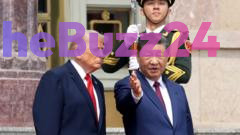
The President of the United States has concluded a crucial two-day diplomatic mission to Beijing, aimed at recalibrating relations between the world’s two largest economies. The state visit commenced with a grand welcoming ceremony at the Great Hall of the People, complete with a military salute and a formal red-carpet reception. Accompanying the political delegation was an elite cohort of American corporate leaders, including Apple CEO Tim Cook, Tesla and SpaceX chief Elon Musk, Nvidia’s Jensen Huang, and BlackRock’s Larry Fink, underscoring the heavy emphasis on technological and economic collaboration.
During their bilateral meetings, the US President and Chinese President Xi Jinping engaged in deep discussions regarding the global ramifications of their diplomatic ties. President Xi framed the summit as a historic turning point, noting that both nations could find common ground and align their strategic objectives despite an increasingly volatile global landscape. In response, the US President praised the hospitality of the hosts and reiterated that direct, face-to-face communication remains the most effective tool for resolving long-standing geopolitical and economic friction.
The diplomatic itinerary extended beyond formal boardroom negotiations to include cultural outreach, highlighted by a delegation tour of the historic Temple of Heaven. The high-profile visit culminated in a formal state banquet, which brought together key political figures, including US Defense Secretary Pete Hegseth, alongside the visiting corporate executives. This final gathering reinforced both nations’ commitment to keeping communication channels open as they navigate a rapidly evolving international order.
Key Takeaways
- The US President completed a pivotal two-day state visit to Beijing, focusing on stabilizing bilateral relations with China.
- A high-powered delegation of American tech and finance executives, including the CEOs of Apple, Tesla, Nvidia, and BlackRock, accompanied the President to emphasize economic ties.
- The summit combined formal political discussions, cultural diplomacy at the Temple of Heaven, and a state banquet to foster open communication channels.
Editor’s Analysis & Impact
This high-profile summit underscores a strategic effort by Washington to stabilize its complex relationship with Beijing through economic diplomacy. By bringing heavyweights from the tech and financial sectors—such as Tim Cook and Elon Musk—the US administration is leveraging corporate interdependence as a buffer against geopolitical friction. The presence of these executives highlights that critical issues like semiconductor supply chains, artificial intelligence development, and market access remain at the forefront of bilateral negotiations. While the diplomatic tone of the visit was cooperative, the true test lies in whether these discussions will yield concrete policy changes or ease trade restrictions. Ultimately, while cultural diplomacy and state banquets build goodwill, the deep-seated structural competition between the US and China will continue to challenge global market stability in the long term.
Frequently Asked Questions
Q: Which prominent business executives participated in the US delegation to Beijing?
A: The delegation featured several high-profile American business leaders, including Apple CEO Tim Cook, Tesla and SpaceX CEO Elon Musk, Nvidia CEO Jensen Huang, and BlackRock CEO Larry Fink.
Q: What was the significance of the cultural activities during the state visit?
A: The delegation's tour of the historic Temple of Heaven served as a gesture of cultural diplomacy, aimed at building mutual understanding and softening the tone of high-stakes political negotiations.
Q: Who represented the US defense sector at the concluding state banquet?
A: US Defense Secretary Pete Hegseth attended the final state banquet, highlighting the security and strategic dimensions of the bilateral discussions.
AI Disclosure: This article is based on verified data and official reports. Our Team and AI have cross-referenced every financial detail with primary sources to ensure total accuracy.
More from this Category