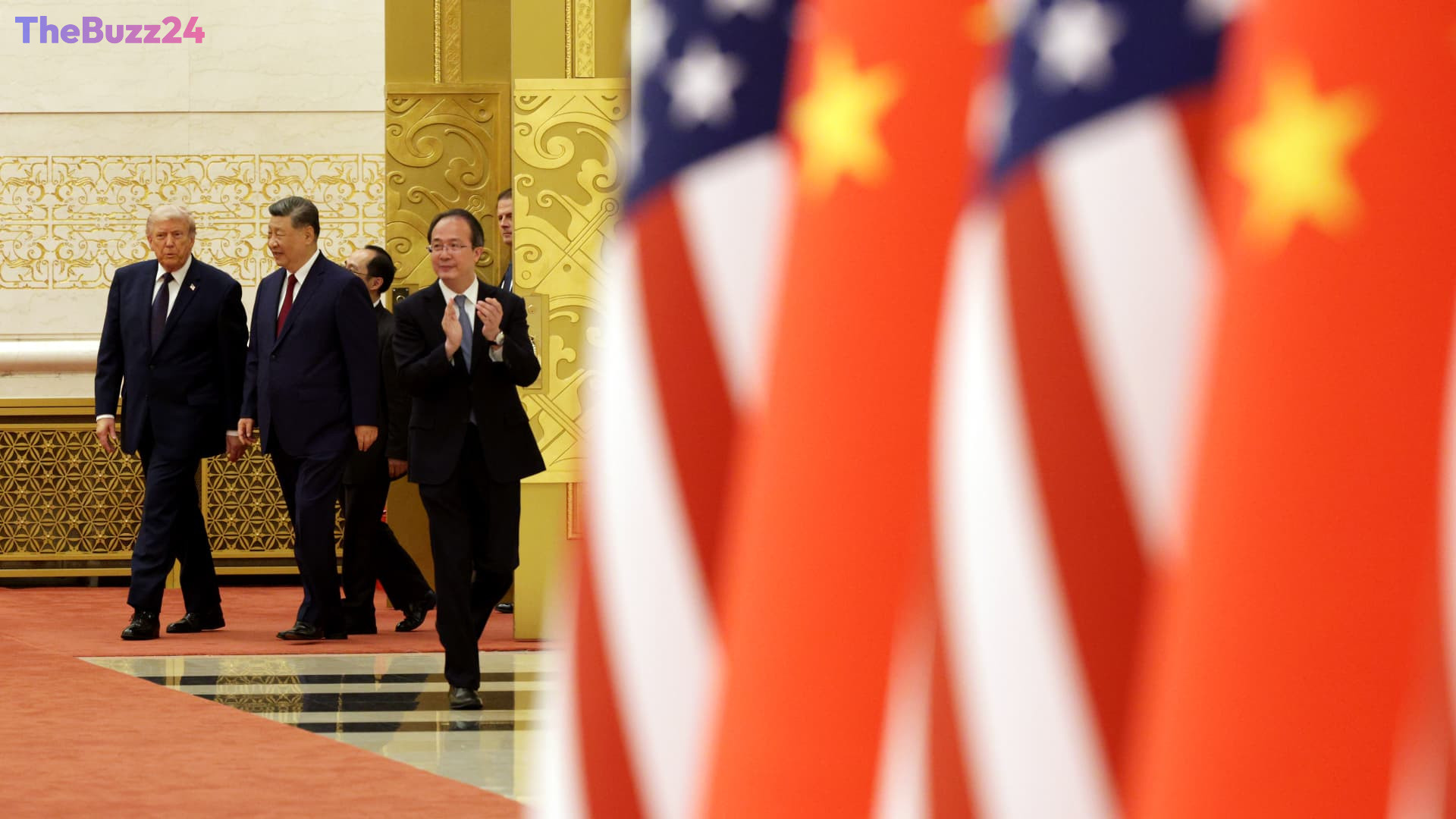
U.S. and China Unveil Framework to De-escalate Agricultural Trade Tensions
The United States and China have established a foundational trade agreement aimed at stabilizing their economic ties by addressing long-standing agricultural disputes. This preliminary accord, forged after high-level discussions, introduces a mechanism to reduce reciprocal tariffs and streamline complex regulatory hurdles that have impeded the flow of farm goods between the two global powers for several years.
This development offers a crucial respite for the American agricultural industry, which has navigated considerable market instability amid heightened trade friction. The framework prioritizes mutual tariff reductions, designed to rejuvenate the competitive edge of U.S. agricultural exports within the vast Chinese market. While still in its initial phases, officials from both nations are pushing for a rapid finalization to re-establish reliable trade routes.
Initial indicators suggest the agreement is already having an effect, with Chinese buyers reportedly increasing their purchases of American commodities, particularly soybeans. Beyond tariff adjustments, the deal also confronts non-tariff barriers that have historically challenged producers. Notably, Beijing has pledged to simplify the registration process for U.S. beef processing plants and to lift previous restrictions on poultry exports from certain American states, providing a significant boost for livestock producers looking to re-enter the Chinese market.
Key Takeaways
- The U.S. and China have reached a preliminary agreement to ease agricultural trade tensions.
- The framework includes reciprocal tariff reductions and addresses non-tariff barriers for U.S. farm products.
- Immediate impacts include increased Chinese purchases of American soybeans and commitments to streamline beef and poultry exports.
Editor’s Analysis & Impact
This initial agricultural trade agreement marks a significant step towards de-escalating the broader economic tensions between the U.S. and China. By targeting the agricultural sector, a key area impacted by previous retaliatory tariffs, both nations are addressing immediate economic concerns. For American farmers, this opens a critical export market, while for China, it helps secure essential food supplies and manage domestic price stability. While the immediate resumption of commodity trade is positive, the path to full trade normalization remains complex. Underlying issues like intellectual property rights and technology policy continue to present challenges, suggesting this agreement is a crucial, yet short-term, reprieve rather than a complete resolution of bilateral trade friction.
Frequently Asked Questions
Q: What is the primary goal of this new trade framework?
A: The main objective is to stabilize the economic relationship between the U.S. and China by reducing agricultural trade barriers, including tariffs and regulatory complexities, that have hindered trade for years.
Q: Which specific U.S. agricultural products are expected to benefit most from this agreement?
A: American soybeans, beef, and poultry are among the key commodities expected to see significant benefits, with Chinese importers already increasing soybean purchases and commitments made to ease restrictions on beef and poultry exports.
Q: Does this agreement resolve all trade disputes between the U.S. and China?
A: No, this is a preliminary agreement focused specifically on agricultural trade. While it de-escalates tensions in this sector, broader geopolitical and economic disagreements, such as those concerning intellectual property and technology, remain unresolved.
AI Disclosure: This article is based on verified data and official reports. Our Team and AI have cross-referenced every financial detail with primary sources to ensure total accuracy.
More from this Category