Justice Department Launches $1.8 Billion Compensation Fund Amid Controversy Over Eligibility
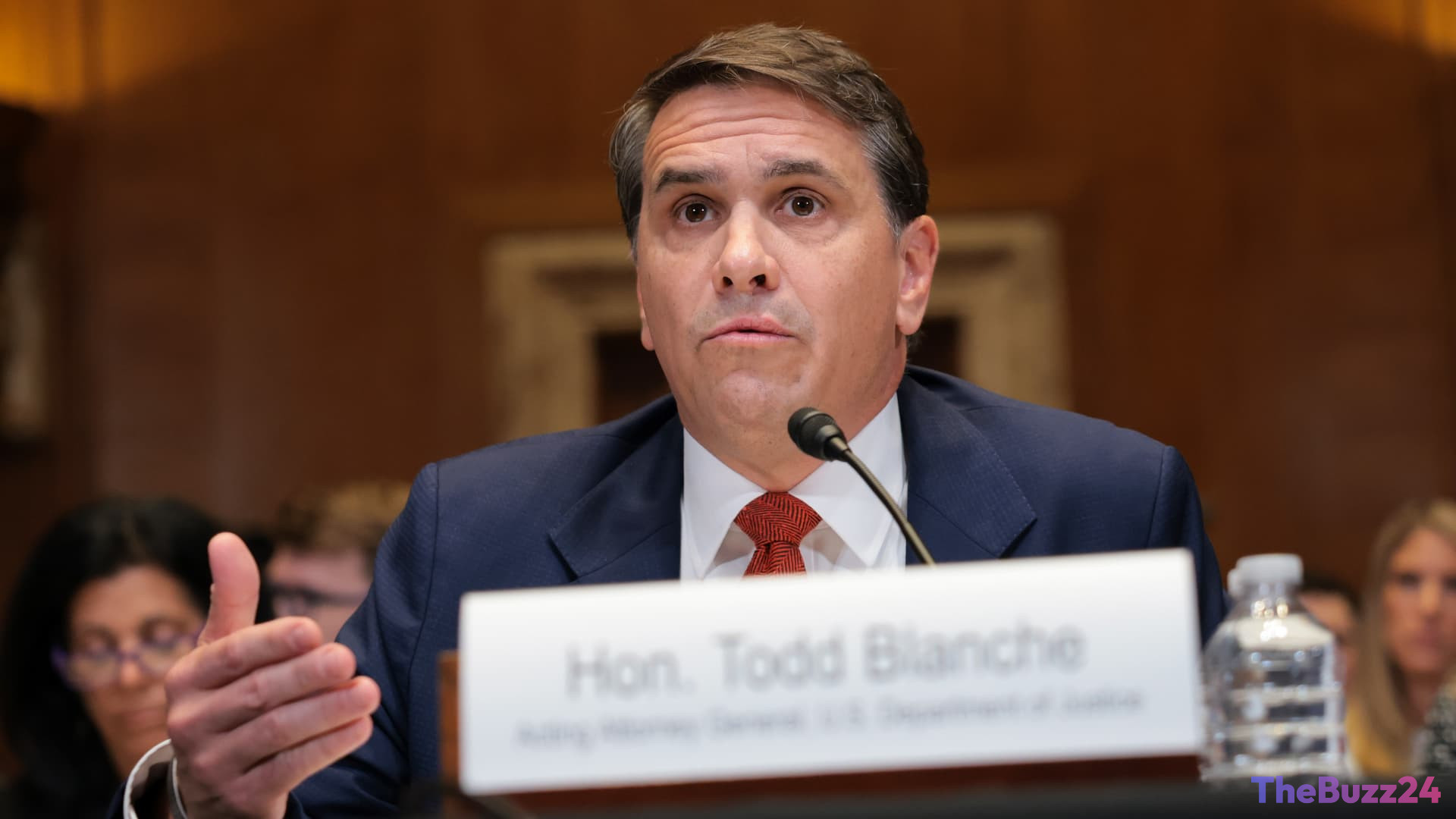
The Department of Justice has officially unveiled a $1.8 billion initiative dubbed the ‘Anti-Weaponization Fund,’ designed to provide financial compensation to individuals who allege they were victims of political targeting during the previous administration. Acting Attorney General Todd Blanche confirmed the program’s broad scope during a Senate appropriations subcommittee hearing, stating that the fund is open to any citizen who submits an application. A newly formed five-member commission will be responsible for establishing the specific eligibility requirements for potential claimants.
The announcement has sparked immediate debate regarding who might qualify for these taxpayer-funded payments. When questioned by lawmakers about whether individuals convicted of crimes related to the January 6 Capitol riot—including members of groups like the Proud Boys or Oath Keepers—could be eligible, Blanche indicated that the final determination lies with the commission rather than his office. Furthermore, while he explicitly stated that members of Donald Trump’s family would be excluded from receiving payouts, he did not rule out the possibility that political donors could qualify, provided they meet the commission’s standards.
This fund was established as a component of a legal settlement that resulted in the withdrawal of a $10 billion lawsuit filed by Donald Trump against the Internal Revenue Service concerning the unauthorized disclosure of his tax records. The initiative has faced significant pushback from critics, including Senator Jack Reed, who expressed concerns that the fund could be utilized as a mechanism to benefit political allies. Blanche defended the program, citing historical precedents for similar compensation structures, though the specific rules for the application process remain forthcoming. The rollout of the fund has also coincided with the resignation of Treasury Department General Counsel Brian Morrissey, fueling further speculation about the internal dynamics surrounding the program’s creation.
Key Takeaways
- The Justice Department has created a $1.8 billion fund to compensate individuals claiming political targeting.
- A five-member commission will determine eligibility, leaving open the possibility that Jan. 6 convicts or political donors could receive payments.
- The fund originated from a settlement ending Donald Trump's $10 billion lawsuit against the IRS regarding his tax returns.
Editor’s Analysis & Impact
The establishment of the ‘Anti-Weaponization Fund’ represents a significant and controversial shift in how the Department of Justice handles claims of political bias. By delegating eligibility criteria to an independent commission, the DOJ has created a layer of ambiguity that invites intense scrutiny from both sides of the political aisle. From a market and institutional perspective, this move sets a complex precedent for how future administrations might settle high-stakes litigation involving government agencies. The potential for the fund to be perceived as a ‘slush fund’ for political allies poses a reputational risk to the DOJ, potentially undermining public trust in federal legal processes. Moving forward, the commission’s transparency—or lack thereof—will be the primary factor in determining whether this program is viewed as a legitimate corrective measure or a politically motivated redistribution of taxpayer resources.
Frequently Asked Questions
Q: Who is eligible to apply for the Anti-Weaponization Fund?
A: According to the Justice Department, any citizen can apply, but the specific eligibility criteria will be determined by a five-member commission that has yet to release its formal rules.
Q: Why was this $1.8 billion fund created?
A: The fund was established as part of a settlement agreement that led Donald Trump to drop a $10 billion lawsuit against the IRS regarding the leak of his tax returns.
AI Disclosure: This article is based on verified data and official reports. Our Team and AI have cross-referenced every financial detail with primary sources to ensure total accuracy.
More from this Category