Flipper Devices Unveils Flipper One: A Linux-Powered Powerhouse for Networking Professionals
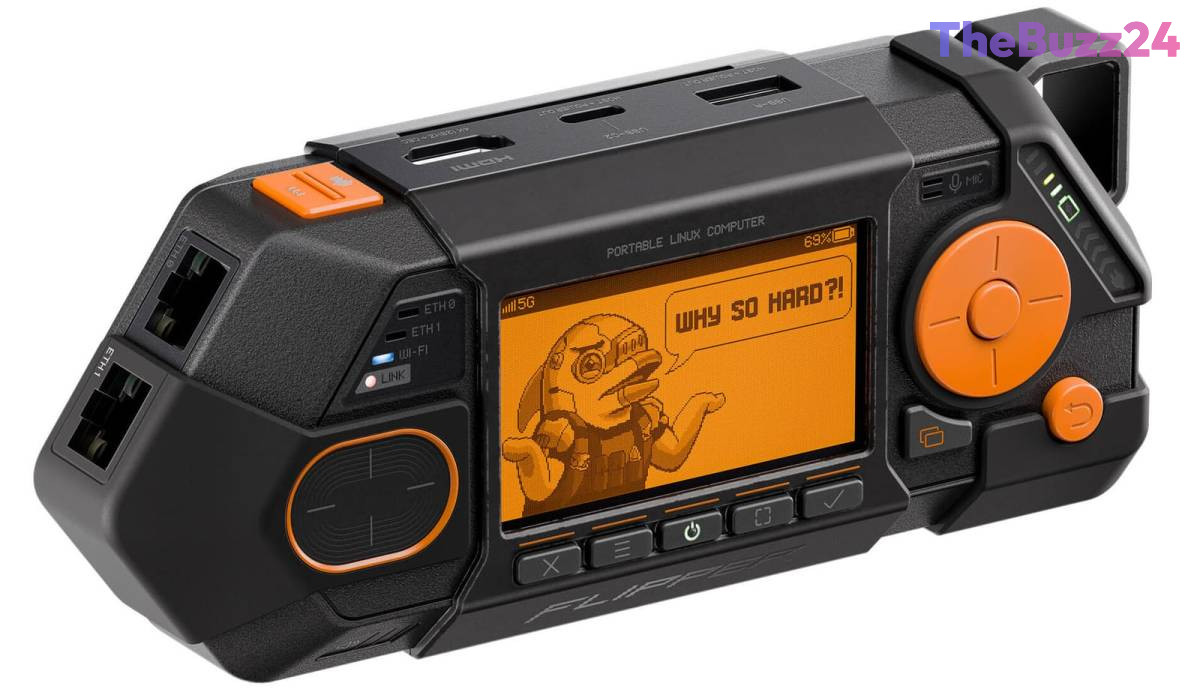
Flipper Devices, the innovators behind the viral Flipper Zero, have officially announced their next major hardware venture: the Flipper One. While the original Flipper Zero gained fame as a versatile multi-tool for radio frequency protocols, the Flipper One represents a significant shift toward high-performance computing. Designed as a portable Linux-based PC and advanced networking hub, the device is engineered to handle complex tasks that far exceed the capabilities of its predecessor.
The hardware architecture of the Flipper One is built for power, featuring an eight-core RK3576 processor, 8GB of RAM, and a Mali-G52 GPU. Notably, the device includes an integrated NPU, enabling the local execution of AI models. To maintain reliability, the device utilizes a secondary Raspberry Pi RP2350 microcontroller, which manages power, display, and input subsystems independently of the main Linux environment. Connectivity is a cornerstone of the design, boasting dual Gigabit Ethernet ports, Wi-Fi 6E, and an M.2 expansion slot for 5G modems, high-speed storage, or software-defined radio (SDR) modules.
To complement the hardware, the company is developing Flipper OS, a custom operating system designed to simplify profile management and system resets without the need for manual SD card flashing. The interface, dubbed FlipCTL, is being optimized specifically for the device’s compact display. Flipper Devices is currently working with Collabora to ensure robust mainline Linux Kernel support and is actively encouraging the open-source community to participate in the software ecosystem. While the project remains in development, the company is targeting a competitive base price of under $350.
Key Takeaways
- The Flipper One is a high-performance, Linux-based networking tool featuring an eight-core processor and 8GB of RAM.
- The device includes an M.2 expansion slot for modular upgrades like 5G connectivity, SSDs, or SDR modules.
- Flipper Devices is developing a custom OS and interface, with a target price point of under $350.
Editor’s Analysis & Impact
The transition from the Flipper Zero—a niche, enthusiast-focused radio tool—to the Flipper One marks a strategic pivot toward the professional networking and cybersecurity market. By integrating a full Linux environment and AI-capable hardware, Flipper Devices is positioning itself to compete with portable industrial testing equipment that typically costs significantly more. The inclusion of an M.2 slot and dual Ethernet ports suggests the company is targeting network engineers, penetration testers, and developers who require a ‘Swiss Army knife’ for field operations. If the company successfully maintains its open-source ethos while delivering a stable, user-friendly Linux experience, the Flipper One could disrupt the market for portable diagnostic hardware, potentially setting a new standard for accessible, high-performance computing in the field.
Frequently Asked Questions
Q: How does the Flipper One differ from the Flipper Zero?
A: The Flipper Zero is primarily a radio frequency multi-tool, whereas the Flipper One is a full-fledged Linux-based portable PC designed for advanced networking, AI tasks, and modular hardware expansion.
Q: Will the Flipper One support cellular connectivity?
A: Yes, the device features an M.2 slot that allows users to add 5G modems, though these modules are expected to be sold separately from the base unit.
AI Disclosure: This article is based on verified data and official reports. Our Team and AI have cross-referenced every financial detail with primary sources to ensure total accuracy.
More from this Category