Mali Capital Faces Economic Paralysis as Militant Blockade Tightens
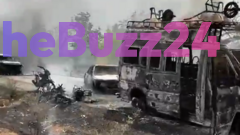
Bamako, the capital of Mali, is currently grappling with a severe humanitarian and economic crisis as militant groups intensify a strategic blockade aimed at isolating the city. The Jama’at Nusrat al-Islam wal-Muslimin (JNIM) has escalated its campaign by targeting critical transport infrastructure, specifically along a major highway located 45 kilometers west of the capital. Recent attacks have resulted in the destruction of numerous fuel tankers and commercial transport vehicles, forcing a disruption in the flow of essential goods into the landlocked nation.
This blockade has created a volatile economic environment, as Mali remains heavily dependent on imports from neighboring coastal states like Senegal and Ivory Coast. The resulting supply chain bottlenecks have caused a sharp spike in the cost of basic necessities, including food and fuel. The timing of this crisis is particularly devastating for local families, as it coincides with the lead-up to the Eid al-Adha holiday, a period typically marked by increased demand for livestock and household goods that many citizens can no longer afford.
In response to the mounting pressure, the military government under General Assimi Goïta has deployed security measures to protect vital supply convoys. These efforts include the utilization of the Russian paramilitary organization Africa Corp to provide aerial surveillance and protection for transport vehicles. Despite these tactical interventions and the formation of specialized security units, the insurgency remains a persistent threat to national stability, further complicated by recent high-profile attacks on government officials. As the blockade continues, residents of Bamako face not only rising costs but also a significant reduction in their ability to travel safely, casting a shadow over the country’s immediate economic future.
Key Takeaways
- Militant group JNIM has effectively crippled key supply routes into Bamako, leading to a severe shortage of essential goods.
- The blockade has triggered rapid inflation, making basic food and fuel increasingly inaccessible for the average Malian citizen.
- The Malian government is relying on the Russian paramilitary group Africa Corp to secure supply lines, though the insurgency continues to challenge state control.
Editor’s Analysis & Impact
The situation in Mali represents a critical inflection point for the Sahel region, where the intersection of insurgency and economic fragility threatens to destabilize the state. The blockade is not merely a tactical military maneuver but an economic weapon designed to erode public confidence in the central government. By targeting supply chains, the JNIM is effectively weaponizing the country’s landlocked geography. The reliance on the Africa Corp for security underscores a significant shift in Mali’s geopolitical alignment, moving away from traditional Western security partnerships. Moving forward, the inability to secure these routes will likely lead to increased humanitarian aid dependency, potential civil unrest, and a long-term contraction of the local economy. The broader implication is a potential domino effect of instability that could further complicate regional trade and security cooperation across West Africa.
Frequently Asked Questions
Q: What is the primary cause of the current crisis in Mali's capital?
A: The crisis is driven by an intensified blockade by the militant group JNIM, which is systematically destroying transport vehicles and cutting off supply routes to Bamako.
Q: How is the government attempting to mitigate the impact of the blockade?
A: The military government is using specialized security units and the Russian paramilitary group Africa Corp to provide aerial protection and escorts for essential supply convoys.
AI Disclosure: This article is based on verified data and official reports. Our Team and AI have cross-referenced every financial detail with primary sources to ensure total accuracy.
More from this Category