Tragedy Strikes Greece as Firefighting Helicopters Collide During Wildfire Response
A mid-air collision between two firefighting helicopters in Greece has resulted in the deaths of two crew members, while two others managed to survive the crash. The incident occurred approximately 65 kilometers west of Athens as the aircraft were engaged in efforts to suppress a significant wildfire burning along the Attica-Boeotia border. Footage of the event captured one Bell helicopter striking the rotors of the other, causing it to ignite and plummet into a ravine.
The victims have been identified as a Danish pilot and a Greek fire service liaison officer. Following the collision, the second helicopter was forced to perform an emergency landing in a nearby area of low vegetation. The two individuals aboard that aircraft—a British pilot and a Greek coordinator—survived the impact with minor injuries and were transported to a hospital for observation. Authorities have since grounded all Bell helicopters operating within the country as a precautionary measure while an investigation into the circumstances of the crash proceeds.
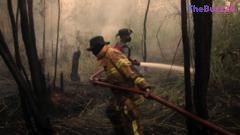
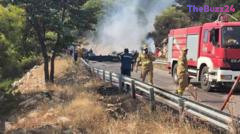
This disaster unfolds against the backdrop of an intense wildfire season across Southern Europe, where prolonged heatwaves have created hazardous conditions. More than 500 firefighters have been deployed in Greece to combat blazes across multiple regions, including Porto Germeno and Megara. While the immediate firefighting operations continue with other aircraft, such as Erickson Air-Cranes and Canadair water-bombers, the loss of the crew has prompted an outpouring of grief from government officials, including Prime Minister Kyriakos Mitsotakis, who extended his condolences to the families of the deceased.
Key Takeaways
- Two crew members, a Danish pilot and a Greek liaison officer, were killed in a mid-air collision between two firefighting helicopters.
- Two survivors, a British pilot and a Greek coordinator, were hospitalized with minor injuries after an emergency landing.
- All Bell helicopters in Greece have been grounded pending an investigation into the fatal accident.
Editor’s Analysis & Impact
The tragic collision highlights the extreme risks inherent in aerial firefighting, particularly during the intense, high-pressure conditions of a severe wildfire season. As climate change contributes to more frequent and volatile fire events across Europe, the demand for aerial support has surged, placing immense strain on both equipment and personnel. This incident serves as a stark reminder of the human cost associated with emergency response efforts. Moving forward, the aviation industry and government agencies will likely face increased scrutiny regarding safety protocols, pilot fatigue, and the maintenance of aging fleets. The grounding of the Bell helicopters will temporarily reduce firefighting capacity in Greece, potentially complicating containment efforts and forcing a reliance on alternative aircraft, which could impact the broader strategy for managing the ongoing wildfire crisis in the region.
Frequently Asked Questions
Q: What caused the helicopter collision in Greece?
A: The two Bell helicopters collided mid-air while participating in firefighting operations near the Attica-Boeotia border. One aircraft struck the propellers of the other, leading to a crash.
Q: Are firefighting operations in Greece continuing after the crash?
A: Yes, while all Bell helicopters have been grounded for safety, other firefighting assets, including Erickson Air-Cranes, Chinook helicopters, and Canadair water-bombing aircraft, remain active in the region.
AI Disclosure: This article is based on verified data and official reports. Our Team and AI have cross-referenced every financial detail with primary sources to ensure total accuracy.
More from this Category