XCENA Secures $135 Million to Tackle AI Data Bottlenecks with Memory-Centric Chips
Semiconductor startup XCENA has successfully closed a $135 million Series B funding round, bringing its total capital raised to $185 million and valuing the company at $570 million. The firm is positioning itself to solve one of the most critical challenges in modern artificial intelligence: the data movement bottleneck. While much of the tech industry remains focused on raw processing power, XCENA is prioritizing the efficiency of data transit between memory and processors, a factor that frequently creates a performance ceiling for large-scale AI models.
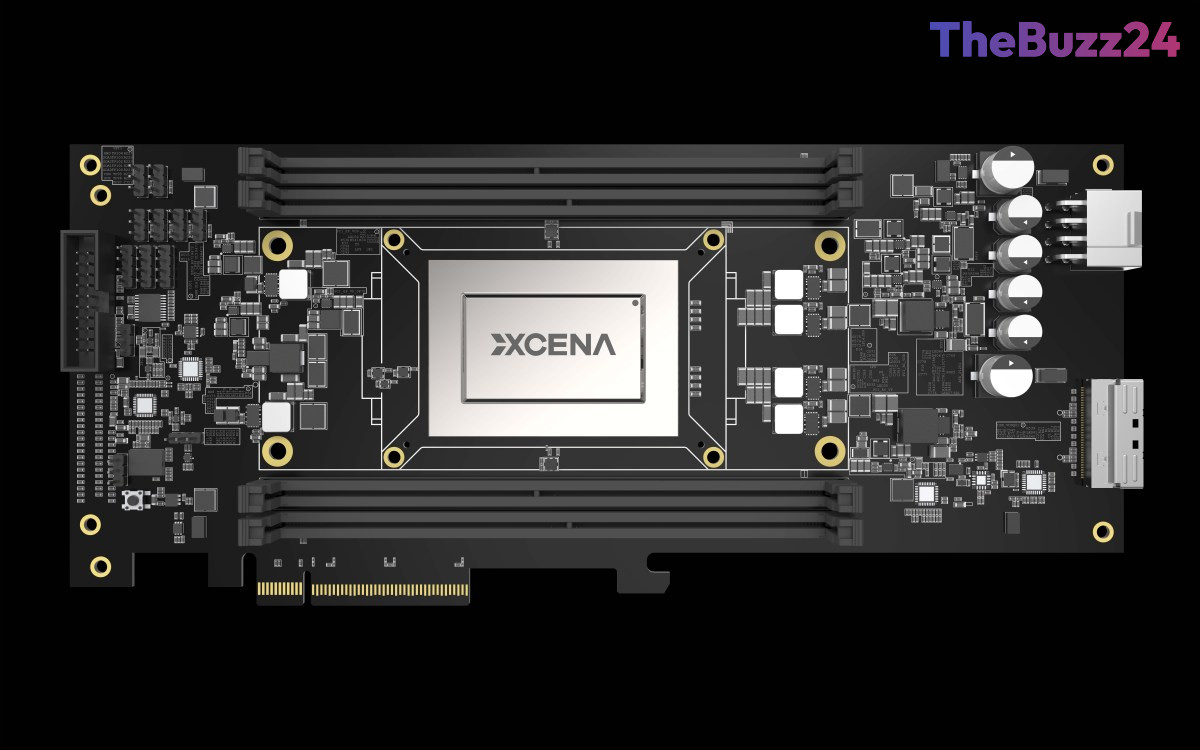
Central to the company’s strategy is the MX1 chip, a specialized component that integrates Compute Express Link (CXL) technology with RISC-V based cores. By embedding computational capabilities directly into the memory module, the MX1 significantly reduces the energy-intensive data transfers that typically occur during AI inference. This architectural shift could prove transformative for hyperscale data centers, potentially allowing for the consolidation of workloads that currently require ten servers into a single, highly efficient unit.
Founded in 2022 by former executives from Samsung and SK Hynix, XCENA is carving out a competitive niche against established industry players like Marvell and Astera Labs. The company’s design philosophy centers on thousands of small, specialized cores optimized for data orchestration rather than general-purpose computing. With this latest infusion of capital, XCENA is preparing for mass production of the MX1 via Samsung’s foundry lines, with a commercial rollout targeted for 2027.
Key Takeaways
- XCENA raised $135 million in Series B funding, reaching a total valuation of $570 million.
- The MX1 chip utilizes CXL technology and RISC-V cores to perform computation directly within memory, bypassing traditional data bottlenecks.
- The company plans to begin mass production of the MX1 in late 2026, with a full commercial launch expected in 2027.
Editor’s Analysis & Impact
The semiconductor industry is currently undergoing a paradigm shift where memory bandwidth, rather than raw clock speed, has become the primary constraint for AI development. XCENA’s focus on memory-centric architecture directly addresses the ‘memory wall’ that limits the performance of GPUs in large-scale inference tasks. By leveraging CXL and RISC-V, the company is positioning itself to capture significant market share in the data center infrastructure space. If successful, the MX1 chip could drastically lower the total cost of ownership for AI-heavy enterprises by reducing server density requirements. However, the company faces stiff competition from well-capitalized incumbents. The success of this venture will depend heavily on the seamless integration of their proprietary cores into existing data center ecosystems and the timely execution of their 2026 manufacturing roadmap.
Frequently Asked Questions
Q: What is the primary problem XCENA is trying to solve?
A: XCENA is addressing the 'data movement bottleneck,' where the time and energy required to move data between memory and processors limits the efficiency of AI infrastructure.
Q: How does the MX1 chip differ from traditional processors?
A: Unlike traditional chips that separate processing from memory, the MX1 integrates computational capabilities directly into the memory module using CXL technology and RISC-V cores, allowing for faster and more energy-efficient data processing.
AI Disclosure: This article is based on verified data and official reports. Our Team and AI have cross-referenced every financial detail with primary sources to ensure total accuracy.
More from this Category