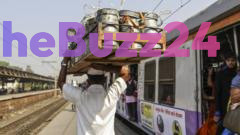
The Uncertain Future of Mumbai’s Legendary Dabbawala Network
For more than a century, the dabbawalas of Mumbai have served as the backbone of the city’s professional workforce. Renowned for their intricate, non-digital logistics system, these delivery workers utilized a complex network of alphanumeric codes to transport millions of home-cooked meals across the city’s sprawling railway system with near-perfect precision. Their operation was long celebrated as a global gold standard for efficiency, drawing admiration from international business schools and serving as a symbol of order within India’s bustling financial hub.
Today, however, this historic trade is grappling with an existential threat. The COVID-19 pandemic acted as a primary disruptor, as the sudden transition to remote and hybrid work models caused a collapse in the daily demand for lunchbox deliveries. Even as Mumbai has returned to full activity, the permanent shift in corporate culture has left the delivery network with only a fraction of its previous clientele. Statistics indicate a sharp decline in the workforce, with the number of registered dabbawalas dropping from roughly 4,500 in 2018 to approximately 1,500 today.
Compounding these challenges is the rapid rise of digital convenience. The widespread adoption of food delivery applications and the emergence of cloud kitchens have provided office workers with instant, diverse dining alternatives that compete directly with the traditional home-cooked meal model. As a result, many veteran dabbawalas have been forced to pivot to more stable sectors, such as general labor or ride-sharing, to cope with the rising cost of living.
For the remaining workers, the profession has become increasingly grueling, often requiring 15-hour days to maintain a livable income. While industry leaders are attempting to modernize by introducing shift-based models, the future remains precarious. With younger generations increasingly pursuing careers in the digital economy, the traditional dabbawala service faces the risk of fading into history, struggling to maintain relevance in a rapidly digitizing urban landscape.
Key Takeaways
- The number of active Mumbai dabbawalas has plummeted by two-thirds since 2018, falling from 4,500 to 1,500.
- The shift toward remote and hybrid work models has permanently altered the demand for traditional daily lunchbox deliveries.
- Modern food delivery apps and cloud kitchens have created significant competitive pressure, forcing many traditional workers to seek alternative employment.
Editor’s Analysis & Impact
The decline of the Mumbai dabbawala network serves as a poignant case study on the vulnerability of traditional, labor-intensive service models in the face of digital disruption. While the dabbawalas were once lauded for their ‘Six Sigma’ level of efficiency, their reliance on manual, non-digital processes has become a liability in an era of instant, app-based gratification. The broader implication is a shift in urban labor dynamics where legacy systems are being rapidly replaced by scalable, tech-enabled platforms. For the dabbawalas to survive, they must likely transition from a purely logistical service to a hybrid model that integrates with modern digital infrastructure, or risk becoming a cultural relic. The loss of this workforce represents not just an economic shift, but the erosion of a unique, community-centric logistical tradition that defined Mumbai for generations.
Frequently Asked Questions
Q: Why has the number of dabbawalas decreased so significantly?
A: The decline is primarily driven by the shift to remote and hybrid work models following the pandemic, combined with increased competition from modern food delivery apps.
Q: What is the current status of the dabbawala profession?
A: The profession is currently in a state of crisis, with many remaining workers forced to work multiple jobs or long hours to survive, while the younger generation increasingly opts for more stable, modern career paths.
AI Disclosure: This article is based on verified data and official reports. Our Team and AI have cross-referenced every financial detail with primary sources to ensure total accuracy.
More from this Category