Hidden in the Canopy: Scientists Confirm New Primate Species in the Democratic Republic of Congo
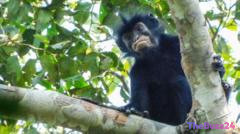
Deep within the dense, high-altitude tropical forests of the Democratic Republic of Congo, researchers have officially confirmed the discovery of a new primate species. Characterized by its striking black face and vibrant pinkish-orange lips, this newly identified monkey resides high in the tree canopies of Lomami National Park, located in the central-eastern region of the country. The confirmation marks a significant milestone for global biodiversity and primate research.
The journey to identifying this unique primate began more than a decade ago. Conservationists first caught a fleeting glimpse of the animal in 2008. However, because of the dense forest terrain and the species’ elusive nature, it took another ten years before a second sighting in 2018 prompted action. Following that second encounter, an international coalition of scientists and researchers launched a dedicated expedition to locate, observe, and formally study the species.
The formal recognition of this species highlights the ecological richness of the Congo Basin, which remains one of the most biodiverse yet understudied regions on Earth. Dr. Karen Laurenson, the Africa director at the Frankfurt Zoological Society, expressed immense enthusiasm over the finding, describing it as an extraordinary reminder of how much of the natural world remains unexplored. Conservationists hope this discovery will bolster protection efforts for Lomami National Park and its unique inhabitants.
Key Takeaways
- A new primate species featuring a black face and pinkish-orange lips has been officially confirmed in the Democratic Republic of Congo.
- The species was first spotted in 2008, but it required a second sighting in 2018 to launch the international scientific expedition that confirmed its existence.
- The discovery highlights the critical ecological importance of Lomami National Park and the need for continued exploration and conservation in the Congo Basin.
Editor’s Analysis & Impact
The confirmation of a new primate species in the Democratic Republic of Congo underscores the vital importance of preserving untouched tropical rainforests, particularly within the Congo Basin. As one of the Earth’s primary carbon sinks, this region is under constant threat from deforestation, mining, and poaching. Discoveries like this provide powerful scientific leverage for conservation organizations to secure funding and demand stricter governmental protections for national parks. Furthermore, it highlights the necessity of long-term ecological monitoring; a decade-long gap between sightings demonstrates that biodiversity conservation requires patience, sustained funding, and international collaboration. Moving forward, this discovery will likely stimulate further scientific expeditions in Central Africa, potentially leading to the identification of other unknown species before they face the threat of extinction.
Frequently Asked Questions
Q: Where was the new monkey species discovered?
A: The species was discovered in the high tree canopies of the dense tropical forests within Lomami National Park, located in the central-eastern region of the Democratic Republic of Congo.
Q: What are the physical characteristics of this new primate?
A: The newly confirmed monkey is distinguished by its unique facial features, which include a black face and prominent pinkish-orange lips.
Q: How long did it take to officially confirm the species?
A: It took a decade. The primate was first spotted by conservationists in 2008, but it was not until a second sighting in 2018 that an international scientific team was assembled to locate and formally study the animal.
AI Disclosure: This article is based on verified data and official reports. Our Team and AI have cross-referenced every financial detail with primary sources to ensure total accuracy.
More from this Category