Nvidia Partners with Unitree to Democratize Humanoid Robotics Research
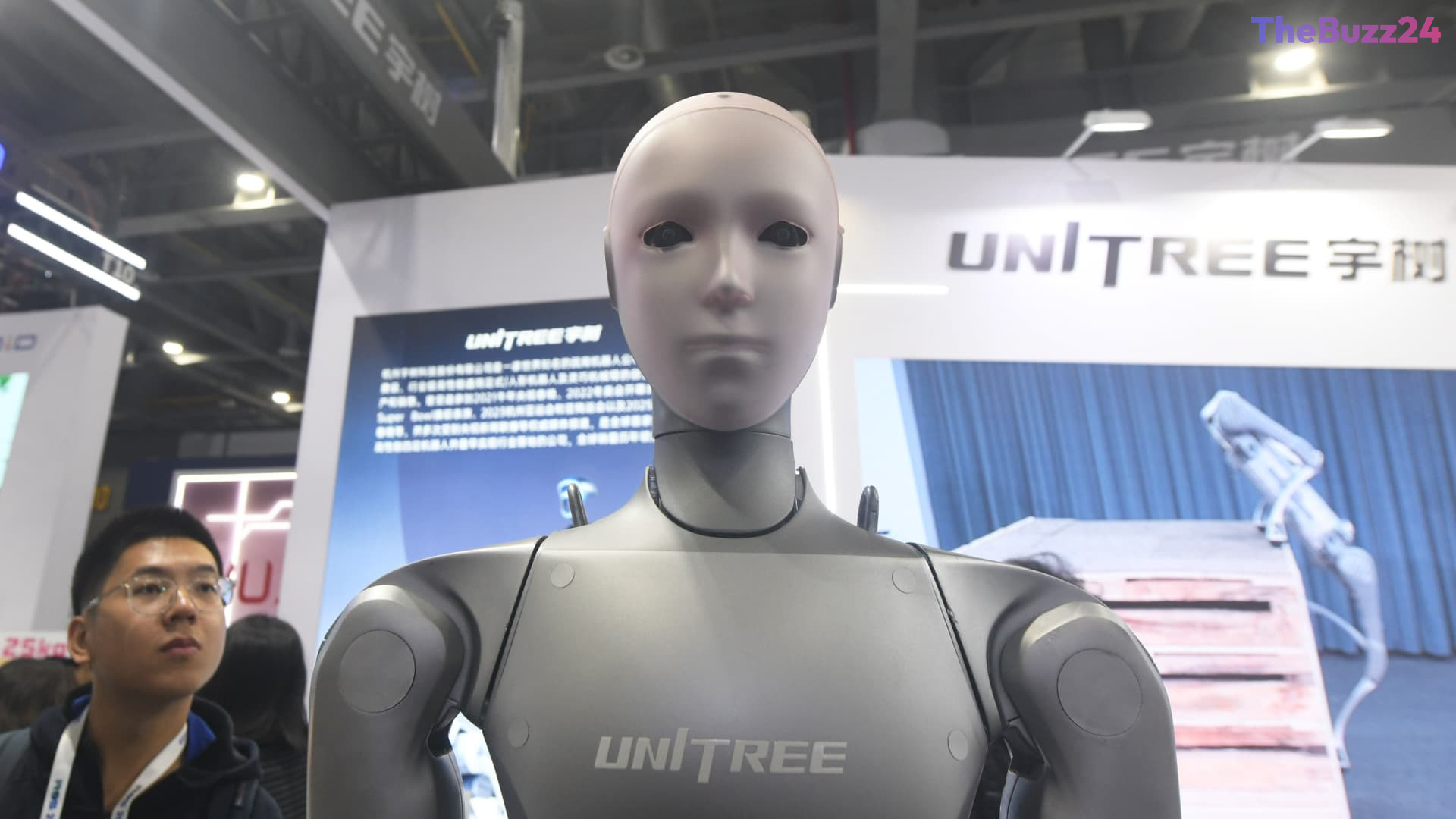
Nvidia has officially entered the humanoid robotics market by partnering with Chinese startup Unitree to launch a comprehensive, research-focused robotics platform. The system integrates Unitree’s H2 humanoid robot with Nvidia’s cutting-edge Jetson Thor hardware, which utilizes the powerful Blackwell GPU architecture to enable advanced on-device artificial intelligence. This collaboration aims to provide academic and research institutions with a turnkey solution for developing complex robotic behaviors.
The new platform features Nvidia’s Isaac GR00T AI models and simulation software, alongside mechanical hands developed by Singapore-based Sharpa. Standing at six feet tall and weighing 150 pounds, the H2 robot is designed to lower the barrier to entry for robotics research. By offering a fully integrated hardware and software stack, Nvidia intends to shift the focus of humanoid development from basic mechanical engineering to sophisticated AI training and deployment.
Targeting higher education and university labs, the system is already slated for use at prominent institutions, including Stanford University, ETH Zurich, the Allen Institute for AI (Ai2), and UC San Diego. This initiative aligns with Nvidia’s broader strategy to lead the ‘physical AI’ sector, which company leadership expects to grow into a multi-trillion-dollar industry over the coming years. As Unitree moves toward a potential IPO on the Shanghai STAR board, this partnership underscores the growing global demand for standardized, accessible humanoid research platforms.
Key Takeaways
- Nvidia is launching a research-focused humanoid robot platform featuring its Blackwell-powered Jetson Thor hardware and Isaac GR00T AI software.
- The platform is designed to simplify robotics research for universities, with early adopters including Stanford, ETH Zurich, and UC San Diego.
- The move signals Nvidia's aggressive expansion into 'physical AI,' a sector the company believes will reach a valuation in the tens of trillions.
Editor’s Analysis & Impact
Nvidia’s strategic move to provide a standardized humanoid platform is a calculated effort to establish its software and hardware as the industry ‘gold standard’ for physical AI. By lowering the technical barrier for universities, Nvidia is effectively crowdsourcing the development of its own ecosystem, ensuring that the next generation of robotics researchers is trained exclusively on its CUDA and Isaac stacks. This mirrors the company’s successful strategy in the data center and generative AI markets. While the humanoid sector is currently nascent and largely confined to research or controlled industrial environments, this partnership accelerates the transition toward general-purpose robotics. If successful, this could create a massive long-term moat for Nvidia, positioning its chips and software at the heart of every future autonomous machine, from research labs to commercial deployments.
Frequently Asked Questions
Q: Who is the target audience for the new Nvidia-Unitree humanoid platform?
A: The platform is primarily designed for higher education and university research institutions to facilitate advanced robotics and AI development.
Q: What hardware powers the new humanoid robotics system?
A: The system is powered by Nvidia's Jetson Thor hardware, which incorporates the advanced Blackwell GPU for high-performance on-device AI processing.
AI Disclosure: This article is based on verified data and official reports. Our Team and AI have cross-referenced every financial detail with primary sources to ensure total accuracy.
More from this Category