Fusion Energy Milestone: Xcimer Energy Activates World’s Largest Private Laser
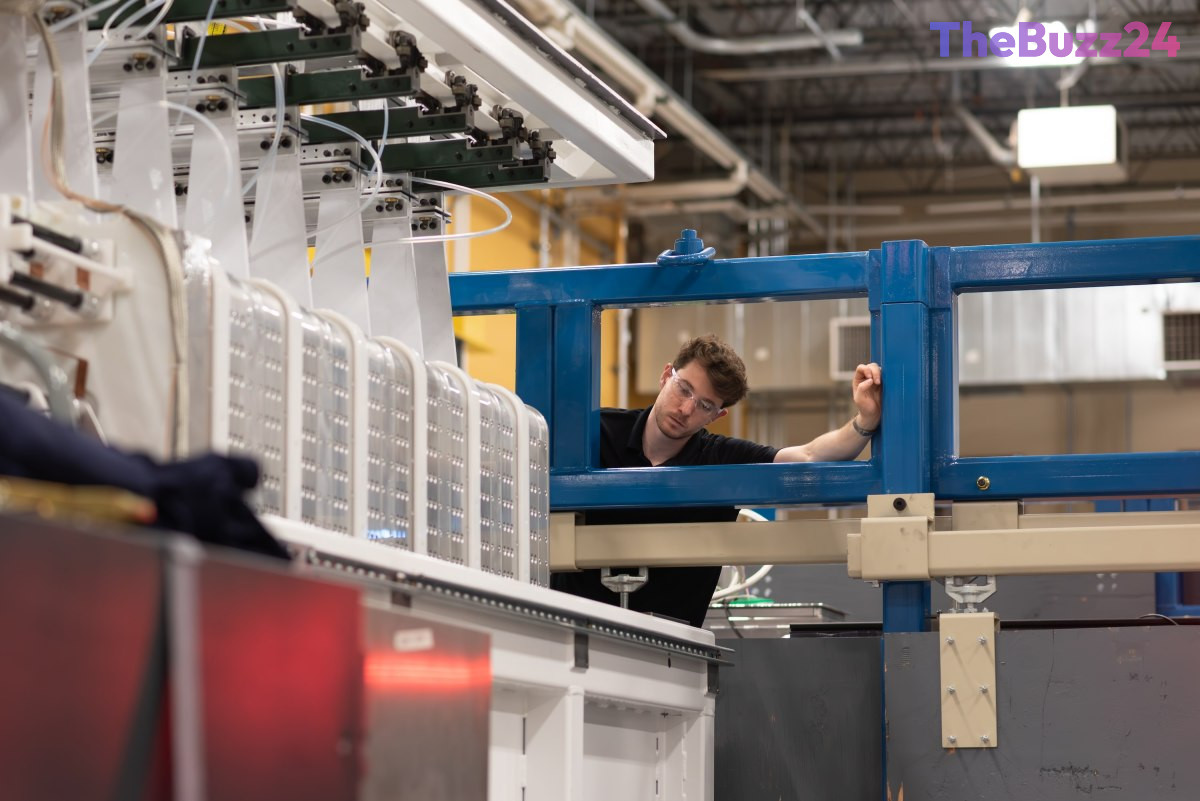
Fusion startup Xcimer Energy has officially activated its Phoenix laser system, marking a significant milestone as the largest privately owned laser facility in the world. This development represents a major step forward in the company’s mission to commercialize fusion power by refining the ignition techniques pioneered by the National Ignition Facility (NIF).
The Phoenix system utilizes advanced excimer amplification technology, a method commonly found in semiconductor manufacturing but scaled to unprecedented levels. Measuring 38 meters in length, the krypton-fluoride laser is capable of generating over 1 kilojoule of energy. By utilizing microsecond-long pulses that are compressed into nanosecond bursts, Xcimer aims to achieve the rapid fuel compression necessary to trigger sustainable fusion reactions.
While the Phoenix system is a breakthrough in private research, it serves as a foundational prototype for the company’s long-term objectives. Xcimer plans to scale this technology significantly, aiming for a commercial power plant design that requires energy outputs exceeding 12 megajoules. The company has set an ambitious timeline, targeting a functional prototype by 2028 and the construction of its first commercial-scale fusion power plant by the mid-2030s.
Key Takeaways
- Xcimer Energy has activated 'Phoenix,' the world's largest privately owned laser, designed to advance fusion power research.
- The system uses high-powered excimer amplification to compress fuel pellets, aiming to improve upon the efficiency of existing government-led fusion experiments.
- The company plans to develop a commercial-scale power plant by the mid-2030s, with a prototype expected to be completed by 2028.
Editor’s Analysis & Impact
The activation of the Phoenix laser signals a shift in the fusion energy landscape, moving from state-funded scientific proofs-of-concept toward private-sector commercialization. By focusing on more powerful and less complex laser architectures, Xcimer is attempting to solve the economic viability problem that has long plagued fusion energy. If successful, this approach could drastically lower the cost of energy production and provide a carbon-free, near-limitless power source. However, the jump from a 1-kilojoule prototype to a 12-megajoule commercial plant is immense, requiring significant breakthroughs in materials science and pulse repetition rates. The next decade will be critical for Xcimer as it attempts to prove that its laser technology can achieve the ‘energy gain’ necessary for grid-scale electricity generation.
Frequently Asked Questions
Q: What is the primary goal of Xcimer Energy's Phoenix laser?
A: The Phoenix laser is designed to test and refine the rapid compression of fuel pellets to trigger fusion reactions, serving as a prototype for future commercial fusion power plants.
Q: How does Xcimer's approach differ from existing fusion research?
A: Xcimer is focusing on developing more powerful and less complex laser systems compared to those used in government facilities like the NIF, with the specific goal of making fusion energy economically profitable.
AI Disclosure: This article is based on verified data and official reports. Our Team and AI have cross-referenced every financial detail with primary sources to ensure total accuracy.
More from this Category