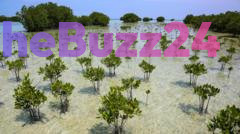
Global Mangrove Forests Stage Remarkable Comeback After Decades of Decline
Coastal mangrove forests, essential ecosystems that serve as natural buffers against storm surges and vital carbon sinks, are experiencing an unexpected resurgence. After decades of rapid deforestation driven by urban expansion and the growth of fish farming, new research indicates that the global net loss of these critical habitats has significantly slowed, with many regions now seeing a net gain in forest cover since 2010.
This positive shift is attributed to a combination of stronger legal protections, increased public awareness regarding environmental safety, and the inherent resilience of mangroves. Following catastrophic events like the 2004 Indian Ocean tsunami and Cyclone Nargis in 2008, many nations shifted their policies to prioritize the preservation of these coastal barriers. The study highlights that when human interference is minimized, mangroves demonstrate a remarkable capacity for natural regeneration, allowing forests to stabilize and expand in key areas such as Indonesia and Myanmar.
Technological advancements in satellite imagery have also provided a clearer picture of this recovery. By utilizing highly sensitive canopy-tracking systems, researchers have identified that previous assessments likely underestimated the extent of new growth. Furthermore, the quality of existing forests has improved, with the proportion of dense, carbon-rich closed-canopy mangroves increasing by nearly 20% since the 1980s.
However, experts warn that the recovery is not uniform. While some regions thrive, others—particularly in West and Central Africa—continue to face severe degradation due to industrial pollution and oil extraction. Additionally, the expansion of mangroves in some areas is linked to nutrient runoff from upstream environmental damage, suggesting that while the current trend is encouraging, long-term sustainability requires addressing the root causes of pollution and habitat destruction on a global scale.
Key Takeaways
- Global mangrove forest cover has seen a net increase since 2010, reversing a decades-long trend of rapid decline.
- Natural regeneration, supported by stricter legal protections and heightened public awareness, is the primary driver of the current recovery.
- Despite overall progress, specific regions like the Niger Delta continue to suffer from significant industrial pollution and habitat loss.
Editor’s Analysis & Impact
The resurgence of mangrove forests represents a critical win for global climate mitigation efforts. Because mangroves sequester up to five times more carbon than terrestrial forests, their recovery is a natural, cost-effective tool for climate stabilization. The shift in data—moving from net loss to net gain—suggests that policy interventions and public sentiment following natural disasters are effective levers for environmental change. However, the ‘double-edged’ nature of this growth, where mangroves sometimes benefit from nutrient-heavy runoff caused by upstream industrial damage, highlights the complexity of ecosystem restoration. Moving forward, the industry must focus on protecting these gains from the dual threats of industrial pollution and increasingly intense tropical cyclones. The long-term outlook is cautiously optimistic, provided that conservation efforts transition from reactive protection to proactive, systemic management of coastal and upstream environments.
Frequently Asked Questions
Q: Why are mangrove forests so important for the environment?
A: Mangroves act as powerful carbon sinks, storing significantly more carbon dioxide than land-based forests. Additionally, their complex root systems protect coastal communities by absorbing the energy of storm surges and tsunamis, while also serving as essential nurseries for marine life.
Q: What is the main reason for the recent increase in mangrove forest cover?
A: The increase is primarily due to a combination of reduced deforestation, stronger government-led legal protections, and the natural ability of mangroves to regenerate when human activity, such as land clearing for fish farming, is halted.
AI Disclosure: This article is based on verified data and official reports. Our Team and AI have cross-referenced every financial detail with primary sources to ensure total accuracy.
More from this Category