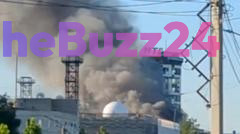
Deep-Strike Escalation: Ukrainian Cruise Missiles Strike Military Production Plant Deep Inside Russian Territory
Ukrainian forces have executed a high-profile, long-range missile strike targeting a critical military manufacturing facility deep within Russian territory. Using newly deployed FP-5 Flamingo cruise missiles, the strike hit the VNIIR-Progress plant in Cheboksary, located in the Chuvash Republic—more than 900 kilometers (560 miles) from the active front lines. The facility is known for producing vital components for Russian drones and missiles, making it a high-value strategic target in Kyiv’s campaign to disrupt Moscow’s military supply chains.
The operation marks a significant escalation in Ukraine’s deep-strike capabilities, which have historically relied on one-way attack drones rather than heavy cruise missiles. The FP-5 Flamingo missile utilized in the attack boasts a massive 1,150-kilogram warhead and an operational range of up to 3,000 kilometers, placing major Russian administrative and industrial centers, including Moscow, well within striking distance. Local officials in Cheboksary confirmed the strike, reporting at least three injuries, though they did not detail the extent of the damage to the industrial site.
In tandem with the Cheboksary strike, Ukrainian forces launched coordinated attacks against several other strategic assets. These included strikes on the occupied port of Mariupol on the Sea of Azov, an oil refinery in Samara, and a “shadow fleet” oil tanker operating in the Black Sea. Meanwhile, aerial warfare intensified overnight as Russia claimed to have intercepted 326 Ukrainian drones, while Ukraine’s air defense reported downing 181 out of 207 Russian drones launched against its territory, despite suffering 21 direct hits across 14 locations.
This surge in long-range operations comes amid a diplomatic stalemate. Ukrainian President Volodymyr Zelensky emphasized that targeting Russian military and energy infrastructure is essential to raising the domestic costs of the war for Moscow. However, Russian President Vladimir Putin has continued to reject peace negotiations, recently dismissing requests for direct talks and maintaining that Russian forces are progressing along the front line, despite independent assessments showing a largely static battlefield.
Key Takeaways
- Ukraine successfully targeted the VNIIR-Progress military plant in Cheboksary, over 900km from the front line, using advanced FP-5 Flamingo cruise missiles.
- The FP-5 Flamingo missile features a 1,150kg warhead and a 3,000km range, significantly expanding Ukraine's ability to strike deep inside Russian territory.
- Coordinated Ukrainian strikes also targeted maritime and energy infrastructure, including the port of Mariupol, a Samara oil refinery, and a Black Sea tanker.
Editor’s Analysis & Impact
The deployment of the FP-5 Flamingo cruise missile represents a technological and strategic pivot for Ukraine. By demonstrating the capability to strike high-value military-industrial targets nearly 1,000 kilometers deep into Russian territory with heavy payloads, Kyiv is actively challenging Russia’s domestic security assumptions. This shift moves beyond symbolic drone harassment toward systematic degradation of Russia’s military manufacturing capacity. For global energy markets, continued strikes on refineries and shadow fleet tankers will likely sustain volatility in oil transit and pricing. Politically, these deep strikes aim to force the Kremlin’s hand toward negotiations by raising the economic and material costs of the conflict. However, with President Putin currently rejecting diplomatic overtures, this escalation is more likely to trigger intensified Russian retaliatory strikes on Ukrainian civilian and energy infrastructure in the near term.
Frequently Asked Questions
Q: What is the FP-5 Flamingo missile?
A: The FP-5 Flamingo is a long-range cruise missile utilized by Ukraine, featuring a 1,150kg warhead and an estimated operational range of up to 3,000 kilometers, allowing it to reach deep into Russian territory.
Q: What was the primary target of the recent deep-strike attack?
A: The primary target was the VNIIR-Progress military plant in Cheboksary, Chuvash Republic, which manufactures critical components for Russian drones and missiles.
Q: How has Russia responded to these strikes?
A: Russia has deployed extensive air defenses, claiming to have intercepted hundreds of Ukrainian drones, while continuing its own heavy drone and missile campaigns against Ukrainian cities and infrastructure.
AI Disclosure: This article is based on verified data and official reports. Our Team and AI have cross-referenced every financial detail with primary sources to ensure total accuracy.
More from this Category