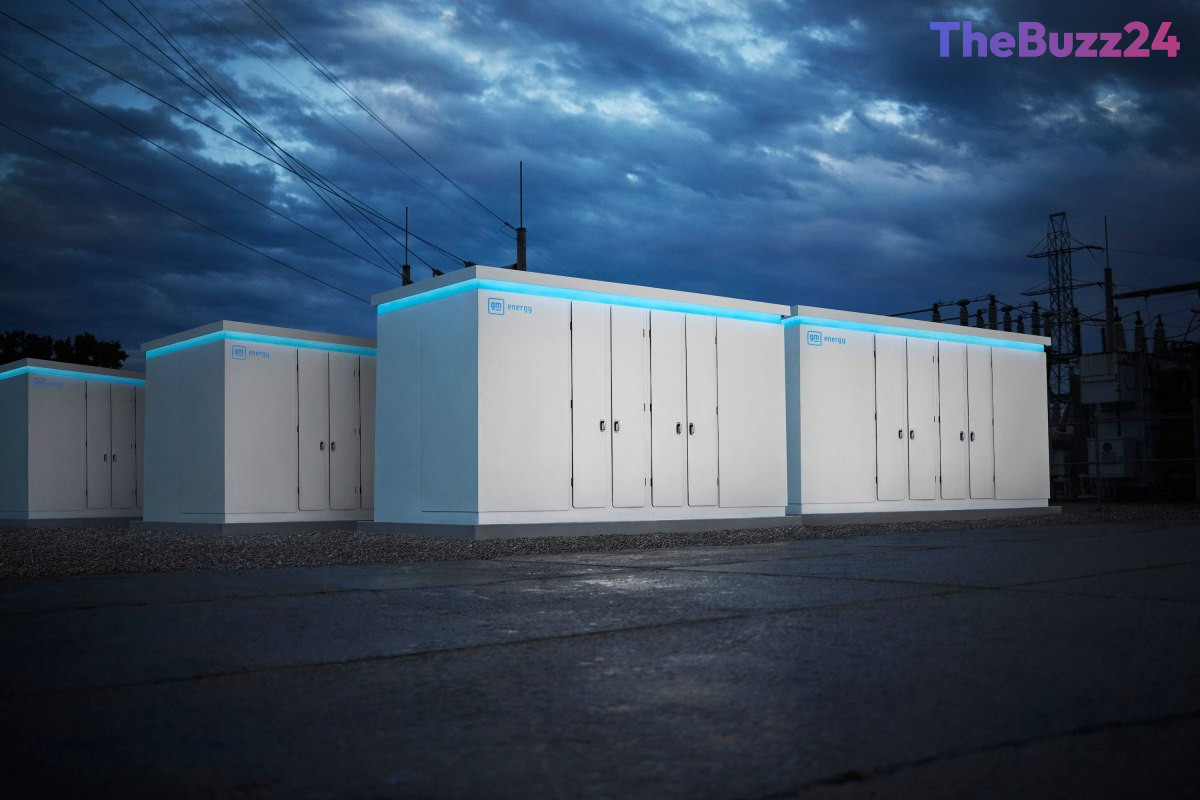
The Next Energy Frontier: GM Challenges Tesla in Booming Stationary Battery Market with Sodium-Ion Strategy
The market for large, stationary energy storage solutions is experiencing unprecedented growth, with sales doubling over the past two years and showing no signs of slowing down. This surge is primarily fueled by the rapid expansion of data centers supporting artificial intelligence, alongside the broader electrification of various economic sectors, including transportation, manufacturing, and HVAC systems. Industry projections anticipate annual installations to exceed 110 GWh by 2030, a significant increase from current levels.
Currently, Tesla holds a commanding lead in this burgeoning sector. The company was responsible for an impressive 82% of the 57 gigawatt-hours installed last year, with its Megapack and Powerwall installations driving a doubling of annual revenue from energy generation and storage since 2023. Tesla’s gross profits in this segment are robust, hovering around 30%, which is double its margins from EV sales and significantly higher than typical automaker profits.
In response to this lucrative opportunity, General Motors (GM) is making a strategic entry into the energy storage market, albeit with a more deliberate approach. The automaker recently unveiled plans for an entirely new sodium-ion battery chemistry specifically designed for stationary applications. While these cells are not expected to be ready until later this decade, GM emphasizes the long-term advantages of sodium-ion technology: its reliance on cheap and abundant materials, the absence of a need for active cooling systems, and its superior cycle life compared to lithium-ion batteries. This move also aims to bolster supply-chain resilience, as China has not yet cornered the market on sodium-ion materials as it has with other battery chemistries.
GM’s cautious pace is partly due to its commitment to its existing lithium-ion manufacturing capacity for electric vehicles, fearing being caught unprepared if the EV market experiences a resurgence. The company is also developing other advanced battery chemistries, such as lithium-manganese-rich (LMR) cells, slated for a 2028 debut, which promise to reduce EV costs by approximately 10%. While sodium-ion batteries are heavier and offer less range for EVs, their lower cost, enhanced safety, and rapid charging potential could make them attractive for more affordable electric vehicles in the future. Despite the inherent risks of a delayed market entry, GM believes its focus on developing a superior product, like sodium-ion, will ultimately pay off, even amidst potential market fluctuations.
Key Takeaways
- The stationary energy storage market is booming, driven by data center expansion and broad electrification, with projected installations doubling by 2030.
- Tesla currently dominates this market, capturing 82% of installations last year and achieving significantly higher profit margins than its EV sales.
- GM is strategically entering the stationary storage market with sodium-ion battery technology, prioritizing cost-effectiveness, supply chain resilience, and long-term product quality, while also advancing new lithium-ion chemistries for EVs.
Editor’s Analysis & Impact
The rapid growth in stationary energy storage represents a critical inflection point for the energy sector, driven by the insatiable demands of AI and the global push for electrification. Tesla’s early dominance highlights the immense profitability potential, setting a high bar for competitors. GM’s strategic pivot to sodium-ion batteries, while slower, could be a game-changer for supply chain diversification and cost reduction, potentially disrupting the lithium-ion hegemony. This move signals a broader industry trend towards exploring diverse battery chemistries to meet varied application needs and mitigate geopolitical supply risks. The future outlook suggests intense competition, innovation in battery technology, and a significant shift towards decentralized and resilient energy infrastructure, with implications for grid stability, renewable energy integration, and the overall cost of energy.
Frequently Asked Questions
Q: What factors are driving the significant growth in the stationary battery storage market?
A: The primary drivers are the exponential growth of data centers, particularly those supporting AI, and the broader electrification of various economic sectors, including transportation, manufacturing, and HVAC systems. This creates a massive demand for reliable, large-scale energy storage.
Q: Why is GM choosing to develop sodium-ion batteries for stationary storage, and what are their advantages?
A: GM is focusing on sodium-ion batteries due to their reliance on cheap and abundant materials, the absence of a need for active cooling systems, and their superior charge-discharge cycle life. This strategy also aims to build supply chain resilience, as the materials for sodium-ion batteries are not as concentrated in specific regions as those for lithium-ion.
Q: How does Tesla currently perform in the energy storage market compared to its EV business?
A: Tesla holds a dominant position in the stationary energy storage market, responsible for 82% of installations last year. Its energy generation and storage segment has seen revenues double since 2023, with gross profits around 30%, which is approximately double the margins from its electric vehicle sales.
AI Disclosure: This article is based on verified data and official reports. Our Team and AI have cross-referenced every financial detail with primary sources to ensure total accuracy.
More from this Category