2026 Midterm Ad Spend Projected to Hit Record $11.6 Billion, Outpacing Presidential Election Years
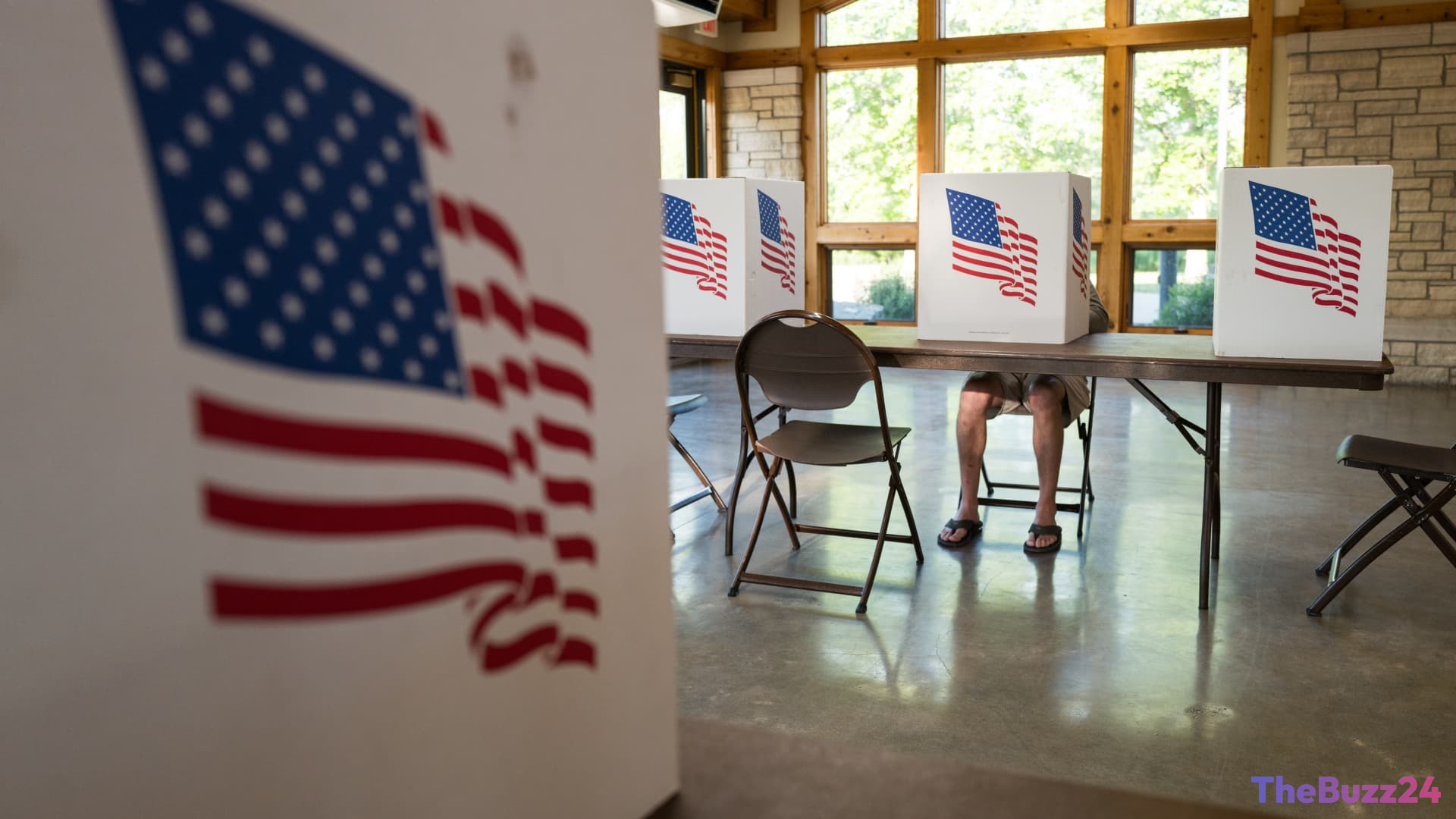
The upcoming 2026 midterm election cycle is on track to become the most expensive political advertising campaign in United States history. Newly released industry projections estimate that total political ad spending will reach an unprecedented $11.6 billion. This massive figure not only shatters the previous midterm record of $8.9 billion set in 2022 but also eclipses the $11.2 billion spent during the highly contested 2024 presidential race between Donald Trump and Kamala Harris. The surge represents a significant upward revision of nearly $800 million from earlier forecasts, signaling an incredibly intense battle for legislative control.
Traditional broadcast television remains the dominant medium for political campaigns, capturing an estimated $5.6 billion, or nearly half of the total projected budget. However, digital and modern media channels are seeing substantial growth. Connected TV (CTV) is expected to secure $2.6 billion, while digital platforms like Facebook, Google, Snapchat, and X are projected to pull in $1.68 billion. Cable advertising rounds out the media mix at $1.4 billion. This influx of capital is a major boon for local television stations and media conglomerates, which rely heavily on political cycles to drive high-margin revenue.
The unprecedented spending is being fueled by high-stakes, early-stage contests in key states. Highly competitive Senate contests in Michigan, Ohio, and Texas, alongside expensive gubernatorial campaigns in California, Georgia, and New Jersey, are drawing massive early investments. In fact, political ad spending had already reached $4 billion by early June, representing a 46% increase compared to the same point in the 2024 presidential cycle. Down-ballot races are also seeing record-breaking financial activity, surpassing the $3.2 billion mark established in 2022.
Historically, the bulk of political advertising occurs in the final months of the campaign. Analysts note that the period between August and November typically accounts for up to two-thirds of all cycle spending, with October alone representing nearly a third of the total budget. With Republicans currently holding slim majorities in both chambers of Congress, the stakes for the 2026 midterms are exceptionally high, prompting both parties and independent committees to aggressively deploy their war chests earlier and more broadly than ever before.
Key Takeaways
- Political ad spending for the 2026 midterms is projected to reach a record-breaking $11.6 billion, surpassing the 2024 presidential election.
- Broadcast television remains the top advertising medium at $5.6 billion, though digital and connected TV platforms are seeing massive gains.
- High-profile Senate and gubernatorial contests in states like Texas, California, and Michigan are driving unprecedented early-cycle spending.
Editor’s Analysis & Impact
The projected $11.6 billion ad spend for the 2026 midterms underscores the hyper-polarized and high-stakes nature of modern American politics. For media companies, particularly local broadcasters and digital ad platforms, this influx of political capital represents a massive financial windfall. Traditional broadcast TV continues to hold the lion’s share of local reach, but the rapid growth of Connected TV (CTV) and digital platforms highlights a shifting landscape where campaigns target voters with highly personalized, programmatic ads. This surge in political spending will likely crowd out commercial advertisers during the peak third and fourth quarters of 2026, driving up ad rates across the board. Ultimately, this trend reflects a permanent shift toward continuous, high-intensity campaigning, where the distinction between midterm and presidential-year spending has effectively dissolved.
Frequently Asked Questions
Q: Why is the 2026 midterm election spending projected to be higher than a presidential election year?
A: The record spending is driven by razor-thin congressional majorities, highly competitive Senate and gubernatorial races in key states like Texas and California, and a significant increase in early-cycle fundraising and spending by political action committees.
Q: Which advertising mediums will benefit the most from this spending?
A: Broadcast television remains the primary beneficiary, projected to receive $5.6 billion. However, Connected TV (CTV) and digital platforms (such as Google, Meta, and X) are seeing substantial growth, capturing a combined projected total of over $4.2 billion.
Q: When is the peak period for this political advertising spend?
A: The most intense spending occurs between August and November, which typically accounts for 58% to 67% of the total cycle budget, with October alone seeing up to 36% of the overall spend.
AI Disclosure: This article is based on verified data and official reports. Our Team and AI have cross-referenced every financial detail with primary sources to ensure total accuracy.
More from this Category