NASA’s AstroPix Tech to Revolutionize Gamma-Ray Detection in Space
NASA is set to advance the capabilities of gamma-ray detection with its innovative AstroPix technology, slated for a demonstration on the upcoming Fly Foundational Robots mission launching in late 2027. This new generation of sensors is designed to capture gamma rays within a crucial energy range of 20,000 to 700,000 electron volts, a spectrum where current instruments show limitations.
Gamma rays, the most energetic form of light, originate from powerful cosmic events such as solar flares and distant galactic collisions. While existing NASA missions like the Fermi Gamma-ray Space Telescope can detect higher energy gamma rays, the AstroPix technology aims to fill a critical gap in sensitivity for energies between 500,000 and 1 million electron volts. This range is particularly significant as it encompasses the peak emissions from intense gamma-ray bursts and the energetic outflows of distant, black-hole-powered galaxies, offering scientists a clearer window into these extreme phenomena.
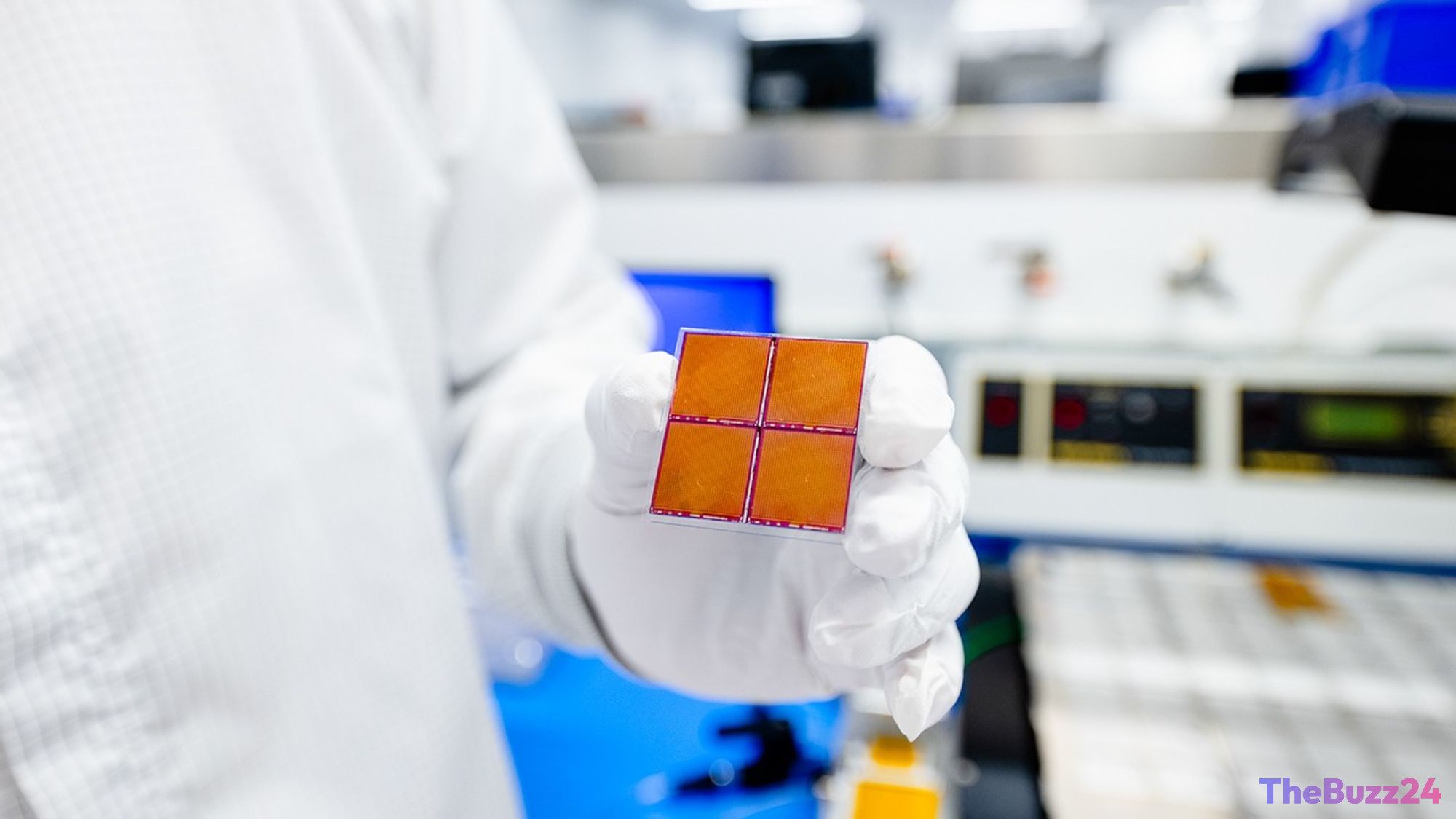
The AstroPix system features chips equipped with four silicon pixel gamma-ray detectors, each containing 1,225 pixels. These detectors operate on principles similar to those found in smartphone cameras but are specifically tuned to register gamma-ray light. The technology demonstration will be housed within an Orbital Replacement Unit on the Fly Foundational Robots spacecraft, a module built by Rocket Lab Robotics. This unit will be manipulated by a robotic arm, also provided by Rocket Lab Robotics, allowing for in-orbit repositioning and data collection as part of a broader robotic servicing demonstration.
This integration represents a synergistic opportunity, as both AstroPix and the Fly Foundational Robots mission are technology demonstrations. “The Fly Foundational Robots spacecraft is also a technology demonstration, so the projects were a good fit for each other,” stated Dan Violette, an AstroPix team member. The mission’s design, which includes the capability for robotic payload changeouts, provides an ideal platform for testing AstroPix’s performance in orbit before its potential integration into future, dedicated science missions. This collaboration maximizes the mission’s scientific and technological return, offering a valuable opportunity for AstroPix to undergo rigorous in-orbit testing.
Key Takeaways
- NASA's AstroPix technology, a new type of gamma-ray sensor, will be demonstrated on the Fly Foundational Robots mission in late 2027.
- AstroPix aims to improve detection sensitivity for gamma rays in the 500,000 to 1 million electron volt range, a critical gap in current capabilities.
- The technology will be tested in orbit using a robotic arm to reposition its module, showcasing advancements in both gamma-ray detection and in-space servicing.
Editor’s Analysis & Impact
The integration of AstroPix technology onto the Fly Foundational Robots mission signifies a crucial step forward in astronomical observation capabilities. By addressing the sensitivity gap in gamma-ray detection, NASA is paving the way for more detailed studies of high-energy cosmic events like gamma-ray bursts and active galactic nuclei. The dual nature of the mission, combining a sensor technology demonstration with a robotic servicing test, highlights NASA’s strategy of maximizing mission value and exploring cost-effective methods for in-orbit upgrades. This development could lead to more sophisticated space telescopes and a deeper understanding of the universe’s most energetic phenomena.
Frequently Asked Questions
Q: What are gamma rays?
A: Gamma rays are the highest-energy form of electromagnetic radiation, far more energetic than visible light. They are produced by some of the most energetic processes in the universe, such as nuclear reactions, radioactive decay, and cosmic events like supernovae and black hole activity.
Q: Why is detecting gamma rays in the 500,000 to 1 million electron volt range important?
A: This specific energy range is where many powerful cosmic explosions, known as gamma-ray bursts, emit their brightest light. It's also where astronomers expect to detect strong signals from distant, supermassive black holes powering active galaxies. Improving detection in this range allows for better observation and understanding of these extreme astrophysical phenomena.
Q: How does AstroPix differ from current gamma-ray detectors?
A: AstroPix utilizes silicon pixel detectors, similar in principle to those in digital cameras, but optimized for gamma-ray sensitivity. While current detectors are effective, AstroPix is designed to be more sensitive in a specific, crucial energy band (500,000 to 1 million electron volts) where existing instruments are less capable.
AI Disclosure: This article is based on verified data and official reports. Our Team and AI have cross-referenced every financial detail with primary sources to ensure total accuracy.
More from this Category