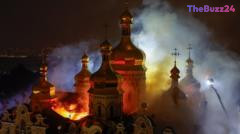
Russian Air Strikes Devastate Kyiv and Kharkiv, Damaging Historic 11th-Century Cathedral
A devastating wave of Russian aerial bombardments has struck Ukraine, claiming the lives of at least nine people and leaving dozens injured across multiple cities. In the capital city of Kyiv, intense strikes targeted residential areas, killing four civilians and knocking out electricity for over 140,000 residents. Meanwhile, in the northeastern city of Kharkiv, five emergency rescue workers tragically lost their lives while attempting to extinguish a blaze ignited by an initial Russian strike.
Beyond the human toll, the attacks inflicted severe damage on Ukraine’s cultural heritage. The historic 11th-century Dormition Cathedral, located within the Kyiv Pechersk Lavra monastery complex, caught fire and suffered significant structural damage. Ukrainian officials, including Prime Minister Yulia Svyrydenko and Foreign Minister Andrii Sybiha, strongly condemned the destruction, calling it an act of state barbarism. Ukraine plans to urgently petition UNESCO and other international bodies to address the destruction of its heritage. The intensity of the strikes also prompted neighboring Poland to scramble fighter jets and place its air defense systems on high alert.
In a related development, Russian officials reported a Ukrainian drone strike in the city of Tula, located south of Moscow, which resulted in three deaths and three injuries. These escalating hostilities occur just ahead of a critical G7 summit in France, where the ongoing war is set to dominate discussions. The escalation also follows a recent conversation between Ukrainian President Volodymyr Zelensky and US President Donald Trump regarding potential diplomatic pathways to resolve the conflict, which began with Russia’s full-scale invasion in 2022.
Key Takeaways
- Russian strikes killed nine people in Ukraine, including four civilians in Kyiv and five emergency rescue workers in Kharkiv.
- The historic 11th-century Dormition Cathedral in Kyiv suffered major damage, prompting Ukraine to seek urgent UNESCO intervention.
- The escalation comes amid heightened diplomatic activity, including an upcoming G7 summit and recent talks between President Zelensky and US President Donald Trump.
Editor’s Analysis & Impact
The latest escalation in the Russia-Ukraine conflict underscores a dual strategy of military pressure and diplomatic positioning. By targeting critical infrastructure and cultural landmarks like the Dormition Cathedral, Moscow continues to exert immense psychological and physical pressure on Ukraine’s population. Concurrently, the timing of these strikes—just ahead of the G7 summit in France and following high-level communications between President Zelensky and US President Donald Trump—suggests an effort by both sides to establish leverage before potential peace negotiations. For the international community, the destruction of heritage sites will likely intensify calls for stricter sanctions and increased air defense support for Ukraine. As diplomatic backchannels warm up, battlefield intensity is expected to peak, with both nations seeking to maximize their territorial and political leverage.
Frequently Asked Questions
Q: What historic landmark was damaged in the recent strikes?
A: The 11th-century Dormition Cathedral, located within the Kyiv Pechersk Lavra monastery complex, was significantly damaged and caught fire during the Russian strikes on Kyiv.
Q: How did neighboring countries react to the aerial bombardment?
A: Poland scrambled its fighter jets and placed its ground-based air defense systems on high alert as a preventive measure in response to the heavy strikes near its borders.
Q: What diplomatic events are occurring alongside these military escalations?
A: The strikes occurred just before a G7 meeting in France focused on the war, and shortly after Ukrainian President Volodymyr Zelensky discussed peace efforts with US President Donald Trump.
AI Disclosure: This article is based on verified data and official reports. Our Team and AI have cross-referenced every financial detail with primary sources to ensure total accuracy.
More from this Category