Starbucks Korea to Halt Operations for Staff History Training Amid ‘Tank Day’ Backlash
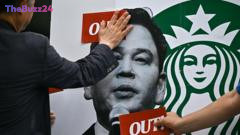
Starbucks Korea is set to temporarily close all its outlets nationwide for half a day next week, allowing employees to participate in a mandatory history education session. This decision comes in response to significant public backlash over a recent promotional campaign that inadvertently evoked painful memories of a brutal crackdown on pro-democracy protesters.
The coffee giant faced widespread condemnation after launching its “Tank Day” reusable cup promotion on the anniversary of the Gwangju Uprising. This historical event, which occurred in May 1980, saw the military kill at least 165 civilians, with many believing the actual death toll to be considerably higher. The promotion’s timing and theme were seen as deeply insensitive and disrespectful to the victims and the nation’s struggle for democracy.
In the wake of the scandal, Shinsegae Group, the operator of Starbucks in South Korea under a licensing agreement, took swift action by dismissing the country’s chief executive. The company also announced that Chairman Chung Yong-jin would personally undergo the historical awareness training. All stores will cease operations at 3:00 PM local time next Wednesday for three hours, during which staff will engage in educational content focused on historical awareness and social sensitivity. This marks the first nationwide early closure for Starbucks Korea since its establishment in the country in 1999.
The controversial “Tank Day” promotion featured tumblers described as having “spacious volume.” While Starbucks Korea initially clarified it was one of several tumbler series in a broader campaign, the company issued an apology for the “inconvenience and concern” caused. The incident has led to protests outside stores and calls for boycotts, reportedly impacting sales. The Gwangju Uprising remains a pivotal and sensitive event in South Korea’s modern history, representing a critical step towards democratization.
Key Takeaways
- Starbucks Korea will close all stores for a half-day to conduct staff history training following a controversial promotion.
- The 'Tank Day' promotion coincided with the anniversary of the Gwangju Uprising, sparking public outrage and calls for boycotts.
- The company has fired its country CEO and will provide historical awareness education to all employees as a corrective measure.
Editor’s Analysis & Impact
This incident highlights the critical importance of cultural and historical sensitivity for global brands operating in diverse markets. Starbucks Korea’s ‘Tank Day’ promotion demonstrates a significant misstep, likely exacerbated by the use of AI in marketing without adequate human oversight and historical context. The swift disciplinary actions, including CEO dismissal and mandatory training, signal a commitment to rectifying the error. However, the backlash underscores the fragility of brand reputation and the potential for historical events to deeply influence consumer sentiment. This event serves as a cautionary tale for multinational corporations, emphasizing the need for robust internal review processes that account for local historical nuances to avoid alienating customers and damaging brand equity.
Frequently Asked Questions
Q: What was the 'Tank Day' promotion?
A: The 'Tank Day' promotion was a campaign by Starbucks Korea featuring reusable tumblers. It was criticized for its timing, coinciding with the anniversary of the Gwangju Uprising, and the name 'Tank Day' was seen as insensitive due to its association with the military crackdown during that historical event.
Q: Why did Starbucks Korea decide to close its stores?
A: Starbucks Korea decided to close all its stores for half a day to conduct mandatory history education for its staff. This action was a direct response to the public outrage and backlash received over the 'Tank Day' promotion, aiming to improve historical awareness and social sensitivity among employees.
Q: What was the Gwangju Uprising?
A: The Gwangju Uprising was a significant pro-democracy protest in Gwangju, South Korea, in May 1980. The military violently suppressed the uprising, resulting in a substantial number of civilian deaths. It is a deeply sensitive and important event in South Korea's modern history, symbolizing the nation's struggle for democracy.
AI Disclosure: This article is based on verified data and official reports. Our Team and AI have cross-referenced every financial detail with primary sources to ensure total accuracy.
More from this Category