Chinese Authorities Raid Underground Church Service, Detaining Leaders
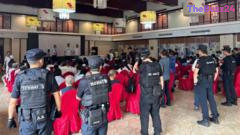
Authorities in the southwestern Chinese city of Jiangyou conducted a significant raid on an underground Protestant congregation during a Sunday service, resulting in the detention of two prominent church leaders. The Early Rain Covenant Church reported that armed police and SWAT units stormed a hotel ballroom where members were gathered, leading to the interrogation of dozens of congregants, including children and the elderly.
While the specific legal grounds for the latest detentions of leaders Yan Hong and Wu Wuqing remain undisclosed, the incident marks a continuation of the intense scrutiny faced by independent religious groups in China. Witnesses described a tense scene where over 50 officers surrounded the attendees, attempting to force congregants to sign affidavits. Despite the pressure, many members reportedly continued to sing hymns and pray throughout the ordeal until their eventual release later that evening.
This event highlights the ongoing friction between the Chinese government and “house churches” that operate outside of state-sanctioned religious institutions. The Early Rain Covenant Church has been a frequent target of state intervention since its founding in 2008, with its founding pastor, Wang Yi, currently serving a nine-year prison sentence for charges related to state subversion. As the government continues to enforce strict control over religious practice, observers note an increasing trend of raids and arrests targeting independent Christian communities across the country.
Key Takeaways
- Two leaders of the Early Rain Covenant Church were detained following a police raid on a Sunday service in Jiangyou.
- Over 30 congregants were taken for questioning, with authorities attempting to secure signed affidavits from those present.
- The raid reflects a broader, ongoing government campaign to suppress underground religious organizations that operate outside state-approved channels.
Editor’s Analysis & Impact
The detention of religious leaders in Jiangyou underscores the Chinese government’s uncompromising stance on ideological and social control. By targeting influential ‘house churches,’ the state aims to eliminate autonomous organizations that could potentially challenge its authority or influence. For the international community and human rights observers, this incident serves as a barometer for the shrinking space for religious freedom within China. The long-term implications suggest that underground religious groups will face increasing operational risks, likely forcing these communities further into secrecy or leading to a decline in their public visibility. As the state continues to prioritize national security and social stability over religious autonomy, the tension between state-sanctioned institutions and independent faith groups is expected to remain a significant point of geopolitical and human rights friction.
Frequently Asked Questions
Q: What is an underground or 'house' church in China?
A: A house church is a Christian congregation that operates independently of the state-sanctioned religious organizations, often meeting in private homes or rented spaces to avoid government oversight.
Q: Why does the Chinese government target these churches?
A: The government requires religious groups to register with state-approved bodies to ensure their activities align with Communist Party policies and do not pose a threat to state control or social stability.
AI Disclosure: This article is based on verified data and official reports. Our Team and AI have cross-referenced every financial detail with primary sources to ensure total accuracy.
More from this Category