Arizona’s San Carlos Reservoir Faces Near-Total Dry-Up and Ecological Collapse
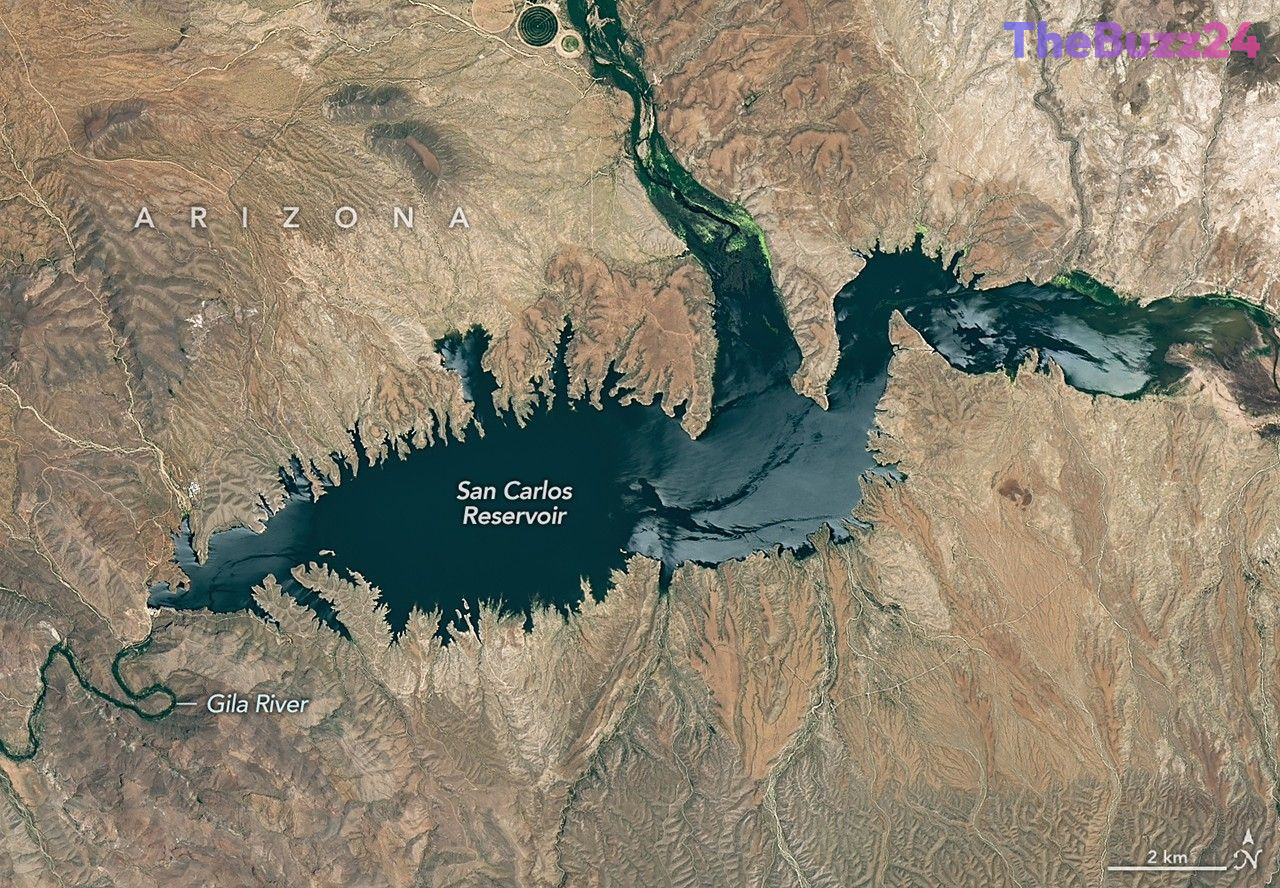
The San Carlos Reservoir in Arizona has reached a critical state of depletion, with water levels dropping to less than 1 percent of capacity as of May 2026. Satellite imagery reveals a stark contrast between the reservoir’s condition in June 2023, when it was 60 percent full, and its current state, where the Gila River’s natural channel is now exposed and surrounded by encroaching vegetation. The reservoir, which relies heavily on snowmelt from the Mogollon Mountains, suffered from a severe lack of winter precipitation, with snowpack levels reaching only 2 percent of the historical median.
This extreme water scarcity has triggered a total ecological collapse within the reservoir. On June 5, 2026, officials were forced to close the area indefinitely following a massive fish kill caused by hypoxic conditions—a result of the rapidly receding water levels. The die-off included significant populations of largemouth bass, catfish, and stocked trout. Authorities have warned the public to avoid the area, as the decomposing aquatic life poses potential health risks to visitors.
While the current situation is dire, it is not unprecedented. The reservoir has run dry at least 20 times since its completion in 1930, with similar ecological events occurring in 1976 and 2018. Experts note that the region remains in a multi-year drought, though there is cautious optimism that upcoming monsoon seasons, potentially influenced by shifting Pacific climate patterns, could eventually replenish the basin. Until then, the reservoir remains a symbol of the volatile water security challenges facing the American Southwest.
Key Takeaways
- The San Carlos Reservoir has dropped to less than 1 percent capacity due to record-low snowpack in the Gila River watershed.
- A catastrophic fish kill has forced the indefinite closure of the reservoir due to health risks and oxygen depletion.
- While the reservoir has historically dried up multiple times, the current multi-year drought continues to strain water resources in the Southwest.
Editor’s Analysis & Impact
The depletion of the San Carlos Reservoir serves as a stark indicator of the intensifying water volatility in the American Southwest. From a market and industry perspective, the reliance on snow-fed reservoirs for agricultural and recreational stability is becoming increasingly precarious. The recurring nature of these droughts suggests that local economies dependent on water-intensive agriculture and tourism must pivot toward more resilient infrastructure and adaptive management strategies. Future outlooks remain tied to the unpredictability of monsoon cycles and long-term climate trends, which threaten to shorten the recovery windows for these ecosystems. As water rights and availability become more contested, the broader implication is a necessary shift in regional policy toward aggressive conservation and the diversification of water sources to mitigate the economic and environmental fallout of prolonged arid conditions.
Frequently Asked Questions
Q: Why was the San Carlos Reservoir closed to the public?
A: The reservoir was closed indefinitely because declining water levels led to hypoxia, causing a massive fish kill. The decomposing fish pose significant health risks to anyone attempting to boat or fish in the area.
Q: Is the current low water level at San Carlos Reservoir a historic first?
A: No. The reservoir has run out of water at least 20 times since it was filled in 1930. Similar ecological events and fish kills have been documented in previous decades, including 1976 and 2018.
AI Disclosure: This article is based on verified data and official reports. Our Team and AI have cross-referenced every financial detail with primary sources to ensure total accuracy.
More from this Category