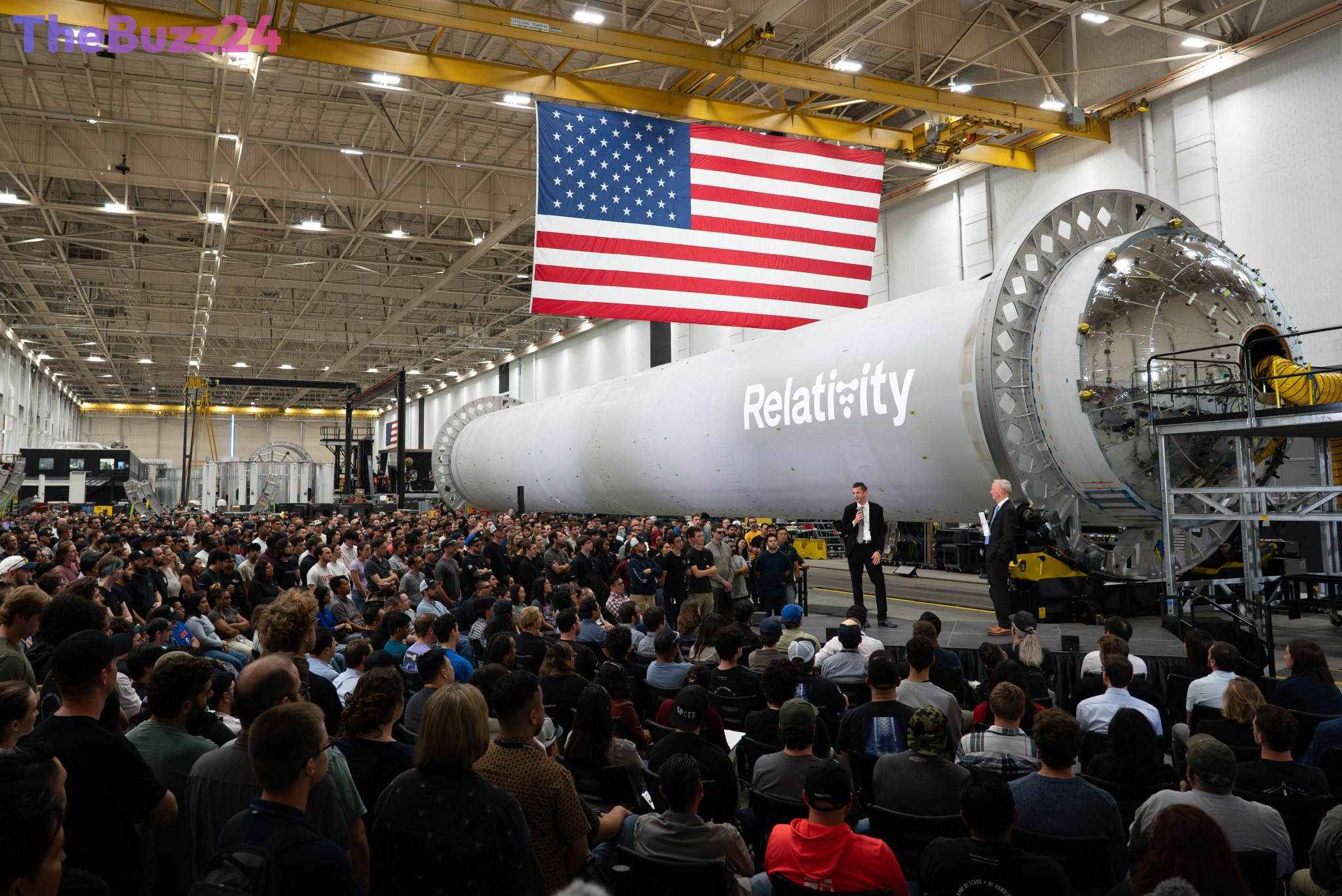
NASA Teams Up with Relativity Space for Ambitious Mars Science Mission
NASA is forging a new path in its exploration of the Red Planet through a significant public-private partnership aimed at accelerating scientific discovery. The agency has joined forces with commercial space company Relativity Space to advance Mars science, combining NASA’s expertise in instrument development with the private sector’s capabilities in spacecraft and launch operations.
Under this innovative agreement, NASA will contribute the sophisticated Aeolus atmospheric-science instrument suite, a collection of four advanced sensors designed to provide unprecedented daily, global insights into Mars’ atmosphere. Relativity Space will be responsible for developing and operating the spacecraft, rocket, and cruise systems required to transport Aeolus to Mars. This collaboration is designed to increase the frequency of scientific missions to Mars, allowing for more rapid data collection crucial for understanding the Martian environment and paving the way for future human expeditions.
“Public-private partnerships like this are a force multiplier for science,” stated NASA Administrator Jared Isaacman. “By pairing NASA’s world-class instruments with commercial innovation and investment, we can deliver more science, more often, and reduce the time it takes to get essential data into the hands of researchers preparing for future human missions to Mars.” The Aeolus mission, slated for a 2028 launch, will build upon decades of NASA’s atmospheric research, enhancing our understanding of Martian winds, temperatures, dust, and clouds. This detailed environmental data is vital for mitigating risks associated with landing spacecraft and, eventually, astronauts on the Martian surface.
The Aeolus payload includes the Doppler Wind and Temperature Sounder (DWTS-Ozone), the Thermal Limb Sounder (TLS), the Surface Radiometric Sensor Package (SuRSeP), and the Wide-Field Context Camera (WFCC). These instruments will work in concert to map atmospheric conditions from the surface to high altitudes. NASA Ames Research Center will lead the design, construction, and integration of the Aeolus payload, while Relativity Space will manage the spacecraft and mission operations. This partnership is structured under NASA’s first six-year reimbursable Space Act Agreement, ensuring a stable foundation for sustained collaboration and mission continuity.
Key Takeaways
- NASA and Relativity Space have formed a public-private partnership to advance Mars science.
- NASA will provide the Aeolus instrument suite, while Relativity Space will handle spacecraft, rocket, and mission operations.
- The Aeolus mission, launching in 2028, aims to provide daily global atmospheric data to aid future human exploration of Mars.
Editor’s Analysis & Impact
This public-private partnership signifies a strategic shift for NASA, leveraging commercial capabilities to enhance its Mars exploration objectives. By outsourcing spacecraft and launch operations to Relativity Space, NASA can allocate resources more efficiently towards scientific instrument development and data analysis. This model not only promises to increase the cadence of Mars missions but also reduces costs and accelerates the acquisition of critical data needed for human landings. The success of this collaboration could set a precedent for future NASA missions, fostering a more dynamic and cost-effective approach to space exploration and strengthening the burgeoning commercial space industry.
Frequently Asked Questions
Q: What is the Aeolus instrument suite?
A: Aeolus is a NASA-developed suite of four instruments designed to provide the first integrated, daily, global view of Martian winds, temperatures, dust, and clouds. It aims to improve atmospheric models and reduce risks for future landings.
Q: What is the role of Relativity Space in this partnership?
A: Relativity Space is responsible for supplying the spacecraft, rocket, and cruise operations necessary to deliver the Aeolus instruments to Mars. They will also manage spacecraft development and mission operations.
Q: When is the Aeolus mission scheduled to launch?
A: The Aeolus mission is scheduled to launch in 2028.
AI Disclosure: This article is based on verified data and official reports. Our Team and AI have cross-referenced every financial detail with primary sources to ensure total accuracy.
More from this Category