H5N1 Bird Flu Reaches Australia, Marking Global Spread Across All Continents
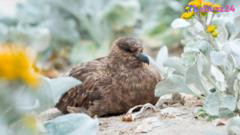
Australia has officially recorded its first case of the highly pathogenic H5N1 bird flu strain, signifying that the virus has now successfully penetrated every continent on Earth. The infection was identified in a brown skua, a migratory seabird, discovered on a beach within the Cape Le Grand National Park near Esperance, Western Australia. Agriculture Minister Julie Collins confirmed the development, noting that while the nation hoped to remain isolated from the virus indefinitely, its arrival was ultimately inevitable.
Environmental and veterinary authorities are on high alert as they monitor for potential wider transmission. A second suspected case involving an exhausted southern petrel found in the same region is currently under investigation. Threatened Species Commissioner Fiona Fraser indicated that testing over the coming days will reveal whether the virus has breached other local animal populations. Meanwhile, Chief Veterinary Officer Beth Cookson reassured the public that emergency response frameworks have been activated, with the national emergency animal disease committee convening immediately to manage the situation.
Although this is the first detection on the Australian mainland, the H5N1 strain had previously devastated wildlife on remote Australian territories in the southern Indian Ocean. Recent studies revealed a catastrophic ecological toll on Heard Island, where the virus is estimated to have wiped out over 75 percent of the island’s baby seal population—amounting to roughly 13,000 deaths—alongside significant mortalities among local penguins. Experts believe migratory pathways from French subantarctic islands facilitated the virus’s initial leap to these remote territories last year.
The H5N1 strain, which first emerged in China in the late 1990s, is highly contagious among wild birds and commercial poultry. While the virus has occasionally crossed over to mammals such as seals, foxes, and otters, human infections remain exceedingly rare and are typically linked to direct, unprotected contact with diseased animals. Australian officials emphasize that there is currently no evidence of mass mortalities on the mainland, but surveillance has been heavily intensified to protect both biodiversity and the agricultural sector.
Key Takeaways
- Australia has confirmed its first mainland case of H5N1 bird flu in a migratory seabird, meaning the virus has now reached every continent.
- Emergency veterinary protocols have been activated to monitor for further spread, with a second suspected case in a southern petrel currently being tested.
- The virus has already caused devastating ecological damage on remote Australian territories, including the loss of over 75% of baby seals on Heard Island.
Editor’s Analysis & Impact
The arrival of H5N1 on the Australian mainland represents a critical ecological tipping point. As the final continent to succumb to this highly contagious strain, Australia now faces unprecedented threats to its unique and highly isolated biodiversity. The agricultural sector, particularly poultry farming, is at immediate risk of severe economic disruption should the virus breach commercial biosecurity barriers. Furthermore, the devastating wildlife losses observed on Heard Island highlight the extreme vulnerability of marine mammals and native bird species to this pathogen. Globally, this milestone underscores the limits of geographic isolation in halting panzootic diseases. Governments and conservationists must now pivot from preventative biosecurity to active mitigation, rapid containment, and vaccine research for vulnerable species to prevent widespread ecological collapse.
Frequently Asked Questions
Q: How did the H5N1 bird flu reach Australia?
A: The virus was carried to the Australian mainland by migratory wild birds, specifically identified in a brown skua found in Western Australia.
Q: Is the H5N1 strain dangerous to humans?
A: While H5N1 is highly lethal to birds and certain mammals, human infections remain extremely rare and generally occur only after close, direct contact with infected animals.
Q: What impact has this virus had on other Australian territories?
A: On the remote Heard Island, the virus caused an ecological disaster, killing over 75% of the baby seal population (around 13,000 pups) and causing high mortality rates among penguins.
AI Disclosure: This article is based on verified data and official reports. Our Team and AI have cross-referenced every financial detail with primary sources to ensure total accuracy.
More from this Category