Ballots and Bullets: How Escalating Violence is Shaping Colombia’s Pivotal Presidential Election
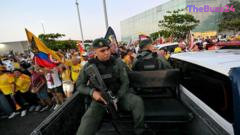
Colombia is facing a critical juncture as escalating internal violence and a dramatic rise in forced displacements take center stage in the country’s upcoming presidential election. Decades of conflict involving leftist guerrillas, right-wing paramilitaries, and powerful drug cartels have intensified, with illegal armed groups nearly doubling their ranks over the last five years. This resurgence of insecurity has left voters deeply divided over how to restore order to a nation weary of extortion, kidnappings, and territorial warfare.
The election presents a stark ideological clash between two candidates with diametrically opposed strategies for peace. Left-wing senator Iván Cepeda, a key architect of the “total peace” framework, advocates for continued negotiations with armed groups alongside deep social reforms to address the root causes of poverty and inequality. While supporters argue this approach prevents further bloodshed, critics contend that ceasefires have merely allowed criminal factions, such as FARC dissident groups and the National Liberation Army (ELN), to expand their control over lucrative drug trafficking and illegal mining routes.
In sharp contrast, conservative outsider Abelardo de la Espriella, a right-wing lawyer and businessman dubbed “El Tigre,” is campaigning on a hardline security platform. Endorsed by former US President Donald Trump, de la Espriella has promised a massive military crackdown, the construction of ten mega-prisons, and an absolute end to dialogue with criminal organizations. His supporters view his uncompromising stance as the necessary “stick” to reclaim territories where government authority has eroded, particularly following the power vacuums left by the 2016 FARC demobilization.
The stakes could not be higher for ordinary citizens, who are bearing the brunt of the security crisis. According to local peace and reconciliation advisors, forced displacement in major hubs like Bogotá surged by 300% between 2024 and 2025, driven by aggressive territorial disputes and rampant extortion of small businesses. As Colombians head to the polls, the outcome will not only dictate the nation’s domestic security strategy but will also reshape its geopolitical alignment and critical diplomatic relationship with the United States.
Key Takeaways
- Colombia's presidential election has become a referendum on national security, driven by a 300% surge in forced displacements between 2024 and 2025.
- Left-wing candidate Iván Cepeda champions a 'total peace' strategy of negotiation and social reform, while conservative challenger Abelardo de la Espriella advocates for a militarized crackdown and mega-prisons.
- The election carries significant geopolitical weight, highlighted by Donald Trump's endorsement of de la Espriella, which could redefine US-Colombia bilateral relations.
Editor’s Analysis & Impact
The outcome of Colombia’s presidential election will have profound implications for Latin American stability, regional security, and global commodities. A victory for Iván Cepeda would likely sustain the current administration’s focus on negotiated settlements, potentially maintaining fragile ceasefires but risking further territorial expansion by cartels if state enforcement remains weak. Conversely, an Abelardo de la Espriella presidency would signal a return to aggressive, US-backed counter-narcotics operations. This hardline approach could temporarily disrupt cocaine supply chains and illegal mining operations, but it also risks escalating rural violence and triggering a larger humanitarian crisis. For foreign investors, particularly in Colombia’s energy and agricultural sectors, the primary concern remains operational security; a failure by either candidate to stabilize rural regions will continue to deter long-term foreign direct investment and complicate regional trade dynamics.
Frequently Asked Questions
Q: Why has violence escalated in Colombia despite the 2016 peace agreement?
A: While the 2016 peace deal successfully demobilized thousands of FARC fighters, a security vacuum was created when the state failed to effectively occupy and secure the vacated territories. This allowed dissident FARC factions, the ELN, and drug cartels to seize control of lucrative drug trafficking and illegal mining routes.
Q: What are the main differences between the two presidential candidates' security platforms?
A: Iván Cepeda advocates for 'negotiated security,' combining state policing with social programs and dialogue to address the root causes of crime. Abelardo de la Espriella rejects negotiations entirely, proposing a military crackdown, the construction of ten mega-prisons, and closer security cooperation with the United States.
Q: How does the United States figure into this election?
A: The US relationship is a major talking point, highlighted by Donald Trump's endorsement of conservative candidate Abelardo de la Espriella. Trump has stated that a victory for de la Espriella would guarantee full US backing, whereas a win for Cepeda could strain bilateral relations due to differing views on counter-narcotics and security strategies.
AI Disclosure: This article is based on verified data and official reports. Our Team and AI have cross-referenced every financial detail with primary sources to ensure total accuracy.
More from this Category