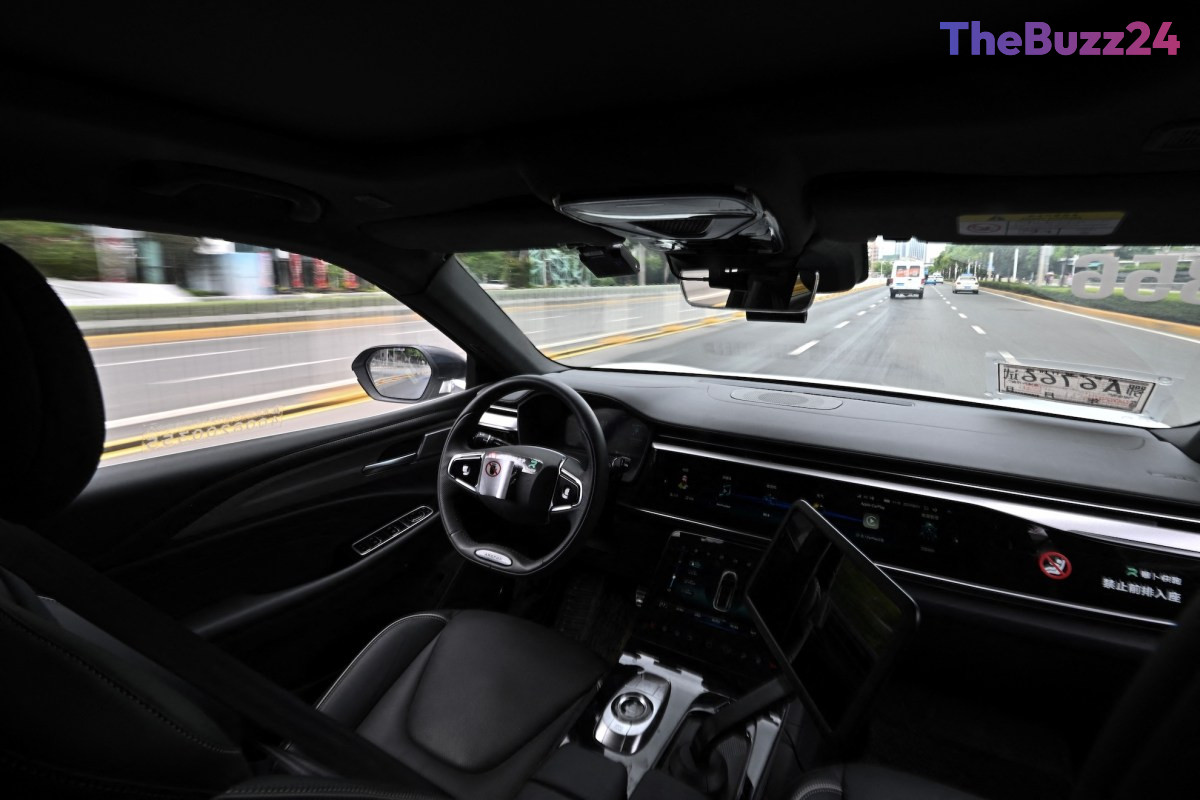
China Leads Global Robotaxi Race as Autonomous Vehicle Fleets Expand Rapidly
A newly launched benchmarking system is shedding light on the highly competitive global autonomous vehicle sector. Developed by research startup Autnmy AI, the “Road to Autonomy Index” utilizes a generative AI platform to evaluate and rank self-driving companies in real-time. By analyzing public databases, regulatory filings, and safety records every 12 hours, the index offers a comprehensive look at the industry. Surprisingly, the data reveals that China is currently leading the global robotaxi race, with Baidu’s Apollo Go program securing the top spot, closely followed by Waymo, Pony.ai, WeRide, and Tesla.
Beyond global rankings, regional data highlights a significant surge in autonomous vehicle deployments, particularly in Texas. Recent state tracking data shows that major players are rapidly expanding their fleets. Waymo increased its registered autonomous vehicles in Texas to 620, while Tesla saw a dramatic 64% jump to 69 vehicles. Zoox, which is currently awaiting federal exemptions to charge for rides in its custom-built robotaxis, also expanded its Texas fleet to 43 vehicles. Other operators like Avride and Nuro continue to maintain a steady presence in the state.
The autonomous and logistics sectors are also seeing a flurry of investment and strategic partnerships. Short-haul self-driving developer Gatik secured a multi-year partnership with PepsiCo to expand its driverless delivery operations. Meanwhile, solid-state battery developer QuantumScape teamed up with Honda R&D to accelerate manufacturing, and a major trio consisting of Stellantis, Wayve, and Uber announced a joint effort to deploy driverless vehicles. On the funding front, AI logistics firm Cargofy raised $11 million, while robot training data startup XDOF secured a massive $70 million funding round.
Despite rapid growth, the industry continues to face technical and regulatory hurdles. Waymo recently issued a software recall for nearly 4,000 robotaxis after multiple incidents where vehicles entered closed highway construction zones. Meanwhile, in Dallas, an Avride robotaxi operating on the Uber network was involved in a collision after a human driver ran a stop sign. As companies like Mobileye and Uber target 2027 for major commercial robotaxi rollouts, balancing rapid scaling with safety remains the industry’s primary challenge.
Key Takeaways
- Baidu's Apollo Go currently leads the global robotaxi rankings, followed by Waymo, Pony.ai, WeRide, and Tesla.
- Autonomous vehicle fleets are expanding rapidly in Texas, with Tesla and Waymo showing significant registration increases.
- Technical challenges persist, highlighted by Waymo recalling nearly 4,000 vehicles to address highway construction zone navigation issues.
Editor’s Analysis & Impact
The latest benchmarking data underscores a critical shift in the autonomous vehicle landscape: China is successfully leveraging its regulatory environment and rapid manufacturing capabilities to outpace Western competitors. While Waymo and Tesla dominate headlines in the United States, Chinese firms like Baidu, Pony.ai, and WeRide are quietly establishing global dominance in operational scale. However, the road to full commercialization remains bumpy. Waymo’s recent recall of 4,000 vehicles due to construction zone navigation issues highlights that edge-case software challenges still plague even the most advanced systems. As major players like Mobileye and Uber target 2027 for widespread commercial rollouts, the industry must transition from rapid fleet expansion to solving these complex safety and navigation hurdles to gain public trust and regulatory approval.
Frequently Asked Questions
Q: Who currently leads the global robotaxi market according to recent benchmarking?
A: China's Baidu Apollo Go program currently holds the top position, followed closely by Waymo, Pony.ai, WeRide, and Tesla.
Q: Why did Waymo recall its robotaxi fleet?
A: Waymo recalled nearly 4,000 robotaxis to address a software issue that failed to prevent vehicles from entering closed highway construction zones.
Q: Which states are seeing the fastest growth in autonomous vehicle testing?
A: Texas is experiencing a significant surge in autonomous vehicle deployments, with companies like Waymo, Tesla, and Zoox actively expanding their registered fleets in the state.
AI Disclosure: This article is based on verified data and official reports. Our Team and AI have cross-referenced every financial detail with primary sources to ensure total accuracy.
More from this Category