Webb Telescope Uncovers Ancient Origins of Interstellar Comet 3I/ATLAS
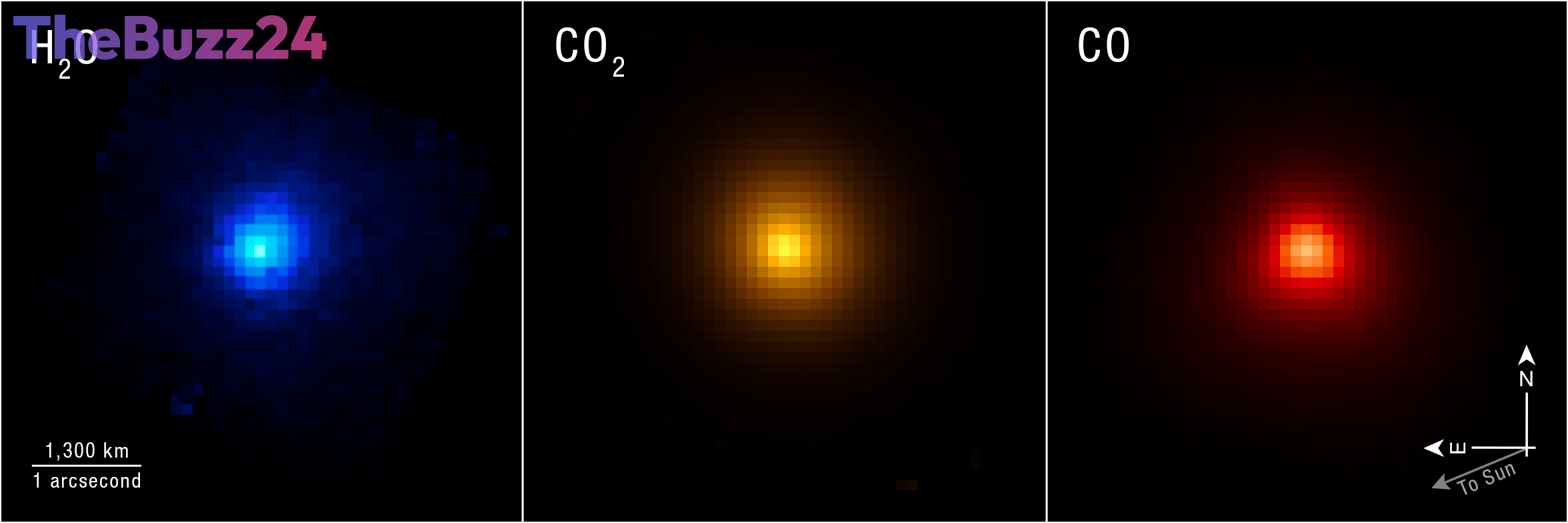
NASA’s James Webb Space Telescope has provided unprecedented insights into the origins of comet 3I/ATLAS, an interstellar visitor that journeyed through our solar system. By analyzing the comet’s chemical composition as it moved away from the Sun in December 2025, astronomers have gathered clues suggesting an ancient and distant formation environment, potentially predating our own solar system.
The Near-Infrared Spectrograph (NIRSpec) instrument aboard the Webb telescope was utilized to map the comet’s specific chemical makeup. The data revealed surprisingly high levels of deuterium, a heavier isotope of hydrogen, approximately 30 times greater than typically found in comets originating within our solar system. This significant difference, along with a scarcity of carbon-13 compared to carbon-12, points towards a formation in a very cold, radiation-rich environment billions of years ago, possibly during the universe’s peak star formation period known as “cosmic noon.”
Researchers believe that the material comprising 3I/ATLAS was likely frozen for an extended period, preserving its original chemical signature. This ancient ice, when warmed by its passage near the Sun, released gases that allowed for detailed spectroscopic analysis. The findings suggest that the comet’s home system may have been significantly different from our own, offering a unique window into the early conditions of the galaxy.
This groundbreaking research, published in the journal Nature, not only sheds light on the specific history of comet 3I/ATLAS but also contributes to the broader scientific quest to understand the prevalence of conditions necessary for life’s emergence throughout the cosmos. By studying such interstellar objects, scientists aim to determine how common or rare the ingredients and environments for life might be beyond Earth.
Key Takeaways
- The James Webb Space Telescope analyzed interstellar comet 3I/ATLAS, revealing clues about its ancient origin.
- High deuterium levels and low carbon-13 indicate the comet formed in a very cold, early galactic environment.
- The findings contribute to understanding the conditions for life's potential emergence in other parts of the universe.
Editor’s Analysis & Impact
The analysis of comet 3I/ATLAS by the James Webb Space Telescope marks a significant advancement in our understanding of interstellar objects and their origins. The discovery of unique isotopic ratios challenges existing models of cometary formation and suggests a greater diversity in planetary system development across the galaxy than previously assumed. This research has profound implications for astrobiology, as it provides a tangible example of conditions that might foster prebiotic chemistry elsewhere. The ability of Webb to dissect the composition of such distant objects underscores its pivotal role in exploring the universe’s history and the potential for life beyond our solar system, potentially influencing future space exploration missions and the search for exoplanets.
Frequently Asked Questions
Q: What makes comet 3I/ATLAS an 'interstellar' comet?
A: Comet 3I/ATLAS is classified as interstellar because its trajectory and composition indicate it originated from outside our solar system, rather than from within it.
Q: Why are the deuterium and carbon-13 levels in comet 3I/ATLAS significant?
A: The unusually high levels of deuterium (heavy hydrogen) and low levels of carbon-13 suggest that the comet formed in a very cold, ancient environment billions of years ago, possibly before the Sun and our solar system existed, and was not significantly reprocessed by heat.
Q: How does the study of this comet relate to the search for life?
A: By analyzing the chemical ingredients and formation environment of interstellar objects like 3I/ATLAS, scientists can better understand the prevalence of conditions and materials necessary for the development of life elsewhere in the universe.
AI Disclosure: This article is based on verified data and official reports. Our Team and AI have cross-referenced every financial detail with primary sources to ensure total accuracy.
More from this Category