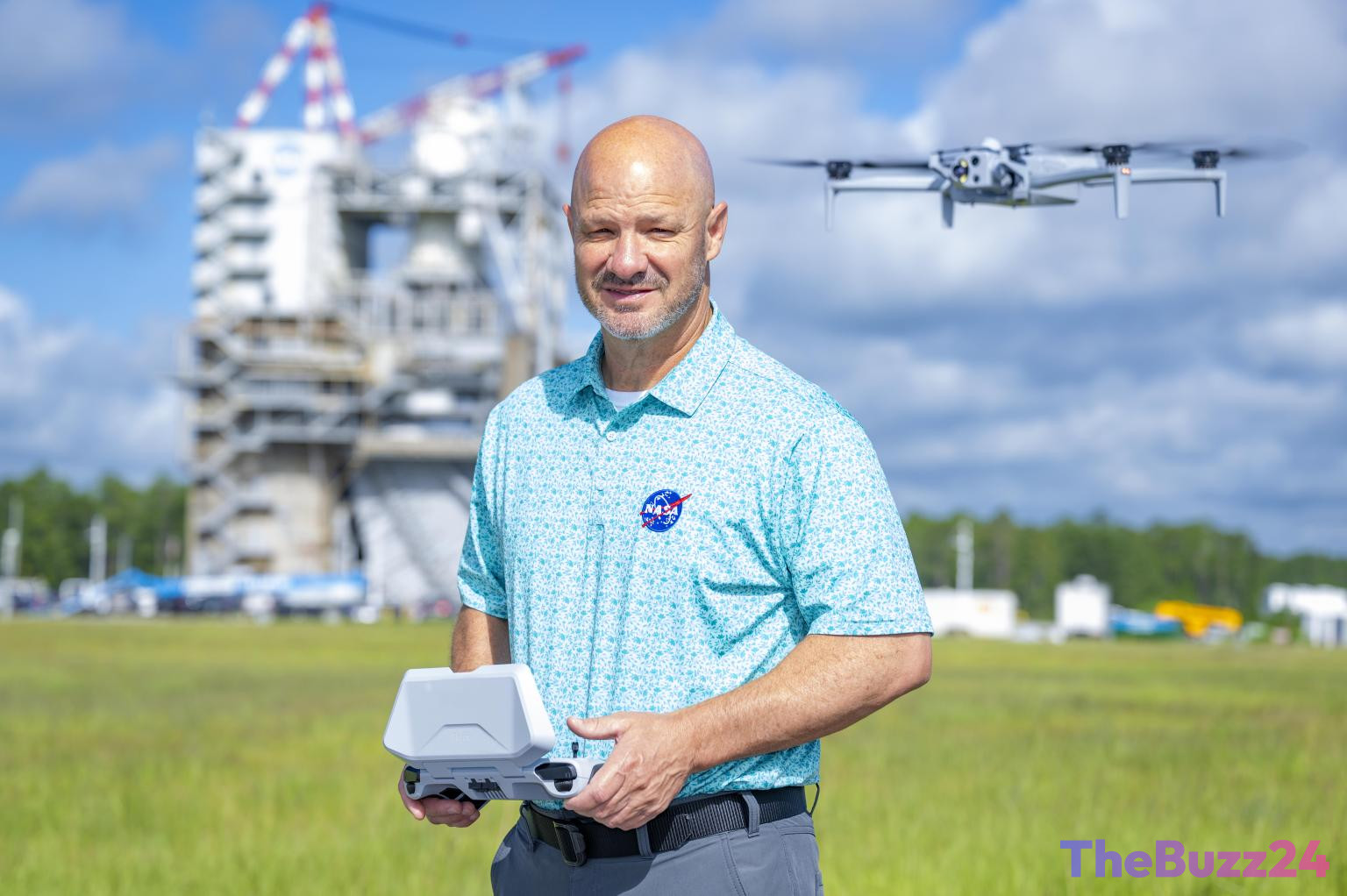
Tracking Artemis II: How Range Operations Manager Jason Peterson Brought the Moon Mission to Global Audiences
For Jason Peterson, working with the world’s premier space agency is a surreal, full-circle experience. Growing up in DeLisle, Mississippi, just down the road from the Stennis Space Center, he spent his childhood listening to the thunderous rumble of rocket engine tests shaking his windows. After a diverse career path that included welding, college, a 24-year tenure in the U.S. Air Force and Air National Guard, and a stint at Airbus, Peterson eventually found his way to NASA, where he now serves as a range operations manager. His military background in airfield and air-to-ground operations proved to be the perfect preparation for the grueling, high-stakes demands of the historic Artemis II mission.
During the nearly 10-day Artemis II test flight, Peterson was tasked with a critical responsibility: ensuring the world could witness the historic journey of astronauts Reid Wiseman, Victor Glover, Christina Koch, and Jeremy Hansen. Peterson supported the team responsible for delivering live video and communication feeds during both the launch and the eventual splashdown. His work began weeks prior at the Kennedy Space Center in Florida, where he and his team conducted rigorous systems checks, configured communication gear, and prepared drone and fixed-wing camera assets to capture the Space Launch System (SLS) rocket’s spectacular liftoff.
Once the Orion spacecraft completed its record-setting lunar flyby—traveling over 252,000 miles from Earth—Peterson transitioned to recovery operations aboard the USS John P. Murtha in the Pacific Ocean. Armed with a high-resolution, multi-sensor thermal camera system, Peterson was the first on the ship to visually acquire the capsule as it reentered Earth’s atmosphere at 35 times the speed of sound. He successfully tracked the spacecraft from the deployment of its initial drogue parachutes all the way to its safe splashdown in the ocean, keeping the live feed perfectly centered and focused for global audiences.
With Artemis II successfully concluded, the focus now shifts to Artemis III, which aims to land astronauts on the lunar surface. The technical milestones achieved during this test flight, supported by the tireless efforts of operations experts like Peterson, have laid a solid foundation for humanity’s ongoing return to deep space exploration.
Key Takeaways
- Jason Peterson, a military veteran and Mississippi native, served as a key range operations manager for the Artemis II mission, overseeing critical video and communication feeds.
- During the launch and splashdown phases, Peterson managed advanced drone and thermal imaging systems to track the Orion capsule's high-speed reentry and return.
- The successful 10-day Artemis II test flight paved the way for the upcoming Artemis III mission, which will return humans to the lunar surface.
Editor’s Analysis & Impact
The success of the Artemis II mission represents a monumental step forward in humanity’s return to deep space, and the seamless execution of its communications and tracking systems highlights the critical role of range operations. By delivering real-time, high-fidelity visual data of both the launch and splashdown, teams led by specialists like Jason Peterson do more than just monitor safety—they bridge the gap between complex aerospace engineering and public engagement. In an era where public interest and private investment drive the space economy, high-quality, transparent media coverage is essential for maintaining global support. Furthermore, the technical expertise refined during Artemis II directly reduces operational risks for Artemis III, which aims to land the first woman and person of color on the Moon. This mission proves that robust ground and naval support networks are just as vital to space exploration as the rockets themselves.
Frequently Asked Questions
Q: What was Jason Peterson's primary role during the Artemis II mission?
A: Jason Peterson served as a range operations manager, leading the team responsible for delivering live video and communication feeds during both the launch of the SLS rocket and the splashdown of the Orion capsule.
Q: How did Peterson track the Orion capsule during its return to Earth?
A: Operating from the USS John P. Murtha, Peterson used a high-resolution, multi-sensor thermal imaging system to locate and track the capsule from its atmospheric reentry at 400,000 feet down to its splashdown in the Pacific Ocean.
Q: What is the significance of the Artemis II mission?
A: Artemis II was a crewed test flight that carried four astronauts on a record-setting lunar flyby, testing the spacecraft's systems and paving the way for future crewed landing missions like Artemis III.
AI Disclosure: This article is based on verified data and official reports. Our Team and AI have cross-referenced every financial detail with primary sources to ensure total accuracy.
More from this Category