Unexpected Geological Complexity Greets Curiosity Rover on Mars
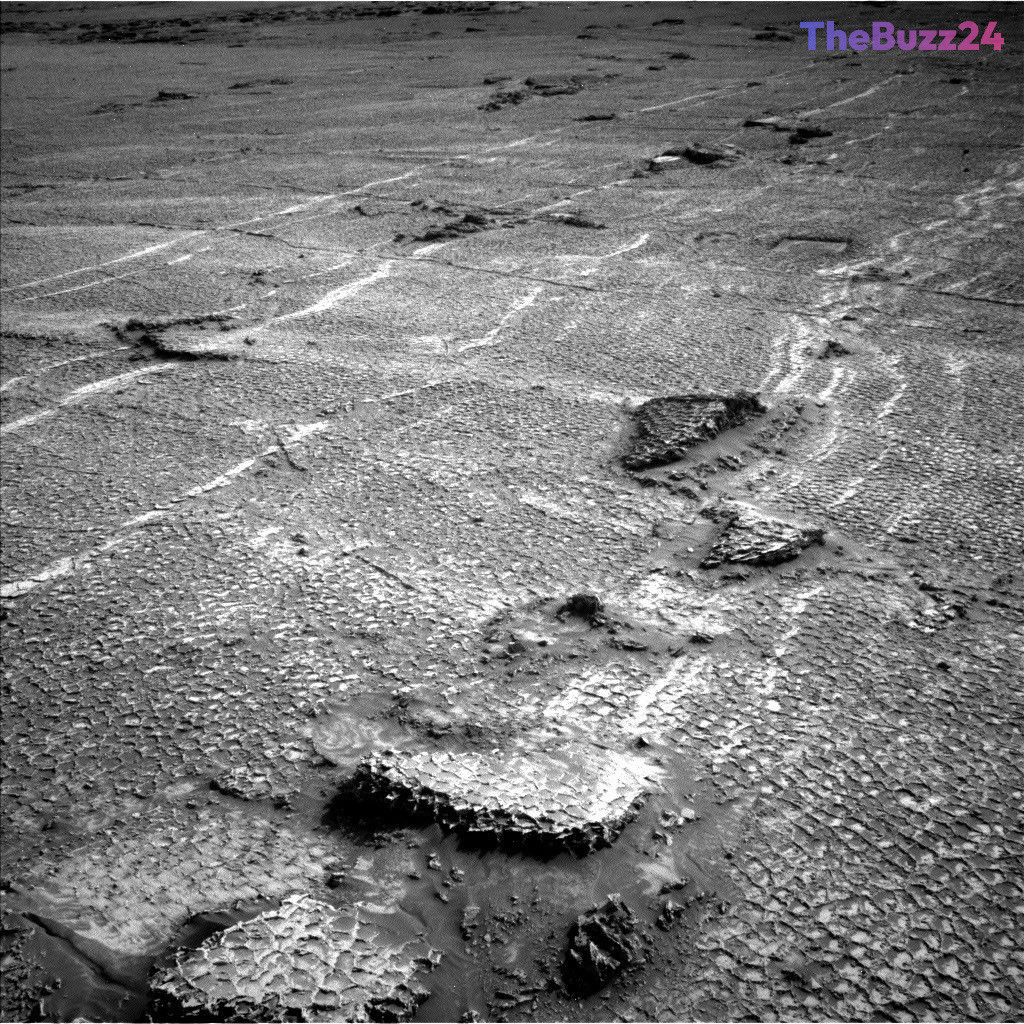
The Mars Science Laboratory rover, Curiosity, has encountered a surprising geological landscape that challenges initial orbital assessments. While navigating toward a region identified as ‘smooth’ in satellite imagery, the rover arrived at its destination only to discover a complex surface characterized by intricate polygons, mineral veins, and detailed laminations. These features, measuring only a few centimeters in size, were invisible to long-range cameras, highlighting the limitations of orbital mapping when compared to ground-level exploration.
Upon arrival at the site, the mission team shifted their operational focus to capitalize on the unexpected findings. The rover has been tasked with an intensive imaging campaign, utilizing its Mastcam and ChemCam Remote Micro Imager to document the terrain in high resolution. Scientists are particularly interested in the newly revealed structures, which suggest a more complex geological history than previously anticipated for this specific area of the Martian surface.
To further investigate the composition of these features, the rover is employing its suite of analytical tools, including the Alpha Particle X-Ray Spectrometer (APXS) and Laser-Induced Breakdown Spectroscopy (LIBS). Targets such as ‘Rio Chimore,’ ‘Rio de Lava,’ and ‘Rio de Salta’ have been selected for detailed chemical analysis. These efforts aim to decode the environmental conditions that led to the formation of such diverse surface textures.
As the mission continues, Curiosity is moving further up the local terrain, which remains littered with these tiny, intriguing polygons. The discovery serves as a reminder of the dynamic nature of Martian geology and the necessity of on-the-ground investigation. The data gathered from these sols will be instrumental in reconstructing the ancient environmental history of the region, providing researchers with deeper insights into the planet’s past.
Key Takeaways
- Curiosity discovered that terrain appearing 'smooth' from orbit is actually highly complex and rich in small-scale geological features like polygons and veins.
- The rover is conducting high-resolution imaging and chemical analysis on specific targets to understand the formation of these newly discovered structures.
- The findings demonstrate the critical importance of ground-level rover exploration in identifying geological details that orbital sensors cannot detect.
Editor’s Analysis & Impact
The recent findings from the Curiosity rover underscore a fundamental reality in planetary science: the ‘resolution gap’ between orbital observation and surface-level exploration. While satellite imagery is essential for mission planning and navigation, it often lacks the fidelity required to identify micro-geological features that hold the key to understanding Martian history. This discovery is significant because it forces a recalibration of how mission teams interpret orbital data, potentially leading to more cautious and thorough ground-based surveys. From an industry perspective, this highlights the ongoing need for advanced, high-resolution imaging technology on future robotic missions. As we look toward future Mars exploration, the ability to autonomously identify and prioritize these small-scale features will be crucial for maximizing the scientific return of every mission, ensuring that no significant geological evidence is overlooked during transit.
Frequently Asked Questions
Q: Why did the rover team expect the area to be smooth?
A: The team relied on orbital images and navigation maps that lacked the resolution to see small-scale features, leading them to believe the terrain was uniform before the rover arrived.
Q: What tools is Curiosity using to study these new features?
A: The rover is using its Mastcam for high-resolution photography, the ChemCam for laser-based chemical analysis, and the Alpha Particle X-Ray Spectrometer (APXS) to study the composition of the bedrock and ridges.
AI Disclosure: This article is based on verified data and official reports. Our Team and AI have cross-referenced every financial detail with primary sources to ensure total accuracy.
More from this Category