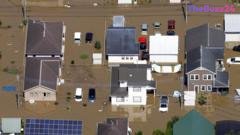
Record-Breaking Rainfall Triggers Deadly Emergency Across Eastern Japan
Eastern Japan is grappling with the aftermath of historic, unprecedented rainfall that has claimed at least eight lives and caused widespread infrastructure failure. The deluge, which meteorologists described as an extreme weather event, dumped more than 100mm of rain per hour in the Chiba prefecture—a volume triple the typical monthly average for August. The intensity of the storm has been attributed to a volatile collision between warm, humid air currents and cold atmospheric pressure, creating highly unstable conditions that caught many residents off guard.
The impact on the region has been severe, with over 20,000 households losing power and thousands of travelers left stranded at Narita Airport as transportation networks ground to a halt. Emergency services issued the highest level of alert on Thursday, prompting evacuation orders for over 100,000 residents. While the alert level was slightly downgraded by Friday, authorities remain on high alert for secondary disasters, including landslides and flash flooding, as rescue operations continue.
Local officials, including Chiba Governor Toshihito Kumagai, have characterized the event as a disaster of historic proportions, noting that the sheer volume of precipitation is unlike anything previously recorded in the area. As the region begins the slow process of recovery, the focus remains on life-saving efforts and restoring essential services. The storm is part of a broader, unusually active typhoon season that has impacted several nations across East Asia, highlighting the increasing vulnerability of regional infrastructure to extreme weather patterns.
Key Takeaways
- At least eight fatalities have been confirmed following record-breaking rainfall in Japan's Chiba prefecture.
- The storm caused significant infrastructure damage, including power outages for 20,000 homes and the suspension of major rail and highway services.
- Authorities issued the highest level of emergency warnings, citing the unprecedented nature of the precipitation which exceeded historical averages by a significant margin.
Editor’s Analysis & Impact
The catastrophic flooding in Japan serves as a stark reminder of the increasing frequency and intensity of extreme weather events in East Asia. From an economic perspective, the disruption to major transit hubs like Narita Airport and the damage to local businesses in Chiba highlight the fragility of regional supply chains and urban infrastructure when faced with climate-related shocks. The ‘unprecedented’ nature of this rainfall suggests that historical weather models may no longer be sufficient for urban planning and disaster mitigation. Moving forward, Japan and neighboring countries will likely need to accelerate investments in climate-resilient infrastructure and advanced early-warning systems. The broader implication is a shift in how governments must budget for emergency management, as the cost of recovery from such ‘once-in-a-century’ events continues to rise, potentially impacting regional insurance markets and long-term economic stability.
Frequently Asked Questions
Q: What caused the extreme rainfall in Japan?
A: The rainfall was caused by a combination of warm, humid air flowing into eastern Japan that collided with cold air, resulting in highly unstable atmospheric conditions.
Q: Are flights still being affected by the storm?
A: While thousands were stranded overnight, Narita Airport reported that flights were scheduled to operate normally by Friday, though some airlines warned of potential minor delays.
AI Disclosure: This article is based on verified data and official reports. Our Team and AI have cross-referenced every financial detail with primary sources to ensure total accuracy.
More from this Category