SpaceX Crew-12 Returns Safely to Earth After 237-Day Mission
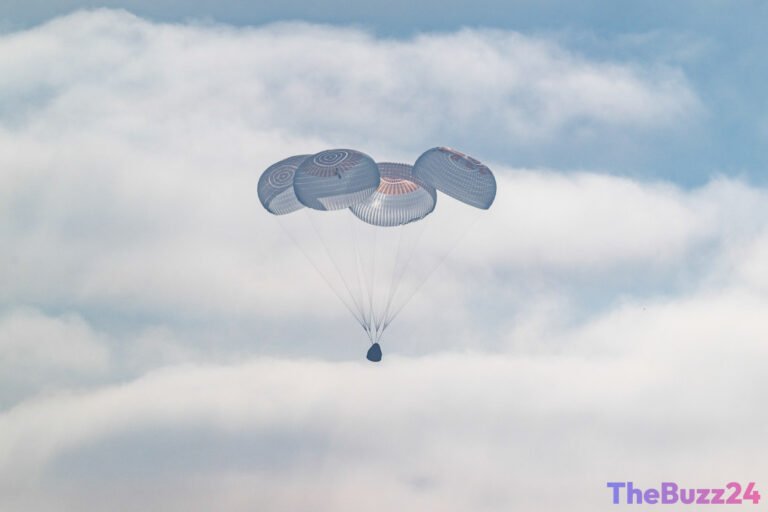
The SpaceX Crew Dragon Freedom spacecraft successfully splashed down in the Pacific Ocean off the coast of Los Angeles on Thursday, marking the conclusion of the Crew-12 mission. The four-person crew, consisting of NASA astronauts Jessica Meir and Jack Hathaway, European Space Agency astronaut Sophie Adenot, and Roscosmos cosmonaut Andrey Fedyaev, returned home after spending 237 days aboard the International Space Station.
During their extensive tenure in orbit, the team traveled over 100 million miles and completed more than 3,792 orbits around the planet. The mission served as a critical platform for scientific advancement, with the crew conducting experiments ranging from stem cell production for medical therapies to the development of on-demand IV fluid generation. These studies are designed to mitigate health risks for future long-duration spaceflight, including potential missions to the Moon and Mars.
Beyond their laboratory work, the crew maintained an active schedule of extravehicular activities. Jessica Meir completed four spacewalks, bringing her career total to seven, while Sophie Adenot made history as the first French woman to perform a spacewalk. Following their recovery by SpaceX vessels, the crew will undergo standard medical evaluations before heading to the Johnson Space Center in Houston for a scheduled debriefing on October 15.
This mission underscores the ongoing success of public-private partnerships in space exploration. By utilizing commercial transport services like those provided by SpaceX, the space program continues to ensure reliable access to low Earth orbit, allowing for sustained research and the development of technologies essential for the next generation of human space exploration.
Key Takeaways
- The Crew-12 mission concluded with a successful splashdown after 237 days in orbit.
- The crew conducted vital research on stem cells, IV fluid generation, and space-related health impacts.
- The mission featured significant milestones in spacewalking, including Sophie Adenot becoming the first French woman to perform one.
Editor’s Analysis & Impact
The successful completion of the Crew-12 mission reinforces the viability of the commercial crew model in sustaining a continuous human presence in space. By offloading routine transportation to private entities like SpaceX, space agencies are effectively shifting their focus toward high-level research and deep-space exploration goals. The data gathered during this 237-day mission—specifically regarding long-term physiological impacts and autonomous medical capabilities—is critical for the success of future Artemis-era lunar missions and eventual Mars transit. As the frequency of these missions increases, the industry is moving toward a more standardized, ‘routine’ approach to orbital travel, which will likely lower costs and increase the volume of scientific output in microgravity environments over the next decade.
Frequently Asked Questions
Q: How long was the Crew-12 mission in space?
A: The crew spent 237 days living and working aboard the International Space Station.
Q: What was the primary focus of the scientific research conducted by the crew?
A: The research focused on human health and exploration technologies, including stem cell production, on-demand IV fluid generation, and studies on how spaceflight affects blood flow and bacterial behavior.
AI Disclosure: This article is based on verified data and official reports. Our Team and AI have cross-referenced every financial detail with primary sources to ensure total accuracy.
More from this Category