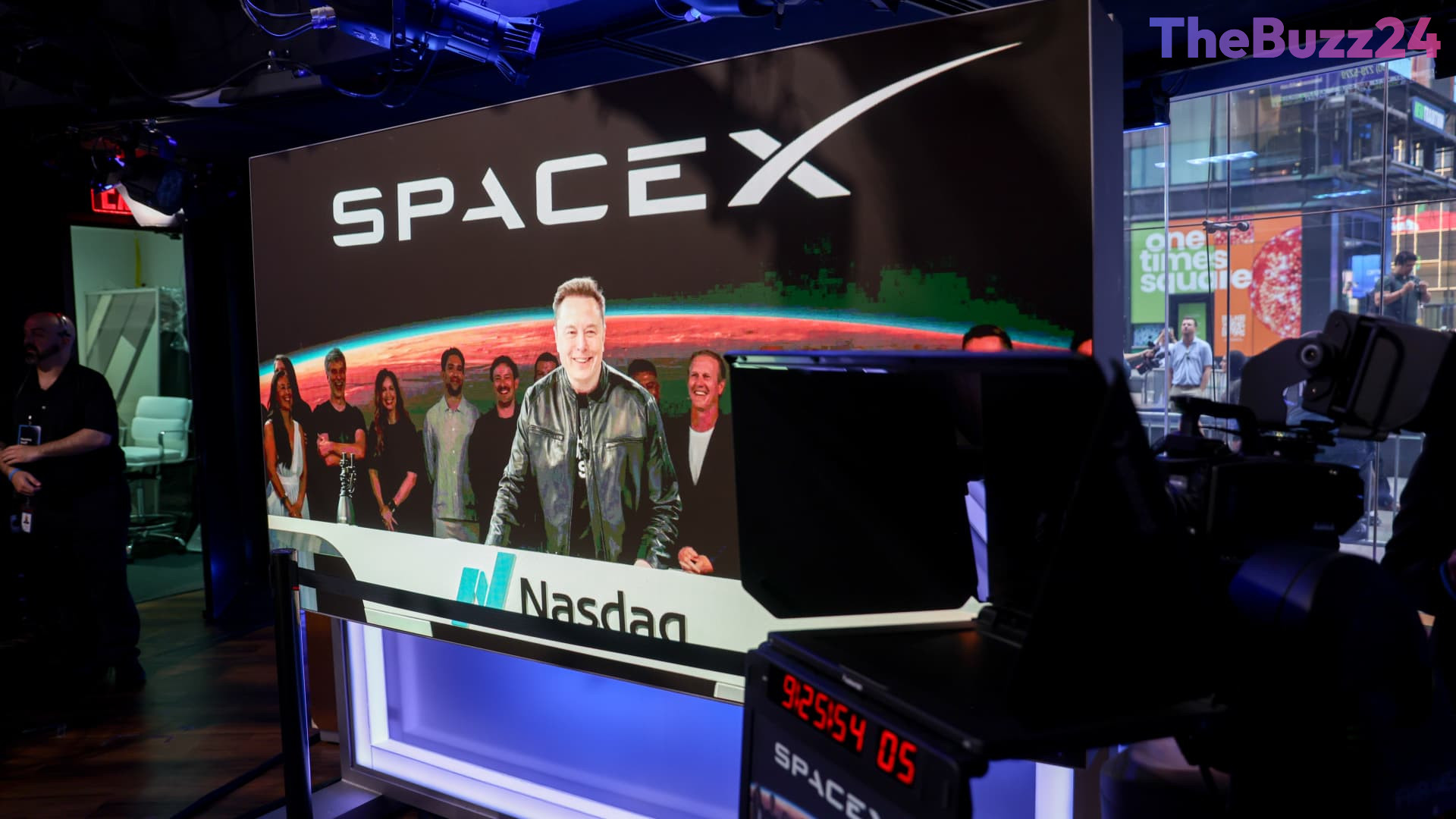
SpaceX’s Public Market Debut Marked by Extreme Volatility and Elon Musk’s Influence
SpaceX’s entry into the public market has been a turbulent affair, characterized by significant stock price swings in its initial two weeks. The aerospace company, known for its ambitious space exploration goals and led by visionary founder Elon Musk, experienced a rollercoaster ride that saw its valuation briefly soar past tech giants before facing sharp corrections. This volatility underscores the unique dynamics at play when a company with a powerful narrative and a celebrity CEO goes public.
Following a record-breaking initial public offering, SpaceX’s stock surged for several consecutive days, at one point briefly surpassing the market capitalization of both Amazon and Microsoft. Shares climbed more than 60% above their initial offering price of $135. However, this bullish momentum proved short-lived. The market soon saw daily drops of 5% and 4%, culminating in a 16% slump as investor jitters began to surface. Subsequent days brought more modest, single-point movements, reflecting a market grappling with the company’s valuation.
Analysts suggest that SpaceX’s stock performance is heavily influenced by expectations and a compelling future narrative rather than traditional earnings multiples. Gil Luria, head of technology research at D.A. Davidson, noted that Elon Musk’s ventures often trade on the promise of future innovations—such as Mars exploration or space-based data centers for SpaceX—rather than current financial performance. This forward-looking narrative resonated strongly with retail investors, who poured a net $405 million into SpaceX shares during its first five trading sessions, marking the strongest retail IPO debut in recent history, according to research firm Vanda. Viraj Patel, global macro strategist at Vanda, highlighted that SpaceX embodies qualities historically attractive to retail investors: a transformative technology story, a bold vision, a celebrity founder, and extensive media attention.
Despite the initial enthusiasm, financial fundamentals eventually exerted pressure. Mike Coop, chief investment officer, EMEA at Morningstar Wealth, pointed out that the “cult of Elon” adds significant hype and volatility, as previously observed with Tesla. Morningstar analysts had previously questioned SpaceX’s valuation, suggesting it was worth less than half its initial target. While Elon Musk has projected sky-high revenues, potentially reaching $1 trillion by 2030, the company reported $18.7 billion in revenue and a $4.9 billion net loss in 2025, with further losses in the first quarter of the current year. Long-term challenges include an anticipated increase in share supply as early investors seek to monetize gains, and a current price that many consider too high given the massive uncertainties, substantial losses, and significant capital investment requirements. Nevertheless, few prominent investors, including Michael Burry of “The Big Short” fame, have been willing to take a short position against the company, citing expensive options and a general reluctance to bet against Musk’s ventures.
Key Takeaways
- SpaceX experienced significant stock volatility in its first two weeks on public markets, with an initial surge followed by sharp declines.
- Retail investor interest was exceptionally high, driven by Elon Musk's visionary projects (Mars, space data centers) and his "cult-like" following, rather than traditional financial metrics.
- Analysts highlight long-term challenges for SpaceX, including potential share supply increases and a high valuation despite substantial losses and capital requirements, though few are willing to short the stock.
Editor’s Analysis & Impact
SpaceX’s volatile public debut underscores a growing trend where market valuations are heavily influenced by narrative and founder charisma, particularly in high-growth, speculative sectors like space technology. This phenomenon challenges traditional financial models, as investor sentiment, fueled by ambitious visions and media attention, can temporarily override fundamental earnings and profitability. The long-term outlook for SpaceX will depend on its ability to translate its ambitious projects, such as Starlink and Mars colonization, into sustainable revenue and profit, justifying its lofty valuation. This situation also highlights the increasing power of retail investors in shaping market dynamics for ‘story stocks,’ potentially leading to greater market instability but also offering unique opportunities for those who believe in the long-term vision.
Frequently Asked Questions
Q: Why is SpaceX's stock considered volatile?
A: Its volatility stems from being a "story-driven" stock, where investor expectations about future projects (like Mars exploration and space data centers) and the "cult of Elon" play a larger role than traditional financial fundamentals, leading to rapid price swings.
Q: What are the main challenges SpaceX faces in the public market?
A: Key challenges include a potential increase in share supply as early investors monetize gains, and a high valuation that many analysts believe is not justified by its current substantial losses and significant capital investment requirements.
AI Disclosure: This article is based on verified data and official reports. Our Team and AI have cross-referenced every financial detail with primary sources to ensure total accuracy.
More from this Category