Heavy Fine Issued in Norway After Vessel Uses Foghorn to Startle Sleeping Polar Bear
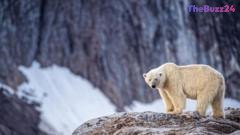
An individual has faced a substantial financial penalty following an incident in Norway’s remote Svalbard archipelago, where a ship’s foghorn was deliberately sounded to rouse a resting polar bear. The event took place earlier this month as a vessel navigated through a fjord in the northwestern region of the territory, located roughly 1,000 kilometers from the North Pole.
Local authorities confirmed that an anonymous individual agreed to pay a fine amounting to 50,000 kroner, equivalent to about £3,890. According to official accounts, passengers aboard the passing boat noticed the apex predator sleeping ashore and subsequently triggered the loud acoustic device. The sudden noise startled the bear, forcing it to wake up and relocate to a different area.
Strict regional laws explicitly prohibit any unnecessary actions that might disturb, attract, or pursue polar bears, a species that has enjoyed official protection in Svalbard since 1972. The Svalbard Environment Act mandates that all human activity and maritime traffic must be conducted in a manner that avoids causing undue stress to local fauna, which also includes walruses, seals, whales, and arctic foxes. Enforcement of these rules remains stringent, with previous penalties issued to tourists attempting to get too close to protected wildlife in the fragile Arctic ecosystem.
Key Takeaways
- An individual was fined 50,000 kroner (£3,890) for using a foghorn to wake a sleeping polar bear in Svalbard.
- The incident occurred in northwestern Svalbard when a vessel passed by the resting animal on land.
- Svalbard strict environmental laws explicitly forbid needlessly disturbing or pursuing protected species like polar bears.
Editor’s Analysis & Impact
The strict enforcement of wildlife protection laws in Norway’s Svalbard archipelago underscores the growing tension between Arctic tourism and ecological preservation. As climate change reshapes polar habitats and human traffic increases in northern waters, regional authorities are taking a zero-tolerance approach to disturbances of native fauna. This incident highlights the broader regulatory challenges faced by polar expedition operators and tourists alike. Moving forward, education and compliance will be critical to balancing economic interests in Arctic exploration with the urgent need to protect vulnerable populations of polar bears and other native species from human-induced stress.
Frequently Asked Questions
Q: What was the penalty for waking the polar bear?
A: The individual responsible was fined 50,000 kroner, which is approximately £3,890, and has agreed to pay the fine.
Q: When did polar bears become a protected species in Svalbard?
A: Polar bears were officially declared a protected species in the Svalbard archipelago in 1972.
Q: Are other animals protected under Svalbard's environmental regulations?
A: Yes, the Svalbard Environment Act protects all local wildlife from unnecessary disturbance, including walruses, seals, whales, reindeer, and arctic foxes.
AI Disclosure: This article is based on verified data and official reports. Our Team and AI have cross-referenced every financial detail with primary sources to ensure total accuracy.
More from this Category