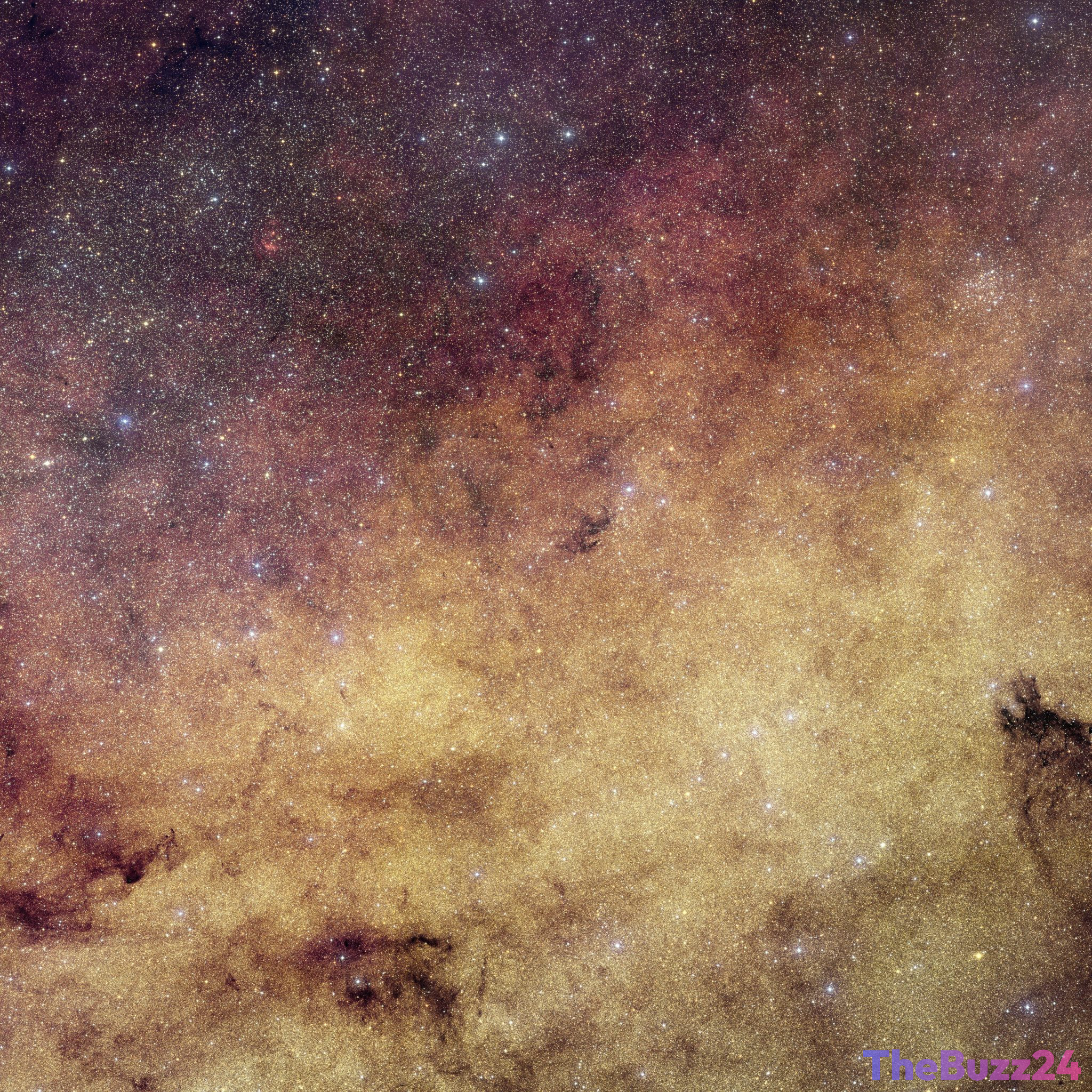
Euclid Telescope Captures Stunning View of Milky Way’s Core, Prepares for Roman Telescope Collaboration
The European Space Agency’s (ESA) Euclid space telescope has delivered a breathtaking new image of the Milky Way’s galactic center. This detailed snapshot, enhanced with ground-based observations for added color, offers an early glimpse into a region of profound astronomical interest. The observation is particularly significant as it overlaps with an area slated for extensive study by NASA’s upcoming Nancy Grace Roman Space Telescope, set to launch later this summer.
This collaborative preview provides astronomers with a substantial head start on a key survey planned for the Roman telescope. By combining data from both observatories, scientists anticipate a more comprehensive understanding of this complex region than could be achieved by either telescope independently. The Euclid mission, a joint effort between ESA and NASA, aims to map the dark universe, but its instruments are also capable of capturing such detailed views of our own galaxy.
The image, released on June 24, 2026, showcases the dense and dynamic environment at the heart of our galaxy. The overlapping observation strategy is designed to maximize scientific return, allowing researchers to cross-reference data and potentially uncover new insights into stellar evolution, galactic structure, and the phenomena occurring within the Milky Way’s core. This synergy between Euclid and Roman promises to be a powerful tool in unraveling the mysteries of the cosmos.
Key Takeaways
- The Euclid space telescope has captured a new, detailed image of the Milky Way's galactic center.
- This observation overlaps with a region to be studied by NASA's upcoming Nancy Grace Roman Space Telescope, enabling a collaborative research effort.
- The combined data from both telescopes is expected to provide a more comprehensive understanding of the galactic core than either could achieve alone.
Editor’s Analysis & Impact
This inter-agency collaboration between ESA’s Euclid and NASA’s Roman Space Telescope highlights a strategic approach to maximizing observational impact in space science. By pre-emptively imaging a key target region, Euclid provides valuable baseline data, allowing the Roman telescope to commence its primary mission with enhanced context. This synergy is crucial for ambitious projects aiming to unravel complex cosmic phenomena. The successful integration of data from different instruments and agencies not only accelerates discovery but also demonstrates the growing trend towards international cooperation in pushing the boundaries of astronomical research, potentially leading to significant advancements in our understanding of galactic evolution and dark energy.
Frequently Asked Questions
Q: What is the Euclid space telescope?
A: Euclid is a space telescope developed by the European Space Agency (ESA) with contributions from NASA. Its primary mission is to study the dark universe, investigating dark energy and dark matter by mapping the large-scale structure of the cosmos.
Q: What is the Nancy Grace Roman Space Telescope?
A: The Nancy Grace Roman Space Telescope, formerly WFIRST, is an upcoming space observatory developed by NASA. It is designed to investigate dark energy, exoplanets, and infrared astrophysics, with a wide field of view that will enable large-scale surveys of the universe.
Q: Why is observing the Milky Way's heart important?
A: The heart of the Milky Way is a dense and dynamic region containing a supermassive black hole, a high concentration of stars, and various energetic phenomena. Studying it helps astronomers understand galactic evolution, stellar dynamics, and the processes occurring in extreme environments.
AI Disclosure: This article is based on verified data and official reports. Our Team and AI have cross-referenced every financial detail with primary sources to ensure total accuracy.
More from this Category