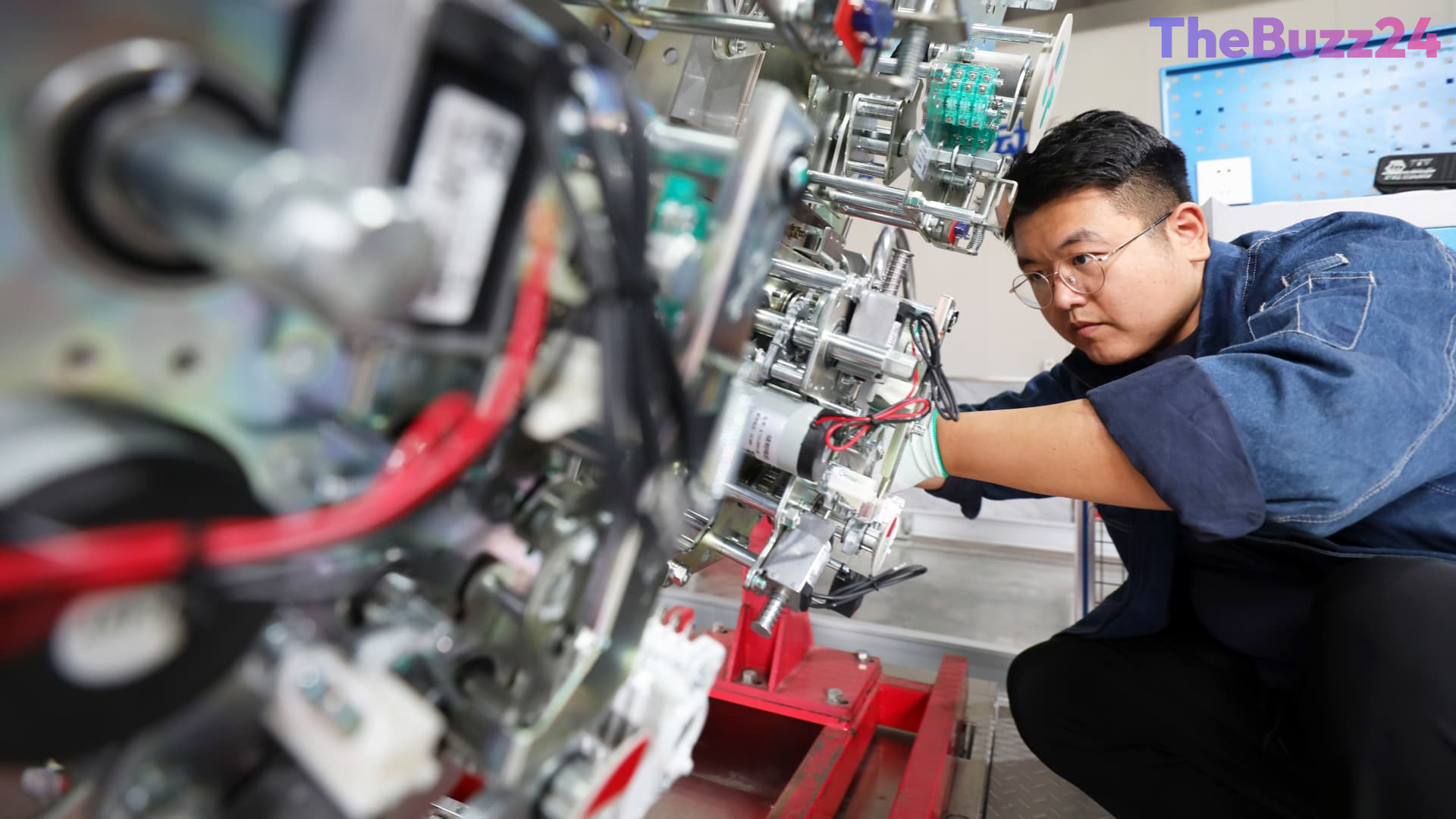
China’s Industrial Sector Shows Resilience Amidst Uneven Economic Recovery
China’s industrial sector continues to demonstrate resilience, with profits for the first five months of the year climbing 18.8% compared to the same period in 2023. While the growth rate in May moderated to 21.1% from the 24.7% recorded in April, the consistent double-digit expansion underscores the economy’s heavy reliance on factory output and robust export demand to offset persistent weakness in domestic consumption.
The data reveals a stark divergence in performance across different industrial segments. The electronics and computer equipment manufacturing sectors have emerged as primary drivers of growth, surging 103.9% between January and May, largely fueled by the global boom in artificial intelligence investment. Similarly, the non-ferrous metal mining sector saw a significant profit increase of 93.9%. Conversely, downstream industries, including automotive and furniture manufacturing, continue to face substantial headwinds, with profits declining by 19.8% and 58.4% respectively.
Structural challenges, including a prolonged downturn in the property market and intense domestic competition, remain significant hurdles for the broader economy. Furthermore, geopolitical tensions, particularly the ongoing conflict involving Iran and its impact on shipping through the Strait of Hormuz, have introduced new layers of uncertainty regarding international supply chains and energy costs. As factory-gate inflation reaches multi-year highs, policymakers are expected to implement more targeted support measures to stabilize corporate profitability and encourage credit growth in an environment where domestic demand remains sluggish.
Key Takeaways
- China's industrial profits grew by 18.8% in the first five months of the year, driven largely by the electronics and AI-related sectors.
- A significant performance gap exists between high-growth upstream industries and struggling downstream manufacturing sectors like automotive and furniture.
- Geopolitical instability and weak domestic consumption continue to pose risks to the sustainability of China's industrial profit growth.
Editor’s Analysis & Impact
The current industrial data from China paints a picture of a ‘two-speed’ economy. While the nation is successfully capitalizing on the global AI and electronics hardware cycle, the domestic-facing sectors are suffering from a lack of consumer confidence and structural property-sector drag. The reliance on exports to maintain these profit margins leaves the country vulnerable to external shocks, such as the current maritime tensions in the Middle East. Moving forward, the effectiveness of Beijing’s monetary policy—specifically the push for increased bank lending—will be critical. If the government cannot stimulate domestic demand to complement the export-led growth, the industrial sector may face a period of consolidation and margin compression as overcapacity issues intensify in the coming quarters.
Frequently Asked Questions
Q: Which sectors are currently driving profit growth in China?
A: The primary drivers are the electronics, computer equipment, and non-ferrous metal mining sectors, which have benefited significantly from the global AI investment boom.
Q: Why are downstream manufacturers in China struggling?
A: Downstream manufacturers are facing pressure from weak domestic demand, intense internal competition, and rising factory-gate inflation, which squeezes profit margins.
AI Disclosure: This article is based on verified data and official reports. Our Team and AI have cross-referenced every financial detail with primary sources to ensure total accuracy.
More from this Category