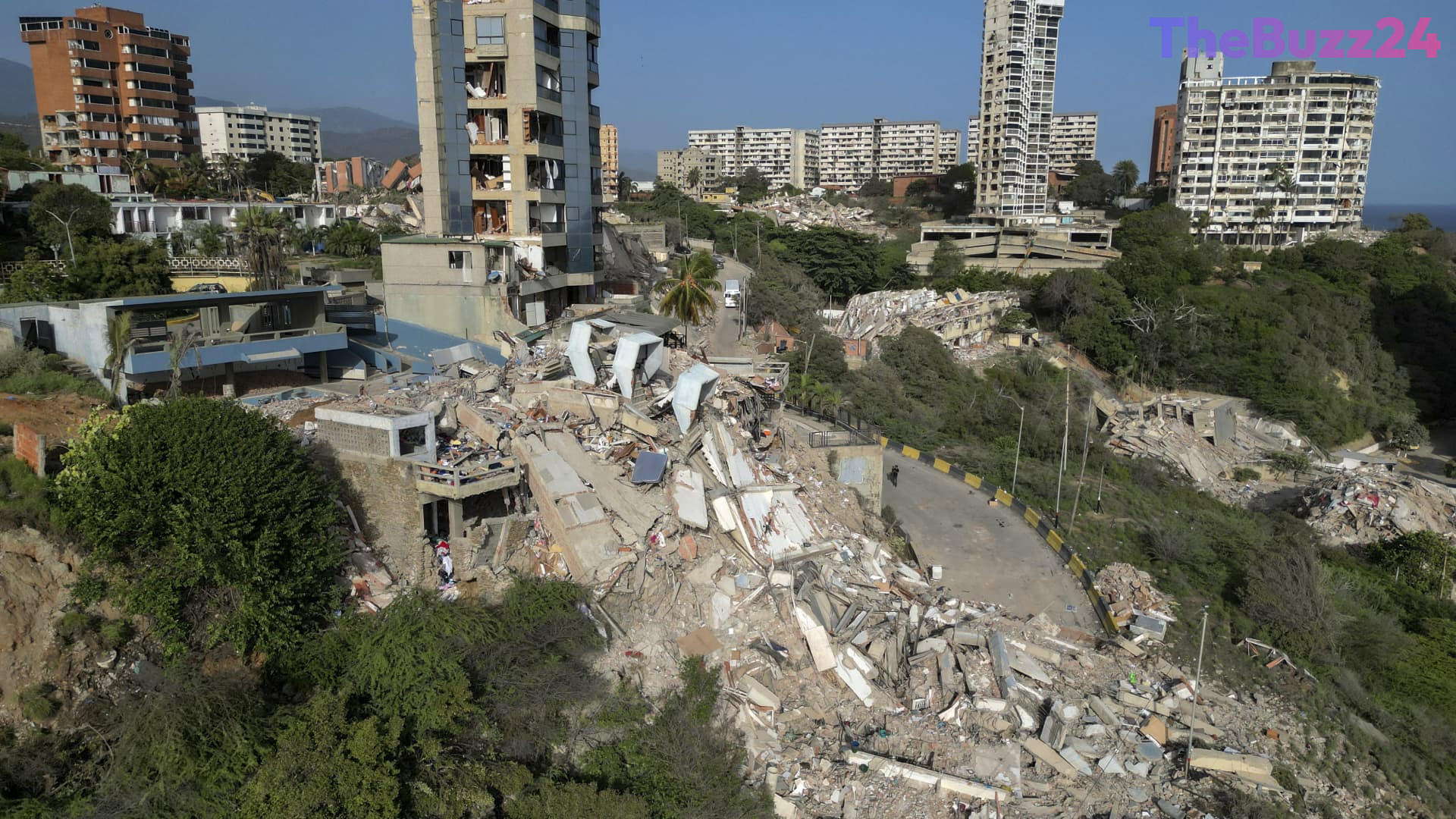
Venezuela Faces Humanitarian Crisis as Earthquake Death Toll Surpasses 1,450
Rescue operations in Venezuela have entered a critical phase as the death toll from two powerful earthquakes that struck the nation this week climbed to 1,450. The magnitude 7.2 and 7.5 tremors, which devastated the coastal state of La Guaira, have left thousands injured and displaced, with hundreds of buildings reduced to rubble. Interim President Delcy Rodriguez has described the event as the most severe natural catastrophe in the country’s history, as international rescue teams work alongside local volunteers to locate survivors.
Despite the arrival of over 2,600 foreign rescue workers, the situation remains dire. The 72-hour window, widely considered the most viable period for finding survivors, has passed, significantly lowering the probability of locating those still trapped. While government officials report that at least 33 people were rescued over the weekend, including several children, tens of thousands of individuals remain unaccounted for. The discrepancy between official government figures and lists maintained by the political opposition highlights the immense scale of the missing persons crisis.
Logistical challenges continue to hamper recovery efforts, with authorities restricting access to key roads to prioritize emergency vehicle movement. Meanwhile, the international community has begun mobilizing significant financial aid, with the United States preparing a multi-hundred-million-dollar support package to bolster ongoing relief operations. As aftershocks continue to threaten the stability of remaining structures, the focus remains on providing shelter for the displaced and maintaining the search for survivors amidst the ruins of La Guaira.
Key Takeaways
- The death toll from the twin earthquakes in Venezuela has reached 1,450, with over 3,150 people reported injured.
- International rescue teams are struggling against time as the critical 72-hour survival window has closed, though some miraculous rescues of children continue.
- The United States is preparing a substantial financial aid package to assist in the recovery efforts, adding to existing commitments.
Editor’s Analysis & Impact
The catastrophic earthquake in Venezuela arrives at a time of extreme political and economic fragility, potentially serving as a catalyst for significant domestic instability. The disaster forces a complex intersection of humanitarian necessity and geopolitical maneuvering, as the interim government attempts to manage a massive recovery effort while under international scrutiny. The influx of foreign aid and rescue personnel provides a temporary reprieve for the strained infrastructure, but the long-term economic impact will likely be severe, given the destruction of housing and critical supply chains. Future stability will depend heavily on the government’s ability to transparently manage international relief funds and effectively coordinate with global partners, as failure to do so could exacerbate existing political tensions and deepen the humanitarian crisis.
Frequently Asked Questions
Q: How many people are currently missing following the earthquakes?
A: While the government has reported hundreds missing, opposition-led tracking efforts suggest that nearly 50,000 people remain unaccounted for.
Q: What is the significance of the 72-hour window mentioned by rescue teams?
A: The 72-hour window is a standard benchmark in search and rescue operations, after which the probability of finding survivors trapped under rubble decreases significantly.
AI Disclosure: This article is based on verified data and official reports. Our Team and AI have cross-referenced every financial detail with primary sources to ensure total accuracy.
More from this Category