Venezuela Earthquake Crisis: Thousands Left Homeless as Survivors Seek Shelter in Makeshift Camps
A devastating series of two massive earthquakes struck Venezuela last week, leaving a significant portion of the population homeless and facing an uncertain future. The seismic events have caused widespread destruction across the region, forcing families to flee their damaged homes in search of safety.
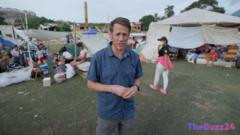
In the northern coastal town of Catia la Mar, the humanitarian situation is particularly acute. Survivors have been forced to establish makeshift camps in areas such as local baseball stadiums, where many are currently sleeping in tents or directly outdoors. The lack of permanent structures has created a precarious living environment for those who have lost nearly everything.
At present, the displaced population is heavily reliant on the generosity of others, depending on donated food and clothing to meet their most basic needs. There is a growing sense of urgency among the survivors, who are calling on authorities to provide more stable, temporary accommodations as the nation begins the arduous process of rebuilding.
As the community grapples with the immediate aftermath, the focus remains on securing essential supplies and finding safe places for the displaced to rest. The scale of the destruction suggests that the recovery process will be a long and difficult journey for the affected regions.
Key Takeaways
- Two massive earthquakes in Venezuela have caused widespread destruction and mass homelessness.
- Survivors in coastal towns like Catia la Mar are currently living in makeshift shelters, tents, or outdoors.
- Displaced residents are currently dependent on humanitarian donations for food, clothing, and basic necessities.
Editor’s Analysis & Impact
The recent seismic activity in Venezuela presents a massive humanitarian and economic challenge for the nation. Beyond the immediate loss of life and property, the destruction of infrastructure in coastal regions like Catia la Mar will likely strain the country’s already fragile economy. The long-term recovery will require significant capital investment and international cooperation to rebuild housing and essential services. Furthermore, the displacement of large populations creates a secondary crisis of public health and social stability. As the government attempts to manage the immediate relief efforts, the focus must shift toward sustainable reconstruction to prevent long-term poverty cycles among those who lost everything. The speed and efficiency of the response will be critical in determining the nation’s path to stability.
Frequently Asked Questions
Q: Where are the earthquake survivors currently staying?
A: Many survivors are staying in makeshift shelters, such as baseball stadiums, or are sleeping in tents and outdoors in towns like Catia la Mar.
Q: What are the most urgent needs for the displaced people in Venezuela?
A: The most immediate needs include temporary housing, food, and clothing, which are currently being provided largely through donations.
AI Disclosure: This article is based on verified data and official reports. Our Team and AI have cross-referenced every financial detail with primary sources to ensure total accuracy.
More from this Category