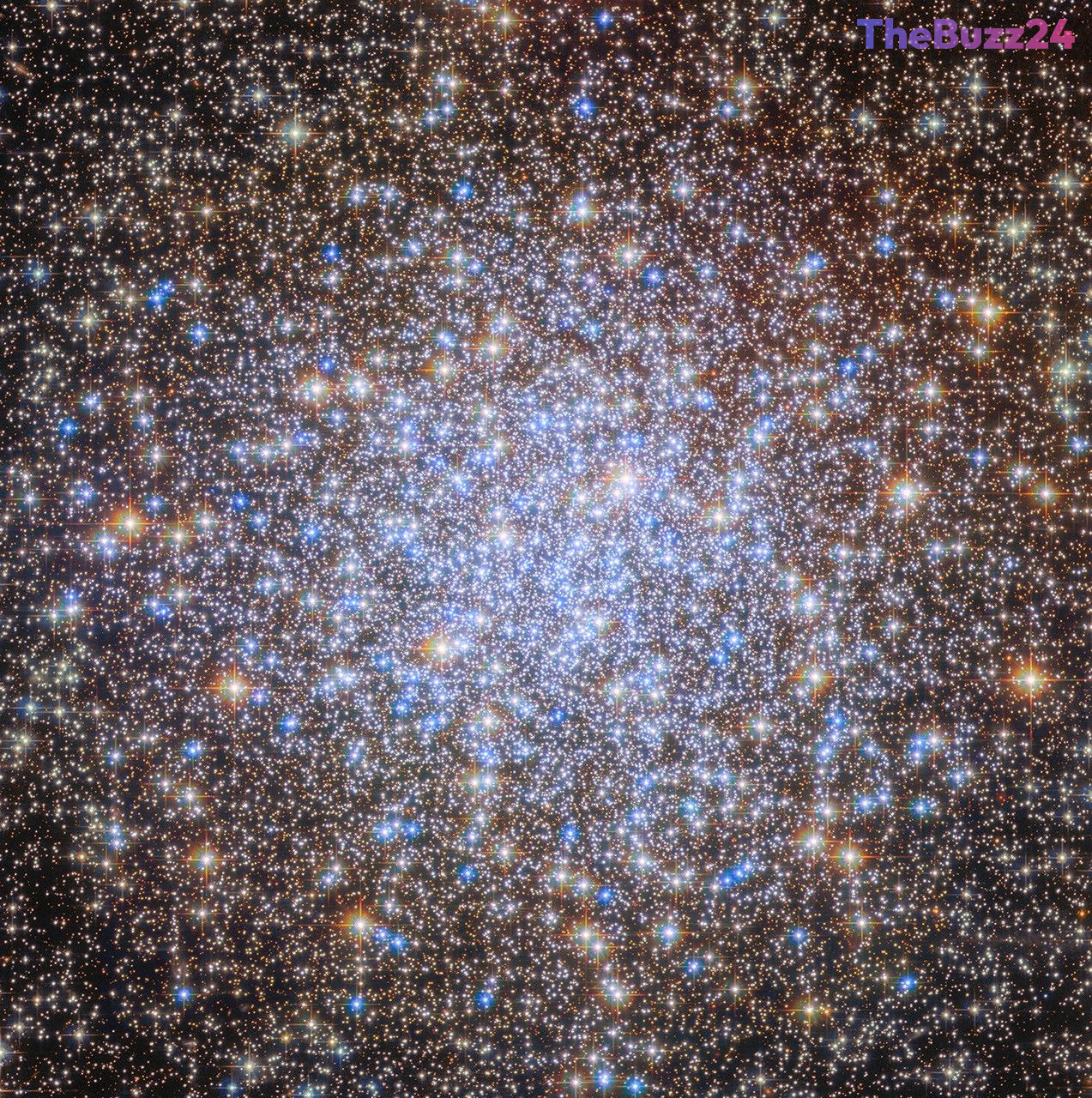
The Chandelier Cluster: A Glimpse into the Ancient Origins of the Milky Way
A stunning new image of the globular cluster NGC 6723, colloquially known as the Chandelier Cluster, has been unveiled, showcasing the dense, sparkling concentration of stars located approximately 27,000 light-years away in the constellation Sagittarius. The cluster appears as a brilliant collection of individual stellar bodies, each acting as a luminous point within a vast, ancient cosmic structure.
Globular clusters such as NGC 6723 are of significant interest to astronomers because they house some of the oldest stars in the galaxy. With ages frequently exceeding 10 billion years, these clusters are nearly as old as the universe itself. Their existence provides a unique window into the early stages of galactic evolution, as they are believed to be among the first structures to have coalesced within the Milky Way.
While these clusters are fundamental to our understanding of cosmic history, the precise mechanisms behind their formation remain a subject of ongoing scientific debate. Researchers continue to study these dense stellar groupings to determine how they formed billions of years before the development of the thin disk of stars that currently hosts our own solar system.
Key Takeaways
- NGC 6723, or the Chandelier Cluster, is a dense globular cluster located 27,000 light-years away in the Sagittarius constellation.
- The stars within this cluster are among the oldest in the galaxy, with many dating back over 10 billion years.
- Studying these ancient clusters helps scientists understand the early formation processes of the Milky Way galaxy.
Editor’s Analysis & Impact
The study of globular clusters like NGC 6723 is vital for refining our models of galactic archaeology. By examining these ‘fossil’ structures, astronomers can better understand the conditions of the early universe and the hierarchical assembly of galaxies. The fact that these clusters predate the Milky Way’s disk suggests a complex, multi-stage formation history for our galaxy. As imaging technology improves, the ability to resolve individual stars within these dense environments allows for more precise age-dating and chemical composition analysis. This research has broader implications for cosmology, as it constrains the timeline of star formation and the evolution of dark matter halos that likely served as the gravitational cradles for these ancient stellar populations.
Frequently Asked Questions
Q: What is a globular cluster?
A: A globular cluster is a large, spherical collection of stars that are gravitationally bound together, typically containing hundreds of thousands to millions of ancient stars.
Q: Why is NGC 6723 called the Chandelier Cluster?
A: It is nicknamed the Chandelier Cluster because its dense, sparkling appearance resembles the intricate, light-filled structure of a chandelier.
AI Disclosure: This article is based on verified data and official reports. Our Team and AI have cross-referenced every financial detail with primary sources to ensure total accuracy.
More from this Category