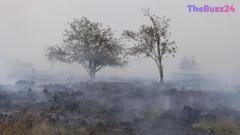
Belgium Battles Its Worst Wildfire in Modern History as Blazes Sweep Across Europe
Emergency crews are working tirelessly to contain a massive wildfire sweeping across Belgium’s premier nature reserve, marking what officials have categorized as the most severe blaze the nation has witnessed in recent years. The aggressive fire has already scorched approximately one-third of the High Fens region, prompting mandatory evacuations for residents living in two neighboring villages as the flames edge dangerously close to residential areas.
To combat the disaster, international aid has been mobilized through the activation of the European Union’s civil protection mechanism. Aerial support, including specialized water-bombing aircraft and helicopters dispatched from Sweden, the Czech Republic, and the Netherlands, has joined ground forces battling the inferno. However, response efforts have faced significant challenges due to the rugged bog-land terrain, dense forests, and unpredictable wind patterns that continue to shift unfavorably.
This catastrophic event is part of a broader wave of wildfires currently plaguing multiple European nations following a historically intense summer marked by extreme heatwaves. Neighboring France has also had to deploy hundreds of firefighters to manage out-of-control blazes in the south-west, forcing hundreds to flee. Climate monitoring agencies attribute this heightened vulnerability to prolonged high temperatures and severe dry conditions that have left vast tracts of European landscapes dangerously parched.
Key Takeaways
- Belgium is fighting its largest wildfire in recent history, destroying a significant portion of the High Fens nature reserve.
- International assistance was deployed via the EU civil protection mechanism, bringing aircraft and helicopters from Sweden, the Czech Republic, and the Netherlands.
- Severe wildfires are affecting multiple European countries, including France, Croatia, Spain, and Serbia, following record-breaking summer heatwaves.
Editor’s Analysis & Impact
The escalating frequency and severity of wildfires across Europe highlight a mounting crisis for emergency management and environmental policy. As consecutive record-breaking summers dry out vegetation across the continent, countries are finding that national firefighting resources alone are increasingly insufficient. The rapid deployment of cross-border European air support demonstrates the critical need for regional cooperation and enhanced climate resilience infrastructure. Moving forward, governments will likely need to significantly increase investments in preventive forestry management, early-warning detection systems, and dedicated multi-national aerial firefighting fleets to mitigate the compounding economic and ecological impacts of extreme weather events.
Frequently Asked Questions
Q: Which area in Belgium is affected by the wildfire?
A: The wildfire is tearing through the High Fens, which is Belgium's largest nature reserve.
Q: What international help was requested?
A: Belgium activated the European Union's civil protection mechanism, bringing in water-bombing aircraft from Sweden and helicopters from the Czech Republic and the Netherlands.
Q: Why is the fire difficult to extinguish?
A: Emergency responders have been hindered by adverse weather conditions, shifting winds, and the park's challenging terrain, which consists of bog-like territory, moorland, and dense forests.
AI Disclosure: This article is based on verified data and official reports. Our Team and AI have cross-referenced every financial detail with primary sources to ensure total accuracy.
More from this Category