Upcoming SpaceX Mission to Deliver Critical Science Experiments and Supplies to the Space Station
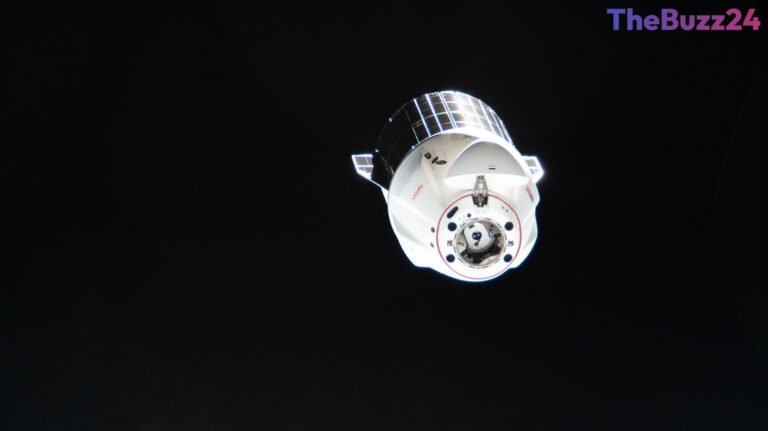
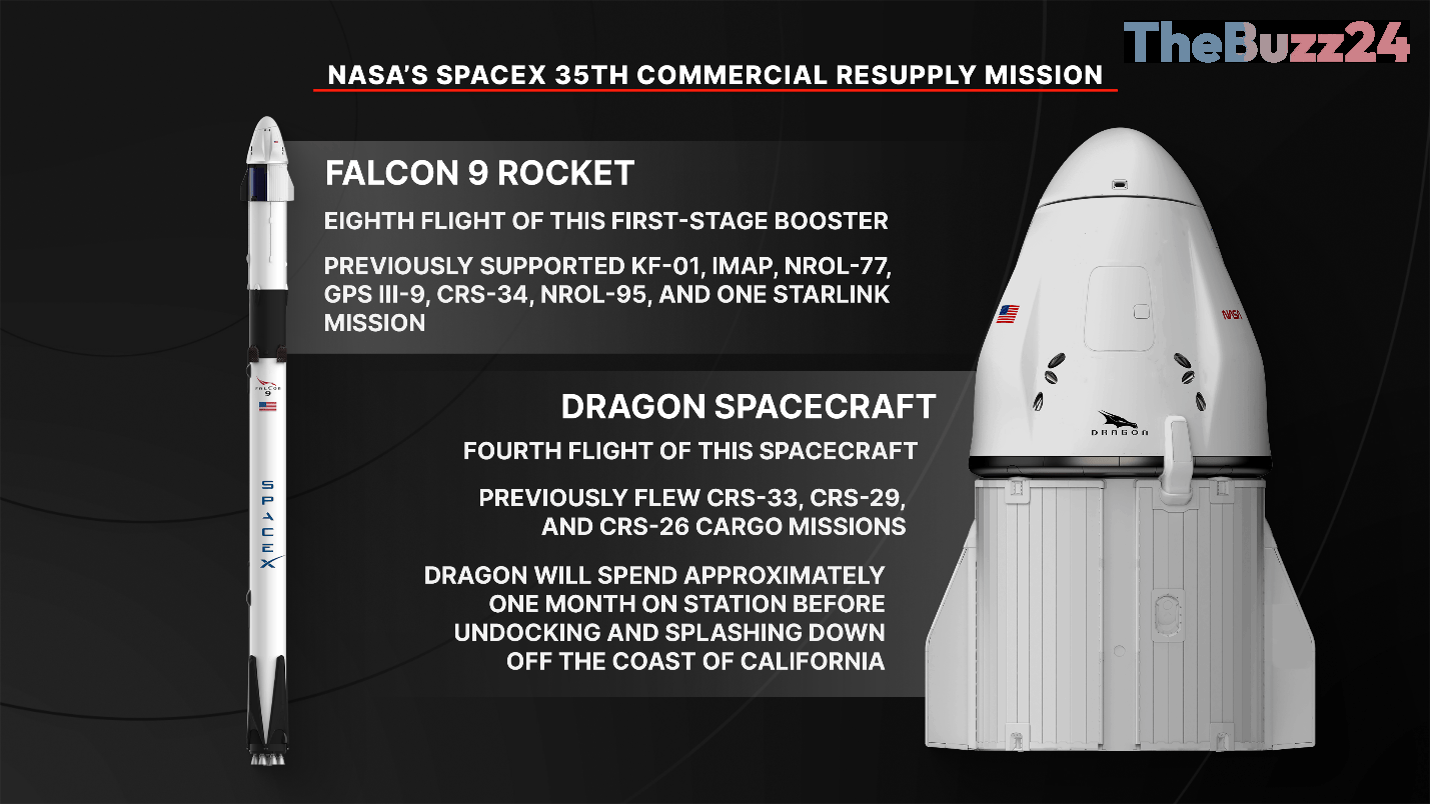
Preparations are underway for an upcoming commercial resupply mission to the International Space Station, utilizing a Falcon 9 rocket and a Dragon spacecraft. The launch is targeted for no earlier than Tuesday, October 13, lifting off from Space Launch Complex 40 at Cape Canaveral Space Force Station in Florida. The flight will carry over 6,300 pounds of essential cargo, equipment, and cutting-edge scientific investigations designed to expand our understanding of human health and advanced materials.
Among the notable scientific payloads heading to orbit is the LambdaVision-1 experiment, which investigates the manufacturing of artificial retinas in microgravity. By building these implants layer by layer in a reduced-gravity environment, researchers hope to achieve greater uniformity and stability, ultimately aiming to restore vision for patients suffering from incurable retinal diseases on Earth. Another key payload, Stellar Spheroids, will examine the growth and function of 3D human heart tissue models to evaluate how microgravity impacts advanced vascular network formation, paving the way for improved disease modeling and pharmaceutical testing.
The mission will also deliver the ELF-Unconventional Glass 2 investigation, which looks at how glass forms from non-traditional elements in space. The resulting insights could yield stronger, more durable materials for future spacecraft and deep-space habitats. Additionally, the MINDS experiment will utilize brain organoids representing diverse patient populations to study inflammation linked to neurodegenerative conditions such as Alzheimer’s and Parkinson’s disease. Operational hardware, including the final pair of Roll-Out Solar Arrays to augment station power and equipment supporting the Artemis program, rounds out the heavy cargo manifest.
Once the Dragon spacecraft reaches the orbital laboratory, it will autonomously dock to the Harmony module, where astronauts Anil Menon and Jessica Watkins will oversee its arrival. The spacecraft is scheduled to remain docked for approximately one month before returning to Earth via a Pacific Ocean splashdown. It will bring back vital scientific samples, failed hardware like a Canadarm2 robotic arm joint for ground analysis, and equipment slated for refurbishment.
Key Takeaways
- A SpaceX Falcon 9 rocket and Dragon spacecraft will deliver over 6,300 pounds of cargo and scientific experiments to the International Space Station.
- Key scientific investigations include manufacturing artificial retinas, growing 3D heart tissue models, creating unconventional glass, and studying neurodegenerative disease markers.
- The mission also delivers the final pair of International Space Station Roll-Out Solar Arrays and testing units for the Artemis program.
Editor’s Analysis & Impact
The 35th commercial resupply mission underscores the evolving convergence of commercial spaceflight and advanced biomedical research. By leveraging the unique environment of microgravity, researchers are able to tackle complex terrestrial challenges—ranging from degenerative eye diseases and neurodegenerative disorders to advanced cardiac modeling—that are virtually impossible to study with the same precision on Earth. Furthermore, the delivery of critical infrastructure components like the final solar arrays and Artemis testing hardware highlights the continuous operational upgrading of the orbital laboratory as it prepares both for future deep-space exploration and its eventual transitionary phase. As commercial space access becomes more routine, the acceleration of space-based manufacturing and biotech research is poised to yield significant commercial and medical breakthroughs in the coming decade.
Frequently Asked Questions
Q: When is the SpaceX cargo resupply mission scheduled to launch?
A: The mission is targeted to launch no earlier than Tuesday, October 13, from Cape Canaveral Space Force Station in Florida.
Q: What are some of the main scientific experiments on this mission?
A: Key experiments include LambdaVision-1 for artificial retinas, Stellar Spheroids for 3D heart tissue growth, ELF-Unconventional Glass 2 for advanced material testing, and MINDS for neurodegenerative disease research.
Q: How long will the Dragon spacecraft remain docked at the space station?
A: The Dragon spacecraft will remain docked to the orbiting laboratory for about a month before splashing down in the Pacific Ocean with return cargo.
AI Disclosure: This article is based on verified data and official reports. Our Team and AI have cross-referenced every financial detail with primary sources to ensure total accuracy.
More from this Category