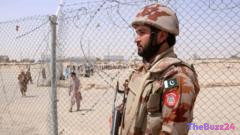
Border Conflict Escalates as Afghan Taliban and Pakistan Exchange Deadly Strikes
Cross-border hostilities have flared up once again between Afghanistan and Pakistan, with the Taliban administration launching retaliatory strikes along the shared frontier. The latest military action targeted areas in Pakistan’s southwestern Balochistan province, resulting in several injuries. In response, Pakistani defense forces reported intercepting and downing four rudimentary unmanned aerial vehicles deployed during the assault, warning that any subsequent provocations would face severe retaliation.
This latest escalation follows a series of heavy aerial bombardments conducted by Pakistani forces inside Afghan territory. Those operations, which targeted suspected militant strongholds in the Paktia, Paktika, and Kunar provinces, reportedly caused significant casualties. While Pakistani officials asserted that the strikes successfully neutralized nearly thirty militants responsible for recent cross-border terror attacks, Afghan authorities condemned the operation, stating that the strikes hit civilian residences and left dozens of non-combatants dead or injured.
The sudden surge in violence shatters a fragile period of relative calm established after a ceasefire agreement last October. The geopolitical relationship between the neighboring nations remains deeply strained by mutual recriminations. Islamabad has consistently accused Kabul of providing safe havens to insurgent groups launching attacks inside Pakistan. Conversely, the Taliban-led government in Kabul denies these allegations, accusing Pakistan of violating its sovereignty and conducting indiscriminate attacks that disproportionately harm innocent civilians.
Key Takeaways
- The Afghan Taliban launched retaliatory strikes into Pakistan's Balochistan province, injuring several people and prompting Pakistan to shoot down four drones.
- The escalation follows recent Pakistani airstrikes in Afghanistan's border provinces, which Pakistan claims targeted militants but Afghanistan asserts killed dozens of civilians.
- The renewed conflict disrupts a fragile ceasefire established in October, highlighting deep-seated tensions over cross-border terrorism and territorial sovereignty.
Editor’s Analysis & Impact
The rapid escalation of military actions along the Durand Line underscores the fragile security architecture of Central and South Asia. Despite temporary ceasefires, the fundamental drivers of conflict—primarily Pakistan’s security concerns regarding the Pakistani Taliban operating from Afghan soil and Afghanistan’s rejection of these claims—remain unresolved. This cycle of retaliatory strikes threatens to destabilize regional trade corridors and exacerbate the humanitarian crisis in Afghanistan. For international observers, the conflict highlights the limitations of diplomatic engagement with the Taliban regime. Moving forward, without a robust bilateral mechanism to address counter-terrorism and border management, the region is highly likely to witness prolonged instability, which could draw in regional powers like China and the United States, both of whom have vested interests in regional containment and counter-terrorism.
Frequently Asked Questions
Q: What triggered the latest round of military clashes between Afghanistan and Pakistan?
A: The latest clashes were triggered by Pakistani airstrikes inside Afghan border provinces targeting suspected militant hideouts, which Afghan authorities claimed killed civilians. In response, the Taliban launched retaliatory strikes into Pakistan's Balochistan province.
Q: Why do Pakistan and Afghanistan frequently clash along their border?
A: Tensions primarily stem from security disputes. Pakistan accuses Afghanistan of harboring militants who launch cross-border terror attacks, while Afghanistan denies these claims and accuses Pakistan of violating its territorial sovereignty and killing civilians during military operations.
Q: What is the status of previous peace agreements between the two nations?
A: Although both nations agreed to a temporary ceasefire in October following deadly clashes, the agreement has proven fragile. Persistent security concerns and retaliatory military actions have repeatedly broken the peace, leading to renewed hostilities.
AI Disclosure: This article is based on verified data and official reports. Our Team and AI have cross-referenced every financial detail with primary sources to ensure total accuracy.
More from this Category