Honda Pivots Battery Production to Power Booming Data Center and Grid Storage Markets
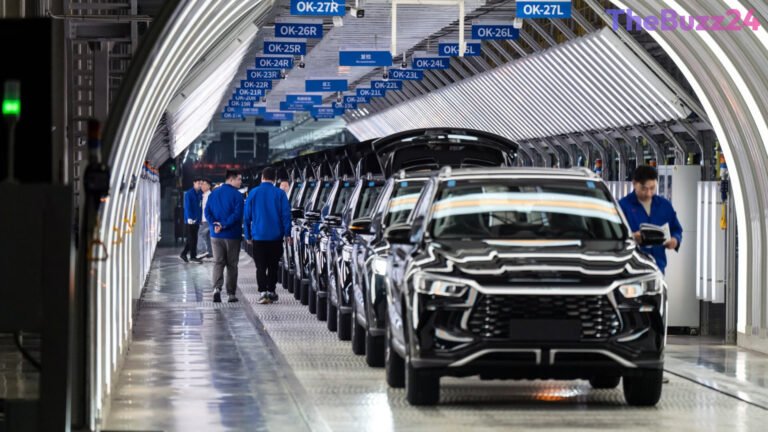
In a strategic shift reflecting the changing dynamics of the green energy sector, Honda has officially commenced the production of batteries dedicated to stationary energy storage systems. This move marks the Japanese automaker’s entry into the rapidly expanding utility-scale energy market, repurposing resources that were originally earmarked for electric vehicles (EVs). The transition comes shortly after Honda halted several of its U.S. EV initiatives, redirecting battery cells manufactured at its Ohio joint-venture facility with LG Energy Solution toward data centers and power grids instead of passenger cars.
The decision to pivot highlights the ongoing challenges in the domestic EV market, where consumer demand has cooled following the expiration of key federal tax incentives last autumn. Faced with market uncertainty and a weakening outlook in China, Honda underwent a massive $15.7 billion restructuring write-down last fiscal year. Rather than dissolving its manufacturing partnership with LG Energy Solution, however, Honda chose to follow the path of rivals like Tesla, General Motors, and Ford by leveraging battery technology for stationary storage—a sector currently experiencing unprecedented growth.
Global demand for stationary energy storage has surged, driven by the massive power requirements of modern data centers and the need to stabilize electrical grids. Industry data shows a 32% year-over-year increase in storage installations, with projections suggesting the market could nearly triple to 110 gigawatt-hours annually by the end of the decade. As battery costs continue to fall, these systems are becoming vital for balancing renewable energy sources like wind and solar, offering automakers a highly lucrative alternative revenue stream with profit margins that often eclipse those of traditional vehicle manufacturing.
Key Takeaways
- Honda is redirecting battery cells from its Ohio joint venture with LG Energy Solution to power data centers and energy grids instead of electric vehicles.
- The pivot follows a cooling U.S. EV market and a $15.7 billion restructuring write-down by Honda last fiscal year.
- Stationary energy storage is a highly profitable, rapidly growing sector, with installations projected to nearly triple by 2030.
Editor’s Analysis & Impact
Honda’s strategic pivot from electric vehicles to stationary energy storage highlights a broader trend among legacy automakers looking to hedge their bets against a volatile EV market. By keeping its joint venture with LG Energy Solution intact, Honda is capitalizing on the massive infrastructure boom driven by artificial intelligence and data center expansion, both of which require immense, uninterrupted power supplies. Stationary storage offers significantly higher profit margins than automotive manufacturing—as demonstrated by Tesla’s highly profitable energy division. This move not only mitigates the financial risks of Honda’s recent $15.7 billion write-down but also positions the company as a key player in grid stabilization and renewable energy integration. Expect more automakers to follow suit, transforming themselves from pure vehicle manufacturers into diversified energy technology providers.
Frequently Asked Questions
Q: Why did Honda stop using these batteries for electric vehicles?
A: Honda canceled several of its U.S. EV programs due to softening consumer demand, which was exacerbated by the expiration of federal tax credits.
Q: Who is Honda partnering with for this battery production?
A: Honda is producing these batteries through an ongoing joint venture with LG Energy Solution at a manufacturing facility in Ohio.
Q: What are stationary energy storage systems used for?
A: These systems are primarily used to power energy-intensive data centers, stabilize municipal power grids, and store excess electricity generated by wind and solar installations.
AI Disclosure: This article is based on verified data and official reports. Our Team and AI have cross-referenced every financial detail with primary sources to ensure total accuracy.
More from this Category