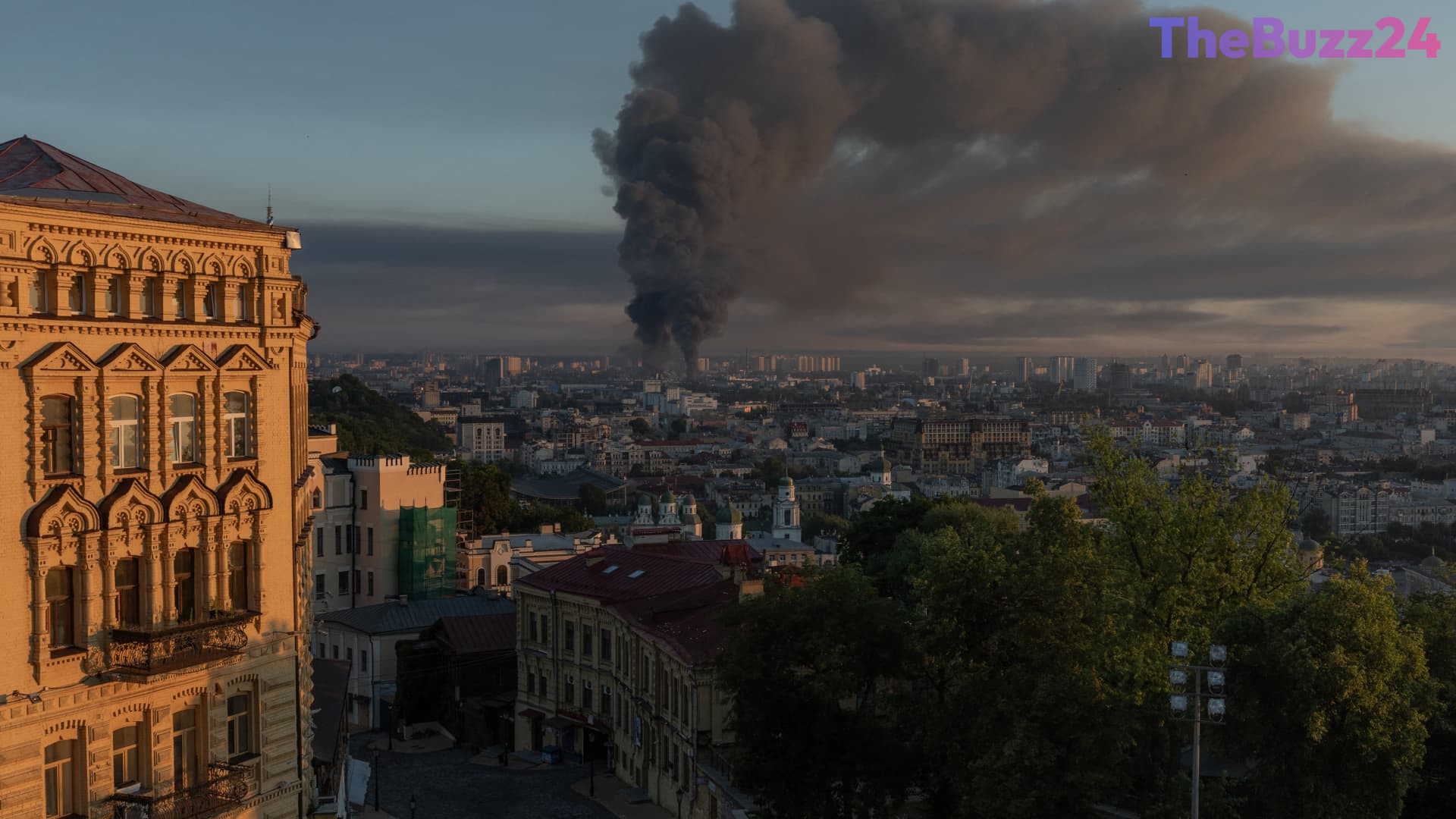
Massive Russian Aerial Assault Targets Ukraine; Neighboring Nations Heighten Defense Readiness
A large-scale aerial offensive involving missiles and drones struck multiple regions across Ukraine on Thursday, resulting in significant casualties and infrastructure damage. Kyiv Mayor Vitali Klitschko confirmed that the assault, which targeted the capital and surrounding areas, left at least 10 people dead and 34 injured. The strikes reportedly focused on military-industrial facilities, energy infrastructure, and airfields across several Ukrainian regions, including Dnipropetrovsk, Poltava, Cherkasy, and Chernihiv.
In response to the intensity of the bombardment, neighboring countries took immediate defensive precautions. Poland scrambled fighter jets and activated ground-based air defense systems to monitor its airspace, characterizing the move as a preventive measure to ensure national security. Simultaneously, Finland briefly implemented an aviation restriction zone in the eastern Gulf region as a precautionary step before restoring normal operations.
Ukrainian President Volodymyr Zelenskyy, who cut short an international trip to return to the country, condemned the aggression as evidence that the Kremlin remains committed to continuing the conflict. The attack follows a period of heightened tension, during which Ukraine has utilized long-range drone strikes to target Russian oil refineries and military assets. As the war enters its fourth year, the latest escalation underscores the ongoing volatility and the increasing regional security concerns for NATO-aligned nations bordering the conflict zone.
Key Takeaways
- A major Russian missile and drone strike on Ukraine resulted in at least 10 deaths and dozens of injuries.
- Poland deployed fighter jets and air defense systems as a preventive measure, while Finland temporarily restricted airspace near the conflict zone.
- President Zelenskyy stated the attack confirms Russia's refusal to engage in meaningful peace negotiations despite ongoing diplomatic efforts.
Editor’s Analysis & Impact
The latest escalation represents a significant intensification of the conflict, signaling that both sides are increasingly willing to utilize long-range assets to degrade the other’s industrial and energy capabilities. For Russia, the strike serves as a strategic response to Ukraine’s recent success in targeting Russian fuel production facilities. For the broader international community, the involvement of Polish and Finnish defensive measures highlights the persistent risk of regional spillover. As Ukraine continues its 40-day strategy to pressure the Kremlin, the conflict appears to be entering a phase of heightened attrition. The future outlook remains grim, with little indication of a diplomatic breakthrough, suggesting that energy infrastructure and military-industrial sites will remain primary targets, further complicating global energy markets and regional security stability.
Frequently Asked Questions
Q: Why did Poland scramble its fighter jets during the attack?
A: Poland activated its fighter jets and air defense systems as a preventive measure to secure its airspace and monitor the situation in areas adjacent to the conflict zone.
Q: What was the primary target of the Russian strikes?
A: According to reports, the strikes targeted military-industrial facilities, fuel and energy complexes in Kyiv, and various military airfields across several Ukrainian regions.
AI Disclosure: This article is based on verified data and official reports. Our Team and AI have cross-referenced every financial detail with primary sources to ensure total accuracy.
More from this Category