Charting the Deep Space Frontier: CAPSTONE Mission Successfully Validates Next-Gen Lunar Navigation Technologies
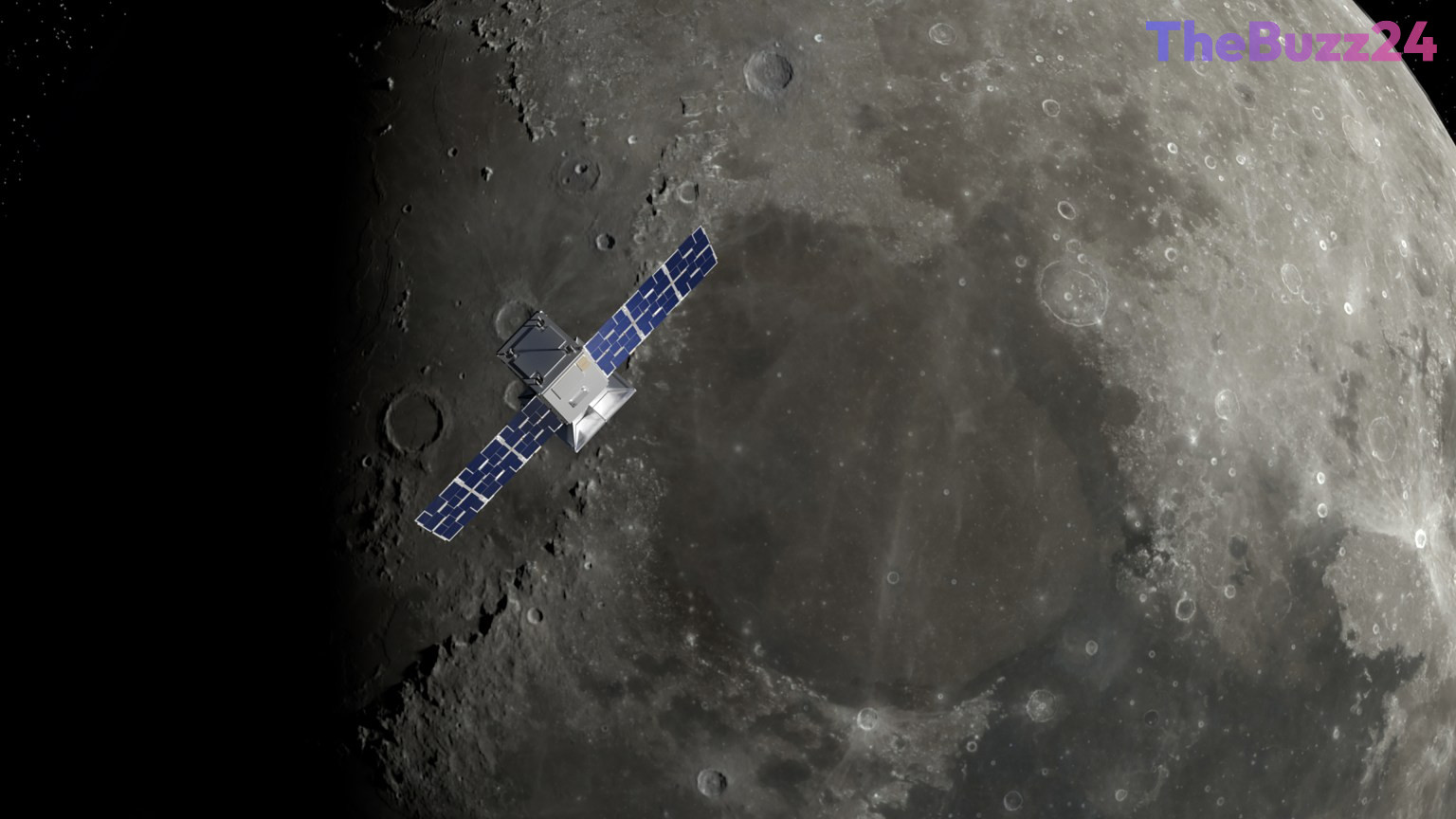
The Cislunar Autonomous Positioning System Technology Operations and Navigation Experiment, widely known as CAPSTONE, has officially completed its extended mission objectives, marking a major milestone in deep-space exploration. Launched in June 2022 as the first commercial U.S. spacecraft to operate at the Moon, the microwave-sized satellite successfully validated critical navigation and communication systems. These technologies are designed to allow future crewed and robotic missions to operate independently of direct, continuous contact with Earth.
During its initial phase, CAPSTONE proved the viability of a unique three-body orbit, utilizing the gravitational pull of both the Earth and the Moon to dramatically minimize fuel consumption. Following this success, the spacecraft entered a 15-month extended mission to serve as a software-defined testbed. A key highlight was the testing of the Autonomous Navigation, Guidance, and Control (autoNGC) software. When communication windows with Earth’s ground stations were restricted, the system successfully utilized an onboard star tracker camera to photograph celestial bodies, calculating its position autonomously and occasionally outperforming traditional ground-based tracking.
In addition to autonomous navigation, CAPSTONE successfully demonstrated Delay/Disruption Tolerant Networking (DTN). This specialized communication protocol acts as a “store-and-forward” system, preserving data during signal dropouts—such as when an astronaut passes behind a lunar hill—and automatically transmitting it once a connection is re-established. Built by Terran Orbital and operated by Advanced Space, the spacecraft’s NASA-supported operations concluded in June 2026. However, Advanced Space will continue utilizing the platform, cementing CAPSTONE’s legacy as a highly cost-effective blueprint for testing software upgrades on active hardware in deep space.
Key Takeaways
- CAPSTONE successfully completed its extended mission in June 2026, validating autonomous navigation and resilient communication systems essential for future lunar exploration.
- The spacecraft's autoNGC software demonstrated that a lunar probe can navigate independently using optical tracking of celestial bodies when communication with Earth is limited.
- The mission successfully pioneered Delay/Disruption Tolerant Networking (DTN) in deep space, ensuring critical data is stored and safely transmitted even during signal interruptions.
Editor’s Analysis & Impact
The success of the CAPSTONE mission represents a paradigm shift in how space agencies and private aerospace firms approach deep-space infrastructure. By utilizing a relatively inexpensive, microwave-sized CubeSat to validate complex orbital mechanics and software-defined technologies, the mission proves that deep-space exploration does not always require billion-dollar platforms. The successful demonstration of autoNGC and DTN technologies addresses two of the most significant bottlenecks in space exploration: communication latency and ground-station scheduling congestion. As the lunar environment becomes increasingly crowded with the upcoming Artemis missions and international commercial endeavors, autonomous navigation will be vital to prevent communication bottlenecks on Earth’s Deep Space Network. Furthermore, CAPSTONE’s ability to receive post-launch software upgrades to run entirely new experiments sets a precedent for highly adaptable, long-lifecycle satellite missions.
Frequently Asked Questions
Q: What was the primary purpose of the CAPSTONE mission?
A: CAPSTONE was designed to test and validate navigation, communication, and orbital technologies in a unique lunar orbit, helping lay the groundwork for future sustained human and robotic operations on the Moon.
Q: How does the autoNGC software help spacecraft navigate?
A: The Autonomous Navigation, Guidance, and Control (autoNGC) software allows a spacecraft to determine its location and trajectory autonomously. During the mission, it used an onboard camera to track the Moon and Earth, navigating successfully without relying on continuous instructions from ground control.
Q: What is Delay/Disruption Tolerant Networking (DTN)?
A: DTN is a communication protocol designed for the harsh conditions of deep space. It temporarily stores data onboard a spacecraft when a connection is lost and automatically forwards it to Earth or another receiver once the signal is restored, preventing data loss.
AI Disclosure: This article is based on verified data and official reports. Our Team and AI have cross-referenced every financial detail with primary sources to ensure total accuracy.
More from this Category